Episode 329 · September 22, 2025 · 15:55
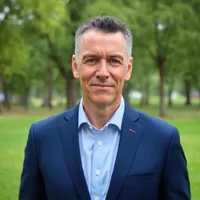
Markus Enzner
VP of Total Rewards Americas, The Adecco Group
Stop The Bleed: Off-Cycle Comp Is Your Biggest Hidden HR Cost
Episode 329 · September 22, 2025 · 15:55
Stop The Bleed: Off-Cycle Comp Is Your Biggest Hidden HR Cost
Key moments
In Markus's words
“I made a huge mistake where I kind of calculated incentives for the top 25 of the organization. And I wanted to send that to my supervisor for like 4-eye principal review, and I sent it to the wrong person.”
“But what companies usually neglect is their off-cycle increases. So basically, you know, how much money are you spending throughout the year... And you will learn that it's typically, it's like 50 to 75% of the cost you're spending completely ungoverned out of your, out of your day-to-day P&L.”
“I think the role for HR kind of going forward will be we have to be ambassadors for the people because the decisions that companies will face is, am I using AI just to cut costs and drive efficiency, or am I using AI to support my people and basically create the best product?”
Transcript
Read the transcript2,758 words
IntroWelcome to the Built by People podcast, where we share the stories and insights of the world's top HR leaders. Join us as we dive deep into the minds of HR executives, uncovering their strategies, challenges, and triumphs in shaping today's workforce.
HostI'm excited to welcome Markus to the Built by People podcast. Markus, thank you so much for joining us today. And as a starting question, I always love to ask if you could share a little bit more about your career journey.
GuestYeah, thanks very much, Dave, for having me. I really appreciate it. Very, very happy to talk to you through my career a little bit. Where do I start? So I think, you know, for me, it's always worthwhile starting to say, I started working very early, you know, as a teenager, I was, I always wanted to be busy, I always wanted to learn. So I had a lot of, a lot of jobs. And I think, you know, those, those early on jobs kind of, you know, helped me to learn a little bit about, you know, sales and customer service and customer centricity as well. And it kind of enabled, let's say, my process thinking as well. And on the flip side, I always say I had a very a lot of very bad managers early on, right? If you're, if you're working, you know, the service jobs, those people are not always kind of trained on, on that. And I thought, you know, I can, I can do this better. So ultimately, you know, I went to university. I'm an economist by education. And I never thought that I would go into an HR career. I always was more interested in the finance side of the house. I would say, you know, the business and the strategy side of the house. I consider myself a numbers and analytics person, but I found the field of total rewards, which is basically a sub-function within HR, which kind of combines my analytical nature and my strategic nature with the, the employee and people component. And I found that still in university, and I've been doing this ever since.
HostWas there a key person or moment that made you realize that total rewards was it?
GuestSo I think the moment was really, you know, at university, I wrote a thesis about profit sharing, and I used that to apply for a job still as a student. And in that job, I basically found my mentor who is kind of still a mentor for me today. And I think, you know, he was a big driving force in me kind of pursuing that career.
HostMarkus, could you tell us about a moment in your career where something was on the line? And also tell us about the decision you made through that experience and what happened next.
GuestI think, you know, I had multiple of those, of those experiences in my career. I think like, like everybody does. Let me think about a specific, specific example. So I think, you know, when you're working a corporate job, right, you will always face crisis. One, one crisis that I, that I always like to speak about, and it's maybe not a major crisis, but for me, it was very early on in my career. At that point in time, it was very hard for me to deal with it. It was basically, you know, as I said, I was new to the organization. I moved to a different country and I basically needed that job. And within my first like 3 months in that job, I made a huge mistake where I kind of calculated incentives for the top 25 of the organization. And I wanted to send that to my supervisor for like 4-eye principal review, and I sent it to the wrong person. So I sent it to a random person within the organization, basically, you know, disclosing the incentive payouts for the top 25 people within the organization, which was back then, for me, it was a major deal. I think today I would be a little bit more relaxed because I would know how to approach it. Back then, it was huge. It was a Friday afternoon. It was really really ugly, you know, I couldn't reach that, that person. And I think basically what I, what I did in that crisis was I owned it. I took full responsibility for it, you know, I communicated it very early and transparently to my team, to my supervisor, to my boss's boss as well. And I said, hey, I made a major mistake. And here's how I'm going to rectify this. And, you know, as I said, I was very nervous all over the weekend. The first call that I did, you know, Monday morning was that person that I accidentally sent that email to. As I said, for me, it came down to be transparent about it, own the mistake, and do everything to solve it.
HostThat's a great story and example. Thank you for that, Markus. What is the most meaningful change that you've made in a company that employees still feel today? And how did you make that happen?
GuestSo I, I think, you know, there's, that's really something that drives me. Kind of making change and having an impact in large organizations, which actually changes how the employees perceive HR or a specific program. I think my best example that I can give you, Dave, is for a previous employer of mine, we implemented what we call a high-performance culture. And, you know, we, we kind of did that in a very holistic way. So it was enabled and sustained through technology. And I think the problem, problem back then was when I arrived in this company, everything was kind of tackled in silos. Okay. All the compensation pieces, all the, all the benefits pieces, everything was kind of handled and tackled in silos. So compensation decisions were often like piecemealed, not combined. People didn't understand how they're being compensated, how their performance has an impact on that. And we really, we really wanted to change that. So I think the first change that we really did is that we, that we wanted to enable managers to really impact total rewards. So as a part of the annual compensation increase processes, we allowed them to tackle not only the base pay, to have an impact on the bonus, and to have an impact on equity compensation as well. And as I said, we kind of backed that with, with technology. From Workday. And I think another big backbone of that initiative was that we kind of took our managers into a big responsibility. I think that's something that you will see very often. Managers sometimes have an easy way out, right? Not taking all the responsibility, not taking all the accountability, and we kind of force them into that. So really, really making sure that we kind of educate and create those mature managers that you want to have within an organization. And I think that was kind of the biggest initiative with the biggest impact that I, that I was leading because it was tackling so many different components from how you manage performance, how do you have that impact compensation, how do you support that with technology, and how do you educate your managers to basically live and support that.
HostMarkus, when did you have to make an unpopular decision for the long-term good of an organization, and how did you bring people along for that ride?
GuestSo I think in HR, it's always the classic example, right? You're dealing a lot with letting people go, reductions in force. That can be, you know, for the organization, but it can be on your own team as well. And I've been, I've been doing this for close to 20 years, and I'm still not getting used to it, right? Because there's people behind all of those decisions. But on the flip side, very often you have to take those tough calls. Again, if it's company performance related or if it's employee performance related, you have to take those tough calls. I think for me, how do you, how do you make that happen in, let's say, the most empathetic way and the best way for the employee is really be fair, be transparent, explain the why, and show empathy. You don't know what's on the line for this employee. Or maybe they just had a baby, right? And now they're losing their job. So there's all those examples. But for me, I think it comes down to be empathetic, be fair, be transparent, and try to explain why you're making this call.
HostMarkus, what's a leadership move or HR initiative that you've repeated in more than one company because it just works?
GuestSo, I'll give you, I'll give you two answers, right? The leadership move that really works for me is When I, when I have junior people, and I mentioned that to you, Dave, that, you know, I, I had a mentor very early in my career, and I feel super blessed about that, right? Because I found the guy by, by, by accident, but it really helped me. So one thing that I do specifically when I, when I have new hires within my organization, or if I'm hiring, let's say, very junior profiles, I assign a mentor to those people., right? Because I think, you know, the whole training part is very important. Again, when you're early in your career, your learning curve is very steep, right? And that's how it should be. But there's a lot that you have to learn about, you know, the culture, the dynamics, how do I talk to people, how do I persuade them, and all that type of stuff. And I think kind of assigning a mentor to junior people is kind of, for me, the solution that always worked. The best. So that's, I think, you know, the leadership move that you asked about. Let's say more on the technical side, one HR initiative that I continue to repeat because I've not found a single company that does it very well is, again, in compensation, we deal a lot with the annual base pay increase of people, right? It's in every huge or in every big organization, it's a major process. Keeps, you know, a handful of people basically busy the whole year setting up the system, cleaning up the data, writing the policies, all that stuff. But what companies usually neglect is their off-cycle increases. So basically, you know, how much money are you spending throughout the year, right? You have that very governed structured process of the annual increases,, but not a lot of companies do a good job kind of managing their off-cycles as well. And for me, that's one of the easiest HR business cases. You just calculate how much am I spending throughout, you know, throughout the year and how much am I spending throughout the governed process. And you will learn that it's typically, it's like 50 to 75% of the cost you're spending completely ungoverned out of your, out of your day-to-day P&L. And So that's a business case that I, that I repeatedly do, and it's always a very easy win, I would say.
HostMarcus, just, I'd love for you to elaborate a little bit more on that because it's something everyone goes through. What's the biggest pitfall to avoid when doing that?
GuestYeah, I would say the biggest pitfall is not to do it. That's, that's really because, because it's For me, this is one of the initiatives where I say you're getting the most benefit with an overseable amount of effort, right? So it's, it's really, you just have to calculate how much money am I spending throughout the year, you know, across the organization, and then you put it into relation, you know, how much are you spending during, during year end? And as I said, right, I've presented that business case like 5 times in my life to, to the boards of the company. And it was always a very easy sell.
HostMarkus, looking ahead, what do you see as the biggest shift you think HR leaders need to prepare for in the next 5 years?
GuestYeah, and I'm sorry for that, but I don't have a very creative answer. But I think, you know, the biggest shift that we, that we will all see and that we are all already experiencing is kind of, you know, AI coming into the game, right? I think, you know, The rise of AI is just not another tool. It's a transformative force. And I guess it's one of the biggest that we will see in our lifetime. I think what will be important for HR, right? There's two ways that this can go. And we've all heard that sentence, AI won't replace your job, but a person that knows how to use AI maybe will. I can relate to that, but I see it still slightly different. I think the role for HR kind of going forward will be we have to be ambassadors for the people because the decisions that companies will face is, am I using AI just to cut costs and drive efficiency, or am I using AI to support my people and basically create the best product? Because for me, I've worked for a lot of big, big size companies. No company is perfect, right? They can, can all improve, but they're all kind of limited by, by the amount of, of resources, the state of their technology. And I think if companies embrace that and use AI to make the processes and the products better, that's the right way. And HR's role, in my opinion, is being that advocate for the employees and maybe stand against the business as well. Who will basically say, hey, I can, I can cut out that, that much cost, right? And that will do this to my stock price. And HR being that ambassador and advocate for the employees, I think that's the key in that.
HostMarcus, if you could leave one piece of advice for our community, something you wish you had known earlier in your career, what would it be?
GuestThere's a couple of things that, that come to my mind. I think first and foremost, and I've done that wrong, you know, at the beginning of my, my career is you have to be very adaptable and you have to embrace change. I don't know, Dave, if you've ever read or heard about the book Who Moved My Cheese? I think it's called, it's written by a guy, Spencer Johnson, Johnson something. But, so when I read, it's a very easy read. It's a 30-minute read, but it's very impactful, right? And it basically teaches you to embrace change. And I think that is really crucial. Again, specifically when you're at the beginning of your career. I went in at the beginning of my career and I thought, you know, that the path is always straight, but the path is never straight, right? It goes left and right and it goes up and down and there's hurdles, right? And you just have to embrace that. You will get to your goal. You will get to your target, but be aware that you have to kind of change along the way. The second thing that comes to my mind is be courageous. I think, you know, people that show courage, that sometimes say the things that nobody else wants to say, these are the people that are basically standing out. Again, in, you know, in the corporate culture, it's very easy to hide and basically to hide behind the, you know, the appreciated opinion. But I think if you're speaking the truth and you show courage, I think that will go a very long way for your career. And then for me, last but not least, is bring your authentic self. Be you, right? Don't, don't pretend to be somebody else. People will realize that. Just bring in, bring your authentic self.
HostMarkus, thank you so much for joining us today on the Built by People podcast. It was a pleasure to have you involved.
GuestI really appreciate the time. Thank you, Dave.
More conversations like this