Episode 223 · June 3, 2025 · 12:06
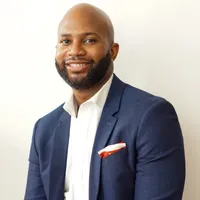
Lionel Riley
Chief Human Resources Officer, Riceland Foods
Forget the Perks: Unlock Employee Loyalty with Active Listening & Purpose.
Episode 223 · June 3, 2025 · 12:06
Forget the Perks: Unlock Employee Loyalty with Active Listening & Purpose.
Key moments
In Lionel's words
“if you're gonna ask, one, you better listen, and then two, you need to follow up on what they said, not just write it down, put it in the email and file it away because they're going to say, hey, we took the time to provide this feedback, now what are you going to do with it?”
“people are the mission, right? I don't care how critical a mission or objective is, you can't accomplish it without the people. You know, if you don't take care of your people, the mission fails.”
“you can't always compete on the shiny perks, but you can always compete on purpose, culture, and community.”
Transcript
Read the transcript1,885 words
HostWelcome to the Built by People podcast, where we share the stories and insights of the world's top HR leaders. Join us as we dive deep into the minds of HR executives, uncovering their strategies, challenges, and triumphs in shaping today's workforce. I'm excited to welcome Lionel to the Built By People podcast. Lionel, thank you so much for joining us. And as a starting question, I always love to ask if you could share a little bit more about your career journey.
GuestFirst of all, thank you for having me. I'm super excited to be here. And just jumping into a little bit about my career journey, I, I'd say it's unorthodox, but I'm here and I'm super excited of where I am today. So two tracks I'll talk about, my military career as well as my corporate career, but I've been in HR for over 20 years now, currently a chief human resource officer for Riceland Foods. And I've also been in the military simultaneously for 20-plus years. Started out in the Army Guard as an infantry guy, spent some time cross-trained to medic. I was enlisted, then I commissioned and became an officer in the Army, and then I transferred to the Air Force or the Air National Guard. A lot of people will say, hey, you got smart, didn't you? And so I'll tell you, I wouldn't trade my Army infantry training for nothing in the world, but it has been really great these last 20 years being on the Air Force side. Current role in the Air Force, I'm a colonel, currently a mission support group commander responsible for your logistics squadron, security forces, force support squadron, civil engineering, and our contracting and comm squadron as well. So pretty busy there. And the military, though, has just opened up a whole new learning platform for me. I like to use that. It's been a learning journey for 20-plus years, an opportunity to lead, meet people, travel internationally as well. Corporate background, 20 years human resources, from recruiting, human resources business partner, investigations, through retail, transportation industry, fintech, financial technology, and to my current role in the agricultural space with Riceland Foods.
HostLionel, tell me about a time when you implemented an employee engagement initiative in a challenging location that successfully improved retention. What was your approach and what were the key learnings?
GuestGreat question. I'll tell you, so one of my memorable initiatives was leading at a remote facility. Turnover was historically high, largely due to the geographic isolation and the limited local amenities. And we were competing for talent just like everybody is, right? I tell everybody competition is fierce today, and so you better put your best foot forward and you better keep your best foot forward to compete for the talent. Rather than try to outspend— I mean, nobody just have an endless pot of money— outspend those companies, we focus really on Belonging and mobility, explaining the career path, what's available once you're here, how to get there, and the benefits of staying with us. And then we launch what we call Voice of the Floor. So have opportunities for our employees to have little standup talks. Hey, what's going good? What can we change? What do we need to stop? Nothing long, nothing more than 20 or 30 minutes just to get those quick real-time decision points and thoughts and concerns of employees, and then track them. We also, you know, within 90 days, we were sharing that feedback. We were seeing the employees were seeing that feedback in action. And that's one of the main things I like to try to remind leaders is that if you're gonna ask, one, you better listen, and then two, you need to follow up on what they said, not just write it down, put it in the email and file it away because they're going to say, hey, we took the time to provide this feedback, now what are you going to do with it? So we would have those follow-up sessions. We posted information and follow-up action items in break rooms around the shifts. We'd do it to where there would be shift change for our overnight employees as well to ensure that they were included, right? Usually a lot of times when you have production, you have multiple shifts. It's usually the first shift that gets all the input and all the feedback, but we want to make sure we're intentional about sharing that feedback and capturing feedback from all shifts. We implemented the internal mobility command with career pathing, grow here, stay here, and we highlighted stories of team members who had risen through the ranks. We are a manufacturing facility. You can come in, you can do many jobs, and you can stay forever if you choose. And so that was something that kind of paid off. People would come in a year or two years, would be able to see that, hey, my foreman, my supervisor's been here for 20 years, started out doing what I was doing and had an opportunity to rise through the ranks. And so that was a good outcome.
HostHow does your military leadership experience influence the way you approach employee experience and engagement in the corporate world?
GuestYeah, so my leadership experience in the military, it's been foundational in shaping how I approach employee engagement, the employee experience in the corporate world. Currently, like I say, I'm a mission support group commander. I lead a diverse team, right? I got 5 squadrons. And again, those are 5 diverse squadrons from a technical skill set, from a personality standpoint. You got cops, you got civil engineers, you got communications, you got logistics and all of that. So leading across diverse teams with critical functions It's taught me a lot. The environment taught me that people are the mission, right? I don't care how critical a mission or objective is, you can't accomplish it without the people. You know, if you don't take care of your people, the mission fails. And that lesson directly translates to my role as a CHRO. In the military, we train to lead with purpose, clarity, and consistency, and those traits build trust. I bring that same intentionality into the corporate setting. Whether we're rolling out a new benefit or building leadership development programs, I always ask, are we creating an environment where our people feel seen, valued, and part of something bigger than themselves? That mindset is rooted in servant leadership, and it's essential for real engagement.
HostWhen was a time you had to compete with major competitors or players for talent in a less attractive location? And what creative strategies did you employ to succeed?
GuestYeah, all my career, every single role, whether it's been military or corporate, there's always been competition. One challenge that I'll talk about was just staffing in general in the logistics and engineering space, especially being at a rural location, kind of place where other contractors are available with bigger pocketbooks, other staffing firms that specialize in specialty recruiting with bigger pocketbooks for incentives and all of that. But what I learned in uniform and business is that you can't always compete on the shiny perks, but you can always compete on purpose, culture, and community. And that's where I lean real heavy in when I have influence. I like trying to take a radical approach. Was partnered with different regional universities and community colleges to create career pipelines, offering internships and apprenticeships that led directly into hiring statuses. Also focus heavily on family inclusion. What is the need of that employer? Is it childcare? Is it flexibility of scheduling? And then again, just being a part of the local community, hosting and participating in local events, building connection for spouses and families that help reduce relocation hesitation if need be. So, and then, you know, I've applied similar strategies in, you know, in smaller towns, highlight the company's mission-driven nature. We feed the world sustainably, right? Who doesn't wanna be a part of that? Helping to feed the world sustainably. Not feed the state of Arkansas, not feed the United States, but feed the world. And so once you tie in that connection and the employee has purpose, they tend to understand that what they're doing, whether it's in the mill or the other facility or engineering or in our communications department, they have a purpose that they're connected to.
HostLano, can you share a story about how you've used employee listening and engagement surveys to drive meaningful change in your organization? What was the process and impact?
GuestI think one of the, uh, the stories I can share is, was, uh, one of the most impactful examples. I'll go back to the period of post-COVID operational recovery. We conducted engagement surveys that revealed a consistent theme across our operations team. Employees didn't feel they had clear development paths and communication from leadership felt top-down. With little opportunity for feedback. That's why I focused early on the importance of engagement surveys and actually listening, one, but two, doing something with that listening, with the feedback. It was an opportunity where previously you collect that data, you create your PowerPoint, you create your notes, and then it just sits there. We mobilized pretty quickly, continuing with listening sessions at every facility, giving frontline team members a voice beyond the survey. You can answer the survey questions, you have a limited amount of open comment, but what else would you like to say? What else would you like for leadership to be aware of? So we provided those opportunities and what we heard helped us build a two-tier response. First, we revamped our communications approach, incorporating more visits, more huddles, more newsletters, and more leadership visibility. And then second, we launched the Frontline Leadership Program, which helped with career pathing. You have a career here, what other opportunities are available? Doesn't mean that you come here in this job and that's where you'll be for the next 20 years. If you want to do more, there's more to do and accomplish it. And again, like I've mentioned earlier, spotlighting different individuals to show their career journey and how they have the opportunity to continue to learn, developed and improved within the company.
HostIda, what parting advice would you like to share with our community?
GuestTwo things. Listen like you mean it. It's so important. Act fast once you listen and you gain that feedback, because acting on that feedback will just help continue to build trust. Surveys and data and roundtables are only as good as your willingness to respond. Visibly and quickly. Um, and even small wins build trust. Everything does not have to be this huge, humongous milestone that it took 8 months to accomplish. Small wins count. And the second thing is just sell the mission, not just the job. In less desirable locations, purpose and belonging are more powerful than perks. People will stay where they feel they matter and it can grow.
HostLionel, thank you so much for joining us today on the Built by People podcast. It was a pleasure to have you involved.
GuestI appreciate it. Thank you very much.
More conversations like this