Episode 366 · January 26, 2026 · 8:20
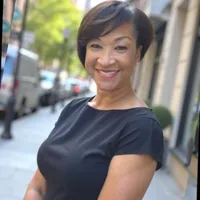
Laurie Shakur
Chief People Officer, Global company
Growth Pains? Proactive People Ops Discipline Builds Your Unshakeable Foundation.
Episode 366 · January 26, 2026 · 8:20
Growth Pains? Proactive People Ops Discipline Builds Your Unshakeable Foundation.
Key moments
In Laurie's words
“I don't like people like that. I know that sounds awful, but 30 years later, I find this to be the most rewarding work.”
“If you can do the job well, the true testament will be enabling others that you lead to do it better.”
“I think what now is a big challenge that we're not talking enough about is AI adoption and understanding.”
Transcript
Read the transcript1,362 words
IntroWelcome to the Built by People podcast, where we highlight the stories and insights of the world's top HR leaders. Now, let's Let's get started and welcome our next guest.
HostToday on the Build by People podcast, we're, uh, we're blessed to have Laurie Shakur with us today. Laurie, thanks for, uh, joining us.
GuestDallin, thank you for having me.
HostAlways, I like to start these podcasts with just getting a little bit of your backstory. So if you could tell us, how did you get into leadership? Tell me a little bit about your career journey, you know, what ultimately got you into HR leadership?
GuestWell, I started my career in sales and marketing, and then I migrated over into risk management analysis. I was lucky enough to have a great— I'm going to date myself by this— manager who pulled me to the side one day and said, do you like your job? And I smiled kind of sheepish— sheepishly. And she said, you know, I'm asking because you're not that good at it. And I thought, oh my gosh. And so, of course, because I had trusted her, we'd worked together for a couple of years, I said, well, what are you thinking? I knew that that was an indication that I may not have had a long career there. And she said, you know, I've been watching you, and you talk a lot, and I think you'd be great in the personnel team, maybe do recruiting. And my initial thought was, I don't like people like that. I know that sounds awful, but 30 years later, I find this to be the most rewarding work. I stepped into leadership about 30 years ago, so it was really early on. I found my rhythm. I had a great mentor who said, if you can do the job well, the true testament will be enabling others that you lead to do it better. And so I've taken that on all these years to try to have people around me that can do better.
HostOh, that's amazing. I love that, Laurie. Thank you for, for sharing that. You know, as you look back over the course of your career, what's the biggest challenge maybe you're currently facing in HR? And, you know, how has that changed over the years?
GuestWell, it sounded like you said challenge. I'm gonna give you a plural and say, when I think of challenges now and today, there are some common denominators. So retention has always been an issue. Engagement, even though we didn't measure it, it's newer that we measure it. Budgets being cut for learning and development. I think what now is a big challenge that we're not talking enough about is AI adoption and understanding. There's a true opportunity for change management and leadership to get us through this.
HostOkay. That's great. You know, and if I shadowed you for a week, where would I see you maybe spending most of your time on things that don't feel strategic? There's a lot of strategic things I know that are on, on the list or on the plate, but what are some areas that you're like, oh, I just, I keep having to come back to this and it doesn't really feel strategic?
GuestMm, yeah. I find a constant balancing act between operational efficiency and the strategic impact. And I think for me, my team and I were still spending far too much time with follow-ups. We're 100% remote, and so communication and clarity is so key. And we spend way too much time with meeting scheduling, confirming what the agenda is going to be, following up after. It doesn't feel strategic. It seems very tactical, but it does lead to the strategic impact of having clarity for execution. But it still feels as though we're just doing a lot of follow-ups just to ensure that everyone is on the same page. And, uh, clearly aligned.
HostLori, what's keeping you up at night, or what's a recent situation where things broke down? Could have been benefits, engagement, turnover, compliance, et cetera. How did you handle it?
GuestMm. Well, I— not so much of a breakdown, but more of an opportunity. So I work for a global company, and we had this really clunky process around our payroll in that my magnificent team in India runs our US payroll, but because they sit in another country, they don't have full access because of the clunky way we set up our payroll system. So while they can run the regular payroll, if you could imagine, there are times when it's critical for compliance or report generation that they have to involve me. And so we literally sat down and said, maybe it's time for us to come up with a global solution instead of me being brought in for something like that. So I won't say a breakdown because we've been operating like that for some time. But as we revisit ways to be much more efficient, we recognize let's enhance our system.
HostI love that. And I think that's a great way. And I, I love your perspective on it's not a situation where things broke down. It's more of a, more of an optimistic approach there. What tools or partners are most critical for you today? And if I could make, wave a magic wand and fix one system or process, what would it be in your, in your opinion?
GuestSo I've got a number of vendors and a number of vendor friends, so I won't say vendors or partners. So I'll speak to the tools. I personally could not live without my system of record, my HRAS. That's my go-to for everything. Goals, OKRs, service anniversaries, key milestones, headcount, all the data. Of course, payroll. We want our people compensated. But new and really critical today are engagement tools and wellness measurements. In my humble opinion, when I can have visibility into who's who's engaged, who's happy, who's not, and they can provide that information anonymously so they can feel safe. And we can measure how are they feeling, what are they thinking, are they sleeping well. So for me, it's HRIS, payroll, engagement, and wellness measurement tools.
HostIf I came back in 12 months from now, what would you have hope has changed within your HR organization or within your company in general?
GuestMm. So broader than me, I, I'd hope that HR has become both more human and more disciplined. As I mentioned, I've been in this industry for multiple decades, and I've consistently heard the mantra, we want a seat at the table. Then when we get a seat at the table, we want to drive the agenda. I think all that's ridiculousness. I think that people would feel much more clearer about what's expected of them and more supported if we just had better and much more disciplined people ops. At the same time, leaders would experience people ops as simpler, with fewer processes, much more intuitive operating models that enable clearer decision-making and faster execution. In my humble opinion, when we finally get this right, people will feel the difference. Even if they can't name it, they will know that something is different. So if I had a magic wand and I could fix anything, it would be that.
HostThat's great. Well, Lori, last question I have for you today. What parting advice would you like to share with our community?
GuestSo imagining that everyone wants to grow and scale, I think I would like to offer that growth will expose whatever you're avoiding. So the sooner an organization builds operating discipline, and by that I mean clear decision-making with clear accountability, clear communication, and change management practices, the less painful, in my humble opinion and experience, the growth becomes. So that work should be done early because it compounds and builds for scale later.
HostThat's great. Well, Lorie, you're a wealth of knowledge. Thank you so much for joining us today on the Build by People podcast.
GuestDallin, I'm humbled and grateful to be here. Thank you.
More conversations like this