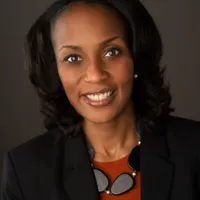
Kristen Hildebrant
Chief Human Resources Officer
Arrow Security
HR's New Mandate: Adaptive Leadership and Strategic Impact Drive True Influence
Thesis
“Kristen Hildebrant believes that HR professionals are critical influencers who must proactively demonstrate their strategic value through adaptive leadership, innovative development programs, and a focus on impact rather than merely securing a seat at the table.”
What you'll take away
- 01Establishing a formal Learning & Development team under HR is crucial for scaling development across a large, distributed workforce, providing a competitive advantage.
- 02Effective leadership involves adaptive styles and influencing others, rather much more than authoritative directives.
- 03Mentorship is an ongoing, everyday activity, whether formal or informal, and can significantly accelerate career growth for individuals within and beyond one's direct team.
- 04Non-traditional, hands-on adult learning programs that incorporate accountability and subject matter ownership by leaders can create meaningful organizational impact, fostering pride and buy-in.
- 05HR professionals must proactively emphasize and define their value as strategic influencers by demonstrating impact once at the leadership table, rather than passively waiting for an invitation.


What most organizations get wrong
- Kristen challenges the common HR refrain of 'needing a seat at the table,' stating that the true impact comes from 'what you do once you're at the table' rather than merely achieving the position.
In Kristen's words
“When I moved to New York a few decades ago, I really didn't know what I wanted to do, and retail wasn't an option. I started my journey in human resources by working with a staffing company and loved what they did. They were matching talent to the client needs.”
This quote highlights the origin of her passion for HR through the lens of connecting people with opportunities.
“one of the things that's been really impactful for us so far has been the suggestion of implementing a formal learning and development team under the HR structure... give us that competitive advantage in the security space.”
Kristen identifies a strategic HR initiative – a formal L&D team – as a key driver for competitive advantage.
“But I was always influenced by people that seemed to effortlessly influence other people. And I realized as a young adult very quickly that really that's a key signal of leadership. And you do adapt styles.”
She defines effective leadership not by authority, but by the ability to influence and adapt styles.
“you're a mentor every day, whether you realize it or not, whether they're in your department or an employee that you're helping or a manager that you're, you know, sitting across from on the, on the floor.”
This broadens the concept of mentorship, emphasizing its pervasive and informal nature in daily interactions.
“what we decided to do was take each leadership lesson, whether it was a soft skill or whether it was a technical skill in the organization, and we assigned that subject matter to one of the leaders to not only do the technical and practical research side of it, but also to provide hands-on kind of practical application of that. And then they presented it to the organization.”
This describes an innovative, leader-led, and highly practical adult learning approach that fostered ownership and accountability.
“I'm not the traditional need-the-seat-at-the-table kind of HR professional, I like to be at the table, and I have been for several years. I think it's what you do once you're at the table that really drives the point home.”
This quote captures her contrarian perspective on HR's influence, prioritizing demonstrated impact over positional authority.
The problems this episode addresses
- Organizations with a large, distributed workforce (e.g., 6,000 employees across 10 states) often lack dedicated learning and development teams, leading to unaddressed skill gaps and missed competitive advantages.
- Companies struggle to implement impactful leadership development programs, especially in remote or global settings, when training lacks practical application and participant accountability.
- HR departments frequently face challenges in articulating and proving their strategic value to the business, often being perceived as administrative rather than transformational.
- Growing organizations need robust, scalable solutions for continuous professional development, from basic orientation and onboarding to advanced leadership training, across all employee levels.
In this episode
Built by People podcast features insights from world's top HR leaders
Built by People
I started in retail, many, many years ago. And what attracted me to retail was always the people
What's Your Career Journey?
Arrow implemented a formal learning and development team under its HR structure
In the Elevator With Arrow's First HR C-suite
Kristin has been involved in leadership development throughout her career
Kristin on Leading With a Mentor
Aero Security used a non-traditional approach to adult learning and training
Exploring the Non-Traditional Approach to Adult Learning and Training
Kristin, what parting advice would you like to share with our community
A Few Words from Kristin Dunn's End
Topics covered
Organizations and entities mentioned
Full transcript
Expand transcript (0 words)
Transcript is not available yet.