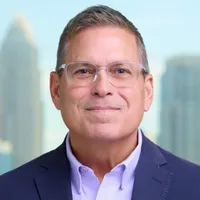
Jon-Paul Ales-Barnicoat
CHRO
Alivecor
Beyond HR Ego: How Authentic Communication Empowers Your People & Mission
Thesis
“Effective HR leadership pivots from individual ego to serving the organization's people and mission, fostering genuine communication and engagement, especially during periods of rapid growth and cultural diversity.”
What you'll take away
- 01Prioritize genuine, authentic communication from executive leadership to bridge gaps and humanize leadership within dispersed teams.
- 02Shift perspective from 'employees' to 'people with lives' to inform more empathetic and effective communication strategies.
- 03Leverage informal communication channels like Slack for community building beyond business-related topics.
- 04Utilize AI tools to enhance the authenticity, thoroughness, and frequency of internal communications.
- 05Embrace a servant leadership mindset, recognizing that senior roles are about enabling others and fulfilling the organizational mission, not personal ego.


What most organizations get wrong
- Pushes back on the term 'transparent communication' as it can be ambiguous, advocating instead for 'genuine communication' that reflects real thoughts and struggles.
In Jon-Paul's words
“The communication gap was significant, and the organization had been through some speed bumps. And so, I introduced a in a LiveCORE leadership series, which is really a fireside chat.”
This highlights a specific initiative taken to address a critical communication problem in a growing company.
“When you stop thinking about people in their employee persona, and you start thinking about people as people that actually have lives... When you start thinking about people from that perspective, you then start to understand what real communication needs to look like.”
This emphasizes a human-centric approach to communication, moving beyond traditional corporate thinking.
“The thing that the emerging tool for us that's really helping us from an HR perspective and helping us to really humanize some of our communication is where we've really gone all in on Gemini. We're using Google's AI tool to help us to craft more authentic messages, to help us to make sure that we're being thorough and complete in our communication.”
This demonstrates a practical, current application of AI in HR for improving communication quality and authenticity.
“The more senior you become in the organization, the less about you it becomes. And the more you become a servant to the people, the organization, the mission.”
This quote encapsulates a core philosophy of servant leadership crucial for senior HR roles.
The problems this episode addresses
- Communication gap between executive team and employees in a dispersed, hybrid company (Alivecor, a 15-year-old startup).
- Difficulty in maintaining genuine, authentic communication across multiple cultures within a growing global workforce.
- Challenges in humanizing executive leadership and fostering a sense of community in a rapidly scaling organization.
- Need for tools to craft more authentic, thorough, and complete internal messages to boost engagement.
In this episode
Intro
John Paul Ailes Barnacote started his career as a recruiter
Built by People: John Paul Ailes Barnacote
Tell me a little bit about your top priorities right now. My top priority is to scale our commercial business globally
Top Three Priorities
Alivecore recently rolled out a leadership series aimed at improving employee communications
Employee Communication at Alivecore
Communication is becoming harder and harder across every organization
Better communication in the workplace
We probably communicate more through Slack than any other tool
What's the Best Communication Tool for Your Organization?
John Paul: I hope people are inspired about the future of the organization
What's Changed at Work in the Last 12 Months?
John Paul shares some parting advice with the Built by People community
John Paul on Leaving the Company
Topics covered
Organizations and entities mentioned
Full transcript
Expand transcript (1619 words)
Welcome to the Built by People Podcast, where we share the stories and insights of the world's top executive leaders. Join us as we dive deep into the minds of executives, uncovering their strategies, challenges, and triumphs in shaping today's workforce. That's Crebi. Now let's jump in and get started with our next guest.
Welcome to the Built by People podcast. I'm Dallin Demke, and I'm excited to be joined today by John Paul Ailes Barnacote. John, thanks for joining us.
Yeah, thank you, Dallin.
As a way of starting, I always like to start off by asking you to tell us a little bit about your career journey, maybe the unexpected turns and what ultimately led you to leadership.
Oh yeah. Interesting. My, my, like everybody else in HR, I didn't, I didn't wake up one morning and say, I want to be in HR. I actually started my career as a recruiter in an agency. And over the years, I slowly transitioned into a corporate recruiting role. And then ultimately transitioned when I worked for Johnson Johnson, transitioned into more of an HR role. And over the course of my career, my— that early foundation in recruiting has really served me well.
Oh, I love that. Thank you. Tell me a little bit about your top priorities right now.
My top priority, and really the top priority of the organization, is, you know, we're A 15-year-old startup company. We're Series F. Our lead investor is Khosla Ventures. We're a health technology company. We're, we're the only FDA-approved personal-use EKG device. And for us to achieve our goal of providing access to cardiovascular care, cardiovascular insights for everybody, 99.9% of the people in the world, we really need to develop and build out our commercial business. And that's really what's been our focus today where We're reaching out to employers and payers with a programmatic solution for their employees. We're reaching out to the biopharma sector for drug trials and drug research. We're working with hospitals and healthcare systems to incorporate our devices into the day-to-day care of their patients. And so that's really been our focus is to scale that B2B commercial side of our business globally.
Awesome. What's a— maybe one initiative you rolled out recently that you're proud of?
Oh boy. I think from a kind of in the theme of employee communications, I think the thing that will— one of the things that will be my legacy at Alivecore is when I joined the organization, we had a real communication gap between our executive team and our employees. And while we're not a big company, we are a very disparate or dispersed company. So we have really embraced the hybrid model and we're committed to that, have 100 or so employees in the United States, and 75 of them are spread out across the country. We're going to end 2025 at about just over 200 people, will grow to about 250 to 300 next year. The communication gap was significant, and the organization had been through some speed bumps. And so, I introduced a in a LiveCORE leadership series, which is really a fireside chat. I kind of, you know, used David Letterman's "My next guest needs no introduction" sort of method and really just sit down with each one of our executives on a monthly basis. We have a different executive that I sit down with. It's unscripted. They have no idea what I'm going to ask them. And we have a fireside conversation that everybody in the company is able to view live. Over Zoom. And we talk about some of the things that are affecting the business, what their insights are around the health of the business, what they're excited about. And that has been a really unbelievable series because it's brought the organization together in a way I don't think any of us really expected. It's humanized the executive team on a level that we definitely did not expect. And it's really opened up our communication. I hate when I hear my peers talk about transparent communication because transparent can be defined differently by different organizations. In our case, what it's done is it's opened up what I would describe as genuine communication, authentic communication, real communication around what these real people are thinking about and struggling with and excited about every day.
I love that. And along those same lines of, you know, direct, clear communication, employee communication is just becoming harder and harder across every organization. What's one area where you're trying to improve the engagement through better communication?
Yeah, and I think this is true not just in communication, but in everything that we do. We're trying really hard to lean in and really understand that these are not just our employees, but these are people that have chosen to work for us, right? And that's an interesting dynamic. When you stop thinking about people in their employee persona, and you start thinking about people as people that actually have lives, that wake up in the morning and have to get their kids to school and have to figure out what's for breakfast, what's for dinner, and in some cases, hope their car starts in the morning kind of thing. When you start thinking about people from that perspective, you then start to understand what real communication needs to look like. And for us, it's everything from explaining what is Diwali, a holiday. We have a lot of employees in India. What does it mean? Why is it meaningful to that group? You know, what is, what is the meaning of Thanksgiving in the United States? What is the meaning of Memorial Day in the United States? And, you know, things as simple as that, but leaning into helping people to understand and helping to bridge that gap in the, you know, multiple cultures that we have that are represented in our organization.
That's wonderful. Along those lines, what tools or platforms are most essential for your operations today or communications in general?
Yeah, I mean, we probably communicate more through Slack than any other tool, and we've really done a good job, I think, leveraging Slack as a community builder as well. We've got a variety of different channels that are not business-related, but they're specific topic-related that our employees all use. Our executives use them. I mean, you know, just a, Just a couple weeks ago, one of our executives went to a concert and posted a bunch of pictures of them at the concert with videos and all kinds of things. So, we look to really build community through some of the— through our Slack channels. I think the thing that the emerging tool for us that's really helping us from an HR perspective and helping us to really humanize some of our communication is where we've really gone all in on Gemini. We're using Google's AI tool to help us to craft more authentic messages, to help us to make sure that we're being thorough and complete in our communication. And that has really changed the game for us. I think our communication style and the frequency and the authenticity of what we've been sending out to the employees has increased dramatically as a result.
That's great. Well, John Paul, if we sat down again in 12 months from now, what would you have hoped has changed with most within your org or within your HR department?
You know, I think within our organization, I think it would have more to do with how people are inspired about the future of the organization and how they, how they're feeling, where they think they may fit in what the future of the organization is going to be. We're building for the future, right? We're a Series F company. We're about a year in, almost a year and a half in to really committing to our B2B approach to the market. We've got a really healthy consumer business. There's an event for us in the future. I don't know when in the future, but in the future, there's an event for us. And I hope that every employee understands what their place is in what that will look like.
I love them. Any last parting advice that you would love to share with our community? Maybe something you wish you had known earlier in your career, or as you've, you know, any experiences that, you know, you might want to leave with our community?
Yeah, you know, one of the things, one of the pieces of advice I got very early on in my career has held true to this day. And that was, you know, as you become more senior in an organization, you move into a manager role, then you move into a director role, and then you move into a VP role. What you learn throughout that journey or what you should learn throughout that journey is that the more senior you become in the organization, the less about you it becomes. And the more you become a servant to the people, the organization, the mission. And when you come to that realization that it's not about you, it's about the people that have invested in the organization with their time and their careers. And when you, when you come to that realization, the decisions become much easier because it's not about you and your ego.
Yeah, that's great. That makes a lot of sense. Well, John Paul, thank you so much for joining us today on the Built by People podcast. It was a pleasure having you.
Thanks, Dale. Appreciate it.