Episode 257 · June 26, 2025 · 11:53
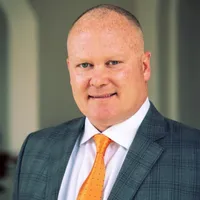
Joe Pope
VP of Total Rewards & HR Operations, Link Logistics
Future-Proofing Talent: Holistic Total Rewards Win in Volatile Economies
Episode 257 · June 26, 2025 · 11:53
Future-Proofing Talent: Holistic Total Rewards Win in Volatile Economies
Key moments
In Joe's words
“I originally was going to school to become a lawyer, and what I found early on is that I really liked compliance, starting out with— I think about where the HR profession was back then. It was more rooted in all the emerging laws.”
“What I'm finding, especially in my role here, is that taking a holistic total rewards approach when, when talking about employee motivation and retention is key.”
“My last firm went against the grain quite a bit. If you look at the top AMLAW 100 firms, they're requiring their employees to come in 4 or 5 days a week. No, no questions asked. Right. Earlier in the pandemic, too, the firm I worked for saw an opportunity to attract talent from those firms by being more flexible.”
Transcript
Read the transcript2,000 words
IntroWelcome to the Built by People podcast, where we share the stories and insights of the world's top HR leaders. Join us as we dive deep into the minds of HR executives, uncovering their strategies, challenges, and triumphs in shaping today's workforce.
HostI'm excited to welcome Joe to the Built by People podcast. Joe, thank you so much for joining us today. And as a starting question, I always love to ask if you can share a little bit more about your career journey.
GuestYeah, so I've been in HR in general for about 20 years. I originally was going to school to become a lawyer, and what I found early on is that I really liked compliance, starting out with— I think about where the HR profession was back then. It was more rooted in all the emerging laws. And along the way, I found some opportunities to really differentiate myself. One of them was actually in employee benefits. It was a black box that the rest of the HR team really didn't want to tackle. It was something that they tended to rely on the broker for information about, and I viewed it as a challenge. I'm like, you know what, this is just the one nut I want to crack. I refuse to take no for an answer., and I learned more and became knowledgeable, became that go-to person. And from there, I took on interest in HR systems, implementing different modules at first, doing system administration, branching out into compensation. And lo and behold, before I knew it, I was leading total rewards. So my whole career journey has been just progressively taking on more and more in the HR profession, and I like it. It's— I like the variety. I, No two days are the same, and even in all the different areas that I oversee, there's always something new going on.
HostJoe, could you tell us about a specific challenge you faced transitioning from the Great Resignation period to today's uncertain market and how you've approached retaining top talent while maintaining fiscal responsibility?
GuestWe're in a very weird period right now. I, what I'm noticing is that people are often staying put in their roles. And we're seeing that in recruiting, right? We're seeing that in people's expectations of their companies. I'm seeing a lot of people staying put and wanting to get more out of their employers. And from a comp perspective, that's been challenging to navigate because if you think about even 5 to 7 years ago, the dynamic was more about budget constraints and trying to get away with the least amount of salary as possible, right? And I've seen that flip during the Great Resignation and really hasn't— it really hasn't changed. Now I'm hearing leaders saying, hey, I want to not only pay people but be more intentional with the investment that I'm making in my people. And so that really leads to better conversations, about compensation and using compensation as a motivational tool. As far as being creative, we're also finding that compensation isn't everything to an employee. Yes, we need to— we work for a living. We need to make sure we're paying our bills. We need to make sure that we are paid what value we bring to the market. But the other levers are just as important, if not more important, depending on the person. So flexibility is very important. Certain benefits are attractive to employees. What I'm finding, especially in my role here, is that taking a holistic total rewards approach when, when talking about employee motivation and retention is key. And it's, and it requires a depth of knowledge that leaders may have not had to have before. They really need to understand what makes their people motivated, what, you know, what are their people looking for? And if compensation is really the issue, let's make sure we're solving for that, for the right issue.
HostJoe, can you share with us how you developed creative reward strategies at your current company that help employees feel a sense of purpose and stability in this work optimization stage?
GuestI just joined Link about 90 days ago, so I'm coming in as a new total rewards leader that is trying to take this function to an elevated level as the business is continuing to evolve. Where we start is understanding the business. And as I'm talking with leaders and working with HR business partners on a day-to-day basis, we're having those discussions about what is the true business need right now. We're coming out of this hypergrowth mode, right? And going more into optimization mode, still, still looking to grow more organically, more intentionally, right? But what comes with that is having deeper discussions about org design, what the business expects out of certain groups of the population and solving for the issue in the moment. That's where we've really had to be very creative because we can't do everything all at once for everybody. That requires a lot of thought, planning, dollars. So we're able to solve for the business needs right now by, again, looking at what's being expected, what's the employee sentiment, what are we trying to solve for?, and whether it's a combination, it could be any combination of a salary adjustment, it could be a one-time bonus, it could be maybe there's a certain benefit that we're just not offering that we need to, that we need to look at. We're taking a holistic approach and a more surgical approach right now until we emerge out of this period of uncertainty, and then we can go more into holistic organizational planning.
HostJoe, can you tell us about how you leveraged remote work policies and compensation strategies at your previous law firm to gain a competitive advantage when other firms were requiring return to office?
GuestYeah, my last firm went against the grain quite a bit. If you look at the top AMLAW 100 firms, they're requiring their employees to come in 4 or 5 days a week. No, no questions asked. Right. Earlier in the pandemic, too, the firm I worked for saw an opportunity to attract talent from those firms by being more flexible. And from a compensation perspective, that creates some tension in the system. We had a salary structure, not unlike many other law firms that had been around for a long time, and those structures were based on geographic differentials. We were also changing our footprint. We were emerging from hiring intentionally based on office location to having a national presence where we were trying to find the best talent for the role, ideally near near an office location, but we were also flexible to find people throughout the country. What that led to over an extended period of time was looking at how are we paying our employees? Do we need to be more flexible with the structure? And that had a lot of executive input, and we ended up coming up with a structure that was more flexible for us that allowed us to respond quickly to talent needs in the market, still be more intentional, be, and provide cost of labor adjustments where needed. But it did really help with our recruitment efforts. We were able to see results with time to fill. Attrition was at a historic low by the time that I had left. We were also tracking metrics around reasons for leaving. Compensation went from number 1 reason to like number 4. So all that being said, it wasn't just the efforts of compensation. It was also intentional conversations and planning with the executive team and making sure that we are aligned on our talent strategy.
HostJoe, could you describe how you're educating leaders to think beyond just pay, what we need to pay, and adopt a more thoughtful, strategic approach to total rewards?
GuestEvery leader has a different— comes from a different perspective, right? So some leaders are thinking about What do I need right now? I'm bleeding, I'm bleeding team members. They're leaving left and right. You also have others that are more budget conscious and they think, hey, why should I have to pay that much for that kind of role? Why can't people be happy for the opportunity that they've been given? And so first, it's important for me to understand where they're coming from, and that helps me build a relationship with them, talk in terms that they can, that they can relate to. Some of it takes time too. So as we're in the thick of things and you have roles that need to be filled, retention concerns, it's really digging into the, taking out the emotions behind these decisions and saying, all right, let's take a step back. What's going on in your organization right now? When you say a role is critical, like, what does that mean? If it takes some time to fill this role, we have, we're having a conversation with recruitment on what that time horizon could look like. And so, Thoughtful planning not only includes solving for that role, but also looking at the rest of the team. So if you're going to have a vacancy on the team, do we also have to take care of some others too? Are there some spot bonuses that we might have to consider? Are there internal equity issues that if we hire this role and it's coming in at 10% higher than the rest of your team, now with pay transparency, they're going to be seeing that the, those salary ranges in the job posting. So I'm helping leaders just connect those dots. So that we're not putting a Band-Aid on one thing and then ripping the Band-Aid off somewhere else, that we're really being thoughtful and holistic. The other thing that's really helped too is we've implemented total rewards statements. Link has an amazing benefits program. We lead the market in many ways there. And I— and as I stepped into this role, I saw an opportunity right away for us to tell that story to employees. And so now we're creating more communications and resources for employees to understand the total rewards package that's available to them, trying to find those opportunities to promote certain benefits that are meaningful to the person at the time. And that's a journey that we've just begun. So we need leadership involvement in making sure that's successful because they know their people and people really listen to their leaders when it comes down to those one-on-one conversations and having the leaders be very aware of all the tools that they have at their disposal will help.
HostJoe, what parting advice would you like to share with our community?
GuestTotal rewards is evolving, and what I think we need to do as total rewards professionals is really get— think outside the box. The rules of yesterday just don't work anymore, and I don't mean any disrespect to World at Work or any of those great organizations that do a lot of great thought-provoking work. But I, I think that the way we've been classically trained, we have to undo some of that thinking to really be relevant to the business, be helpful to the business, and also do all of this creative thinking and planning while keeping things together. So we have to be able to walk and chew gum at the same time. And that requires a mind shift set. It's not, it's no longer just about pricing jobs and, you know, and giving your numbers to whatever manager, whatever leader, and they run with it. You really need to be understanding the business, understanding the market, and helping to solve for, for the situation at hand.
HostJoe, thanks so much for joining us today on the Built by People podcast. It was a pleasure to have you involved.
GuestThanks for having me.
More conversations like this