Episode 196 · May 14, 2025 · 17:02
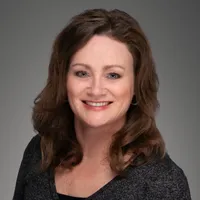
Jessica Mitory
SVP, Total Rewards and Team Member Experience, Advance Auto Parts
HR as a Profit Center: Building High-Performance Teams for Shareholder Gain
Episode 196 · May 14, 2025 · 17:02
HR as a Profit Center: Building High-Performance Teams for Shareholder Gain
Key moments
In Jessica's words
“From that point, I decided to pursue a career where I can make a difference in someone's day. Really making sure that I can create meaningful experiences for employees while also creating value for the business.”
“Essentially, change is just as much about communication as it is about process and implementation.”
“Overall, it took us about a year to facilitate the change and lead the change based on all the feedback. But to make it successful, it was really necessary to solve all the problems together.”
Transcript
Read the transcript2,809 words
HostWelcome to the Built by People podcast, where we share the stories and insights of the world's top HR leaders. Join us as we dive deep into the minds of HR executives, uncovering their strategies, challenges, and triumphs in shaping today's workforce. I'm excited to welcome Jessica to the Built by People podcast. Jessica, thank you so much for joining us. And as a starting question, I always have to ask if you could share a little bit more about your career journey.
GuestYeah, absolutely. First and foremost, thank you so much for having me. I'm so grateful to be here today. So I actually started my career journey pretty early on. I grew up in a blue-collar family where most of my family members worked in manufacturing or construction, so mostly blue collar. I spent many days sitting around the kitchen table listening to stories about their day, whether that was a good day or a not so great day, and truly understanding the impact that an organization can have on an individual person's day and ultimately their family sitting around the kitchen table. From that point, I decided to pursue a career where I can make a difference in someone's day. Really making sure that I can create meaningful experiences for employees while also creating value for the business. I started my career in consulting, getting to know and understand various industries, different types of business models. It was always very curious and fascinating to me. And when I started my career, I didn't know what industry I wanted to go in yet, so I thought this would be a good way to learn and understand. I also focused on compensation, when I first started my consulting journey. I did this for two reasons. One, because I knew as an HR leader to truly have an influential seat at the table, you need to understand the business. Consulting and specifically compensation consulting gave me an avenue to do that as I was assessing different financial metrics and the levers that you can pull to really not only influence expense, but also what was driving the business and ultimately translating that into results. The second reason was obviously understanding how to impact the P&L, and there's no better way to do that than through compensation. It's often the most significant expense on the P&L for employers. So being able to understand how to influence that was really critical early in my career. After a few years, I decided to step out of my comfort zone and accept an offer to join PepsiCo as a member of their executive compensation department. Within that department, I worked on a lot of things, primarily supporting board materials, working on executive compensation and administration, and also consultation. There was one event that happened while I was there, which was when the company decided to merge one of its largest bottlers into the business. From the seat I was sitting in, I was really excited about this opportunity to learn and grow my skillset. So, I immediately raised my hand to support the salary structure design and incentive designs that we would use ultimately as we merged businesses. After the integration and getting to learn lots of the different business leaders on that bottler side, I was asked to actually move over to that part of the business as an HR business partner. And that really started my journey over the next 7 years supporting business leaders and helping them grow their teams. And ultimately lining their teams up and talent strategies to deliver results for the company. My last rotation at PepsiCo was once again stepping outside of my comfort zone, but this also included me stepping outside of the HR department. So I joined as a member of the transformation office. I pulled from my prior experiences, primarily from compensation and also as an HR business partner and being that consultant to the business. To really develop various labor models, develop recommendations on how to reduce frontline turnover, and ultimately make a recommendation on a new operating model that would be rolled out nationally for the business. It was definitely a challenging but impactful experience to be part of a team where my role was really twofold. One was to maintain annual results and performance, But two was to also create and drive change to set us up for long-term growth for the future, essentially to perform while we were also transforming. During this time, I learned that you have to quickly assess when, where, and how things were not working, and you have to be able to pivot and to be agile when you are not seeing the results that you were expecting, or more importantly, when you are also seeing declining results. That either being on the team member experience side or ultimately on the business side. After this rotation and in 2019, I joined Advance Auto Parts where I am today. I was ready to learn a new industry. Retail is definitely very different than consumer products, and I was really excited to join and be a leader within an evolving HR department. Since my time here, I've had various roles. I've been here for about 6 years now. And in those roles, I've been an HR business partner to our corporate functions. I've also had the opportunity to establish an organizational development department during COVID And now I lead total rewards and team member experience, which comprises of compensation, benefits, and HR systems and talent, essentially thinking of integrating that team member experience end to end.
HostThanks for that great introduction, Jessica. Can you tell us about a specific transformation initiative at Advance Auto Parts where HR played a pivotal role in leading change? Walk us through how you approached it and what made it successful.
GuestYeah, absolutely. So Advance is on a transformation journey. We have a lot of change that we are leading right now across the business. And in HR, we also have to lead change and initiatives that helps the support and drive that transformation journey. So, the specific example that I will give you is what we did last year, where we actually decided to redesign our bonus plans to realign our focus to that transformation strategy, while at the same time, transition to a new bonus tool. With all of that change, we had two goals in mind to do that. One was Frankly, to create plans that were simple to understand, simple and transparent for our team members to be able to understand how their bonus was being calculated. And two was to drive a singular focus on profitable growth. This was a significant change management effort led by the HR team, but certainly in lockstep with our leadership team. And overall, it was a really hard change. Anytime you're focused on changing compensation, it's very challenging to make sure that you're bringing others along at all levels in the organization along the way. And we did that in two ways. The first way is making sure that we were aligned with the senior leadership team. It's really critical as you're leading change across an organization that your senior leaders are brought along in the journey. One, to make sure that you're actually driving the value that aligns with the strategy that they're creating. But two is to also make sure that you have quick paths for decision-making because you probably will need to pivot. And when you do, it's important that they understand where you are in that journey. The second that we really focus on is our team members. You have to be able to explain the rationale, so the why, and what's the impact that it has to them specifically with any change that you're making. Essentially, change is just as much about communication as it is about process and implementation. And we did a lot of communication around this change in the months leading to the change, during the change, and certainly after the change. In a lot of ways, we're still doing communication on this journey, and it's been over a year at this point. Our communication has really been focused on why are we doing this? So again, that why is really important. 2, what is changing? 3, what does it mean for you? So what does it mean for me? And then 4, how will we know when we are successful? So putting core metrics in place so you know when something is working or not working or when you know you need to pivot. During this change, we also created lots of spaces for listening. We put our frontline team member first here at Advance and making sure that you create those spaces so you're listening to your team member, what they don't understand, where you need to provide better education, what are some ways the tool could work better for them, and what are some ideas? We get a lot of our best ideas from our frontline. And so incorporating that in to work as one team is really critical. Overall, it took us about a year to facilitate the change and lead the change based on all the feedback. But to make it successful, it was really necessary to solve all the problems together. Listening to the needs of our team members, listening to their concerns, their feedback, but also solving problems as a cross-functional team when those needs were escalated to the center. And ultimately, I really do believe if you're doing what's right for the business, doing what's right for the team members, and being agile enough to pivot, you can lead through most changes and challenges that you're facing.
HostJessica, tell me about a time when you had to create pillars of stability during a major organizational change. How did you identify what those pillars needed to be and how did you implement that?
GuestYeah, so retail right now is a pretty highly volatile industry, and as I mentioned, Advance is going through its own transformation. All of that can be very messy, and overall it can make the organization feel very stressed. So I do believe it's really important in the role for HR to anchor the organization into these key pillars that create stability. Stability that they can go to, to stay engaged with the organization while also maintaining performance and focus on any goals that the organization sets forth. For Advance, the way that we anchor these pillars of stability during this transformation is we focus on the things that haven't changed for us since our company was founded in 1932. And that's primarily because these pillars make us who we are. And they're really simple. The first one is we serve our customers. We pride ourselves in being a neighborhood store that brings quality parts when you need them with quality service to get you back on the road. We listen to our customers and find a way to say yes when they ask us for help. The second is we inspire the team. We truly care about our customers, and we also truly care about our team members. When you're going through transformation, it's critical to invest in your team members. So when you do see those moments of stress in team members, you're reaching out to demonstrate that care and really looking out for each other when times are hard or difficult. So really making sure that you're focusing on that experience, not only in store, but also how that translates for the team members all the way through the organization and providing that support from your corporate offices all the way down to the stores, and everyone feels like they're part of one transformation effort or one initiative. For Advance last year, the way that we did this is that we actually invested in our team members by investing in frontline wages and also our benefit programs. This year, we're really focused on development and skills. We absolutely have development programs, but really revisiting those because as you're going through transformation, Some of those things may change. And so how do you make sure that your team members have the capabilities and the confidence to tap into those skills to lead through that transformation in a seamless way? The third pillar that we focus on is growing the business. When you are leading a transformation, you need to absolutely prioritize, identify, and communicate your measures of success. We make sure that we have clear, consistent messaging and regular rhythms of the business that feel organic to our organization to communicate these KPIs, communicate where people need to be focused, and also make sure they know where we are so they know what we need to do to pivot to get to those measures of success. During those forums of communication, we also again provide spaces for our team members to provide feedback. This enables us to know where there are roadblocks,. And as a leadership team, we connect pretty regularly to seek to understand, hey, we're hearing this in terms of where this might be an issue. How do we work together to solve that for our organization? This helps us to understand performance, but then also plan next steps as a team. I do believe that the role of the HR organization with these three pillars, specifically for us to anchor into who you are and anchor the organization into those key pillars of stability when you're going through the change, but to also make sure that you're weaving those into everything that you're doing as you're leading that transformation.
HostJessica, tell me about how you've managed to successfully wear multiple hats in HR while keeping shareholders, customers, and employees all in mind. Can you share a specific example where balancing these perspectives led to a better outcome?
GuestYeah, absolutely. Ultimately, our role in HR is to create values for shareholders by building a high-performance organization. So essentially create values— value for your employees, to serve the customer, and ultimately create value for shareholders. The way that we do this at Advance is through the inverted pyramid. We are a servant leader organization, and we put our customer first, and we put those who serve the customer, so our frontline, first. They are the ones who are serving our customers, and they're the ones who are providing that level of service to really help build and grow our business. So to create value for those team members, we are always evaluating our compensation, benefit, and development programs. As I mentioned last year, we invested in our frontline wages. This investment was really made to help us reduce frontline turnover. As a result of this investment, I'm happy to report that we reduced our turnover by 11 basis points in 10 months. Our team members felt valued and appreciated for being recognized for the work that they were doing while they were also continuing to serve the customer. By having a more stable workforce and having lower turnover, you're going to have less gaps in that service to the customer. You also have more tenured employees. Which also improves the quality of the service to those customers. And as service to the customer improves, financial performance improves, and therefore you're creating shareholder value. So when we made this investment, we are really thinking about that from all three angles and really thinking about it not only in the short term, but the long term for our business.
HostJessica, what parting advice would you like to share with our community?
GuestAbsolutely. So I, as I mentioned, I've had a lot of pivots in my career. Both within the HR department, different industries, as well as really stepping outside of the HR department. And it has taught me a lot throughout my career. My advice would be to be fearless in the pursuit of continuous learning. My career philosophy overall is to collect as many diverse experiences as possible. The harder they are and the scarier they are, the better. You can leverage those diverse experiences to really build connections to solve complex problems. There's no doubt that the experiences I've had, I use every day here on this transformation journey at Advance. It also helps you to see things from multiple perspectives, to be able to build connection across the organization. And certainly when you do hard things, you see what you're capable of and it builds your confidence that you can face harder things in the future.
HostJessica, thank you so much for joining us on the Built by People podcast. It was a pleasure to have you involved.
GuestSame to you. Thank you so much again for having me.
More conversations like this