Episode 75 · February 3, 2025 · 11:08
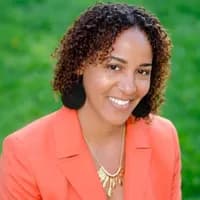
Erin Ogunsanya
Benefits and Wellness Manager, Matterport
Why Your HR Strategy Needs Radical Adaptability for Global Well-being
Episode 75 · February 3, 2025 · 11:08
Why Your HR Strategy Needs Radical Adaptability for Global Well-being
Key moments
In Erin's words
“I've had a pretty unconventional background and journey into HR and hoping that sharing that encourages someone else to leap into HR if they were thinking about it.”
“we created Wellness at Matterport, which encourages our community to actively take care of their health in a holistic way, both physically, mentally, and financially. So I wanted to create a culture of wellbeing by offering programs that put employees' health in the forefront.”
“our utilization of benefits actually went way, way up, which I actually see as a positive. I know it's not always a positive for a lot of different companies, but our employees were able to fit in gym sessions, afternoon walks, yoga classes between meetings, you know, walking meetings, taking care of their health in ways they just weren't able to in the past.”
Transcript
Read the transcript1,972 words
HostWelcome to the Built by People podcast, where we share the stories and insights of the world's top HR leaders. Join us as we dive deep into the minds of HR executives, uncovering their strategies, challenges, and triumphs in shaping today's workforce. I'm excited to welcome Aaron to the Built By People podcast. Aaron, thank you so much for joining us. And as a starting question, I always love to ask if you could share a little bit more about your career journey.
GuestThank you so much, Dave. Honored to be joining you. I've had a pretty unconventional background and journey into HR and hoping that sharing that encourages someone else to leap into HR if they were thinking about it. I started my career, I'm going to start way back from high school doing hair. And one of the pillars that I actually think led me to feel connected and understand people. While I was working as a hairstylist, I decided to go back to school full-time and pursue my associate's. And because I'm kind of nutty, uh, I also decided to pick up a weekend gig during that time and doing social work. I think at the time that's really what I thought I wanted to do. As I finished my associate's and worked at the group home for like 3 years, I decided this is not sustainable for me in any single way possible. I had a friend who worked in college admissions and she suggested HR and I was uncertain, but decided it paid a lot more than social work. I decided to pursue a degree in organizational communications. With hopes of finding out if HR was a good fit for me. After graduating, I realized getting into HR without an internship is like getting into Illuminati. I did not have good luck at that. So unfortunately, I was unable to take that unpaid internship and I chose to work in office management. And this is where I learned that office management and HR work closely with one another. And I expressed to each person that I worked with that I had an interest in HR and each person gave me HR tasks to build my skills, which I'm super grateful for still today. And I actually am still in contact with a lot of them. And I was able to work in a few tech companies before taking a year off to be with my son after he was born. And then I landed a position at Matterport and at Matterport, our Chief People Officer and my manager truly saw a potential and nurtured my love for HR. And I started as a generalist, and a year and a half into that role, we hired a head of total rewards, which was Wade Galdi, who you actually had on your podcast before, and we discussed benefits and the future of wellness, and we really just kind of vibed. It was really kismet. We created Wellness at Matterport, which encourages our community to actively take care of their health in a holistic way, both physically, mentally, and financially. So I wanted to create a culture of wellbeing by offering programs that put employees' health in the forefront. And that is how I came to lead global benefits and wellness at Matterport for 4 years. We're now— I've been there when it was like before IPO, going IPO, and now we're about to be acquired. So it's been a wild 6 years for me at this point.
HostErin, how has the shift to a hybrid work environment influenced your organization's approach to employee wellness? And what specific needs have emerged as a result?
GuestYeah, so before COVID my company was actually onsite, like 5 days a week company. And we, when COVID hit, we had to create a completely different culture for employees that was now remote. And at first it was challenging and there was a lot of oversharing. So people felt like they had to suddenly had to, you know, connect with each other, tell everybody what we're doing, what's going on. And as times shifted, And when we went on, we adapted to being fully remote. People seemed to be a lot happier. And studies have proven that working remotely increases productivity, reduces stress levels, and improves work-life balance for employees. Employees now are given the ability to manage their schedules, to not commute, and they take care of their health in ways they never were previously. Employees didn't have to wait until the weekend to take half days or to see their dentist, their physician, or anybody else. They were able to now fit that in their day. And our utilization of benefits actually went way, way up, which I actually see as a positive. I know it's not always a positive for a lot of different companies, but our employees were able to fit in gym sessions, afternoon walks, yoga classes between meetings, you know, walking meetings, taking care of their health in ways they just weren't able to in the past. And notably, remote work has been amazing for people that are neurodivergent, for parents, and we've often seen in our employee resource groups how working remotely has changed our lives for the better. It's also allowed us to find talent everywhere and not just pigeonholed in certain areas where we were before. But we do also believe in the power of connectivity. So we do have kind of a hybrid work for us. We got rid of our centralized offices, but we actually rely on WeWorks now. So we've learned that people still want that human connection, right? They want to be able to have that collaboration in person. And we have the ability for those people that want to do that to do so by going into WeWork and connecting with one another. And it really just allows people to have the autonomy to manage their schedules in ways that fit into their needs. And it's really positive for our teams. And I know me personally, I'm a parent, so I can be present for everything in my son's life now, which is amazing. And I'm super grateful for that flexibility.
HostErin, what wellness programs or resources have you found to be particularly effective in supporting employees working both remotely and in the office?
GuestYeah, so my company knows I'm super big on authenticity and I only put things in place that make sense to my community. So I pull lots of data and then I pull our community a lot too to see what works best for them. Every year it's a different need and I think that's the most successful thing that anybody can do when putting wellness programs in place, uh, be adaptable. Not one year is the same. Each year we gain a new demographic and we need to adapt our programs to what our community sees as most influential. Influential. For example, during the pandemic, we saw employees experience burnout, and they were facing a lot of challenges day to day, and most of the day was spent on screens consuming information, whether it was good or bad. I created the Wellness Stability Initiative. I created guests to discuss burnout and had webinars for that. I put together resources that help employees take breaks, including mindful apps. We did no meeting Fridays, and we really adjusted to what the community was at, at that point. But then a couple years later, as the pandemic was starting to phase out, our needs changed. Our community was looking forward to more ways to connect. We did meetups at WeWorks, we put gym benefits in place, we really gave our community the opportunity to connect on their terms. And I think the pendulum is always swinging, and it's important to sway from year to year for what your community actually wants and needs in remote or hybrid working.
HostErin, how do you ensure that wellness initiatives are accessible and relevant to all employees regardless of where they work?
GuestYeah, so we are actually a global company, and with that comes some obstacles, but not everything in the US will be offered in UK, Singapore, Canada, et cetera. And I generally treat each region as a separate entity. So my US community will have different needs and wants than my UK team. We have a global stipend that works for everyone, and they can utilize that in the company whatever way they'd like to. And then we have wellness apps that fit each region and programs that are sustainable for their region. We use Sequoia Global for our broker, so we are able to utilize benefits that make sense to each region. For example, mental health is more of a topic for UK and US and not so much in Singapore. There isn't something top of mind for them, so we tailor benefits to suit what is most important for each community.
HostErin, in a hybrid environment, how do you keep employees engaged and connected to the organizational culture while also supporting their mental and physical wellbeing?
GuestYeah, so that's how we, with wellness at Matterport, we did have this foundation of those three pillars, right? That physical, mental, and financial wellness. And we really wanted to zone in on those, so I created an intranet that highlights all the programs, as well as a dedicated Slack channel. But I also try to have quarterly webinars to discuss things that are top of mind for employees. I also try to engage and interact with those employees in the resource groups, reminding them of the programs that we have in place and kind of where they can have that support if needed. And I really wanted to make sure that we are creating a culture where taking care of your health is the forefront.
HostErin, what metrics or feedback mechanisms do you use to assess the effectiveness of your wellness programs in a hybrid work setting?
GuestYeah, so this is a great question because I love metrics and stats in HR. It truly drives me, and I think it's how we can have those decisions made and pushed with leadership. Any app or program we have has data and metrics accompanying it. As I said earlier, I also like to pull my community. We do regular cultural surveys to check the pulse of our community, and I have wellness questions in those, and I also do my own separate wellness surveys to kind of gauge where everybody's at. But using that data, I can generally make a pretty compelling case if needed by year-end that these things are important or not. HR, I think, is often thought of being primarily people-focused, but applying data and metrics truly does help get a lot of initiatives moving forward. It's wonderful that there's so many tech-forward companies that prioritize well-being today, and they build those metrics in their applications, and it makes my job just a little tiny bit easier.
HostErin, what parting advice would you like to share with our audience?
GuestI think that the biggest thing is that I hope to inspire people that just because you aren't able to get your foot in the door right away on certain things, you do really need to advocate for yourself and say, this is what I want. You may not have that job right away, but if there's any way that you can kind of find an avenue to get those skills under your belt, Eventually you can build towards the career that you want to have.
HostErin, thank you so much for joining us on the Built My Podcast. It was a pleasure to have you involved.
GuestYou as well. Thank you.
More conversations like this