Episode 311 · August 25, 2025 · 19:50
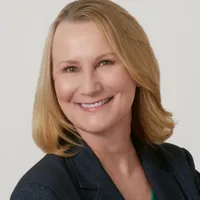
Donna Flynn
Chief People Officer, Steelcase
The Untapped HR Advantage: Designing Environments That Earn the Commute
Episode 311 · August 25, 2025 · 19:50
The Untapped HR Advantage: Designing Environments That Earn the Commute
Key moments
In Donna's words
“My journey has been a crooked one.”
“We design work experiences for people.”
“Instead of the usual suspects, you need to listen to the unusual suspects.”
Transcript
Read the transcript3,066 words
HostWelcome to the Built by People podcast, where we share the stories and insights of the world's top HR leaders. Join us as we dive deep into the minds of HR executives, uncovering their strategies, challenges, and triumphs in shaping today's workforce. Donna, thank you so much for joining us today. And as a starting question, I always like to ask if you could share a little bit more about your career journey.
GuestYeah, my journey has been a crooked one. I actually got a PhD in anthropology directly out of my undergraduate. Always thought I would be a professor, uh, when I started, cuz I started that graduate work pretty young in my early 20s. And by the time I was done with it, I knew I didn't wanna be a professor and I didn't know what I would want to do. But that was a seminal moment for me because it taught me how to make a pivot in your career and how to take your skills and apply them in a completely different context. And I have done that over and over on my career journey. So that was the first time. And I pivoted from academia to doing international development research and worked in Africa and the Middle East for a gender and development think tank in Washington, DC. And then I pivoted again to technology. I moved to San Francisco and discovered user experience research. So again, the same skills, understanding people, doing research and analysis. Applying them to design of technology. So I did that in San Francisco and then went up to Microsoft and did that at Microsoft for 9 years. I worked across a number of different product solutions at Microsoft. And then I felt like I had had enough of technology. And so I did another pivot and that's when I found Steelcase, where I am today. Steelcase designs and builds furniture and architectural elements for large corporations, small businesses, hospitals, universities, and K-12s. And the way we think about it, you may read in the, in the paper or in investor articles, you'll see one of the largest office furniture manufacturers. But the way we think about it at Steelcase is we design work experiences for people. And so I went to Steelcase and led the team. That does research on the future of work, worker, and workplace. And I led that team for 9 years at Steelcase. And I loved switching from software to hardware and manufacturing and actually building real things for people in the physical world. And so after 9 years, of course, doing anything for 9 years, I think you're looking for a change. And so I loved Steelcase and I didn't wanna leave. But I was looking for a change and the VP of Global Talent role opened up and I thought, I have never had a job in HR ever. And yet I have been, I have been circling around this topic of people at work for 25 years in my career. So I competed for this role and, and I got it. And so I think the lens that I bring to this role is very unique. But I am all about people and systems and how to design the right systems for people. So that's a little bit about my journey and how I got here.
HostDonna, can you share a specific example from your time at Steelcase where reimagining the modern workspace directly impacted employee retention or engagement? Can you walk us through the problem, the actions your team took, and also the results?
GuestYeah. Yeah. And I'll actually, I will tell you the story of my own team. When I started this job 5 years ago, it was March of 2020. So we all know what happened March of 2020. It was the, uh, the outbreak of the pandemic of COVID But it was a week before we had all been sent home. And so I walked into my team space and in day 1 of my job leading the global talent team at Steelcase. Case, so HR and learning and development. I walked into their team space and I felt like I was walking back 20 years. It was all gray cubicles. There were very few collaborative spaces. People were crowded together. Their, their team space, the HR space was actually behind locked doors, so no employees could access it. And I thought, oh my goodness. And I called the head of our facilities and I said, Dan, we're gonna, we're gonna have to work together on this project because we need to bring my team into the modern world with our workspace. So we had two big goals for redesigning that space. One was finding strength in the diversity of our perspectives. For all of you leading talent teams, you know, you have highly process-based work like payroll, and you have highly creative work like learning and development. You have highly confidential work like compensation, and you have a lot of public work. That you need to do, like designing employee experiences with the company. And so at that time, none of these teams were really sitting together. There wasn't enough space for everyone. They were behind locked doors. And so I really wanted to bring everyone together and find strength in our diversity. I also wanted to reposition the HR team as a trusted partner to the company. They were not a trusted partner. There was not a lot of trust. We were behind locked doors. So, so we had key design principles in that project. That project took a couple of years. We did a lot of deep research. Our key principles were we wanted to move the team from behind locked doors to be in the flow of the business. And we also wanted to create a welcoming space, not only for all of our teams, but for all of the employees to come and visit. So we did a lot of research with all my teams. We understood the needs. We had people on my team who had never sat together actually working together to design a shared space that they could live in together. We also engaged a human-centered design process called inclusive design. Inclusive design is all about hearing the voices of the excluded, the ones who were typically excluded. One of my colleagues often says, instead of the usual suspects, You need to listen to the unusual suspects. And so we worked with the community and we brought in people with disabilities. We brought in people with neurodivergent conditions. We brought in a whole range of diverse community members, as well as other employees from across Steelcase to join my team members and to run workshops, give feedback on the space, to walk through through the space and give feedback. And so, so this is at Steelcase, one of our human-centered design processes that, that we could, we, we engage in regularly. And so through all of this, we created a beautiful space. It has rich materials and colors. It has a lot of natural light. It has a lot of biophilia. Instead of being behind locked doors, it's We're situated on a main pathway between some spaces and the cafeteria and between two buildings. So people crossing between buildings walk through our space all the time. We have places for anyone to touch down. We have beautiful café areas. And we managed to design to the private needs of compensation, the public needs of learning and development, and bring everyone together. So it has really been a great journey, and we've seen outcomes of increased joy of the teams. I can't tell you how many people called me up and said, I'm so happy to be here, and increased collaboration, increased engagement, and increased trust with the rest of the company, too.
HostDada, can you tell us about a time when that human-centered design principle at Steelcase helped address a unique employee need or challenge? What was the issue? How did you approach it? And what were the key outcomes and lessons learned?
GuestYeah, human-centered design is in our DNA. I mean, we, we all practice it. So there's not a single— I mean, I could give you lots of different examples, but we practice it in the way we build products. And we have practiced it for more than 25 years. One little-known fact is that Steelcase used to be a majority shareholder of the design consultancy IDEO. IDEO is one of the premier design consultancies in the world. And in their early startup days, uh, our CEO invested in them financially, and that created a lot of cross-pollination. And so design and design thinking practices got really embedded in our whole culture. So we do it in our work, in how we create products. We do it in how we design spaces. For me as Chief People Officer, I have been employing it as well to think about employee experiences we wanna design. We've recently done a big effort to look at the employee experiences of our hourly workers in our factories and went deep in understanding what is it they want to improve in their day-to-day life? How can we make their day-to-day life more enjoyable? What are the needs we can meet? And so we have really focused on that and are implementing a number of changes in our factories. We've also implemented it to build our, a stronger culture inside Steelcase. We have key principles around fostering a culture of inclusion, and we have used it to redesign our employee resource groups inside Steelcase. And when I first joined this, this team, we had two employee resource groups. One was focused on gender and one was the Pride group, and they had been around for quite a while. But they weren't thriving. They weren't growing. They didn't have resources. And so we did a deep dive into how can we support our employees to really create a sense of belonging and a sense of community through our employee resource groups. And we used human-centered design to do that. And we now have, uh, 13 thriving global groups and just incredible engagement scores. Scores and sense of belonging across these groups globally across the world. So that's another example of where we've implemented human-centered design within our talent team.
HostDonna, Steelcase invests heavily in research related to the future of work. Can you describe a project where those insights led to a significant change in your workplace strategy?
GuestYeah, I think, so we have been doing research on the future of work for 20-some years. I led that team for 9 years before taking this role. Long before COVID we were talking about flexibility at work. We were talking about the importance of having a mix of spaces to do your work. So private spaces for calls, public, you know, more shared spaces and collaborative spaces for shoulder-to-shoulder work. What we have seen with the pandemic is that the whole world has caught up to understanding the power of space to really support the work that you need to do at this point, on this day, at this time. We all went home, we all learned how to do distributed work and hybrid work, and yet we also learned, you know, there are some affordances that different spaces provide you that your home office not— might not provide you. So having, uh, what we call a palette of place, many different places to choose from to do your work, having complete flexibility Having a hybrid work, uh, schedule where you can be with people when you need to be with people and not be with people when you don't need to. All of this was part of our future of work research well before COVID Um, another thing that we, uh, did research on 14 years ago when I first joined Steelcase was on the importance of wellbeing at work.. And at that time, 14 years ago, no one was talking about wellbeing. No one was talking about mental health. No one was talking about emotions at work. And the CEO really questioned the usefulness of that research. And I said, don't worry, we are, we are going to see big changes in the workplace and wellbeing at work is going to be a big deal. And now it is. And so 7 years ago, we built a wellbeing hub inside our own offices in our headquarters. And that Wellbeing Hub is staffed with a counselor, a Wellbeing Navigator who is trained to match employees with the right resources and support they need, as well as a nurse who comes in regularly from a local health clinic. So the Wellbeing Hub also sponsors fitness things and all kinds of activities and really provides lots of programming and support for our employees. So that's, that's one example of something that we implemented in our own campus.
HostDonna, reflecting on your diverse background, including your experience at Microsoft and acquiring a PhD in anthropology, can you give us a story where your unique perspective shaped a major HR cultural initiative and what you would do differently if you had to do it again?
GuestYeah. Yeah, that's great. That's a great question. So I told you a little bit about how I got here, the journey. And this, I think, about a little bit about how I create unique value as an anthropologist in this job. People often ask, me, don't you ever regret leaving anthropology? And I say, I do anthropology every day, every day in this job. I do anthropology. I apply my core skills as an anthropologist, as an executive leader, as a leader of people, and previously as a leader of a team doing research on the future of work. So there's 3 core skills that I consider I, as anthropology, that I do every day in this job. One is deep listening and observation. Executive leaders have to be deep listeners. Go to any leadership development course or workshop or reading, and they will talk about deep listening and observation to sense and understand everything around you. What is happening in your organization? Two is then moving from listening to system analysis. Organizations are social systems. Anthropology is the study of social systems, not just politics, not just economics, not just ritual, everything altogether. And so my training to quickly see a system and how different parts of that system are connected and where there's might be system pieces that are broken or where there might be opportunities for improvement, that is anthropology. The third part is what I see as opportunities for change. So in that system, where do you Where do you see that innovation? Where do you see the opportunity for change? That combined with my design experience gives me the skills to actually drive effective systemic change across a massive complex system. So, a story. I started this job in 2020. George Floyd was murdered in the summer of 2020. There was lots of conversation about organizations doing more, uh, to support, uh, cultures of inclusion and addressing issues where around diversity. And so we had at Steelcase, we had no programs around this when I took on this job. And, and there was much pressure, uh, to do something fast. And I sat down with my CEO and he was very supportive. And we decided we needed to do that system analysis before we did anything. We needed to understand the current state. And so we spent several months learning, doing the deep listening, talking to employees, doing the data analysis, really identifying where do we think those opportunities are for us to drive change. And through that, we identified key areas of change to drive a stronger culture of inclusion. And we set goals against those changes, uh, prioritize programs to implement, and year over year for 5 years now, we have seen measurable progress for us to really build a stronger culture of inclusion.
HostThen what parting advice would you like to share with our community?
GuestI would love to say that as CHROs and people leaders, you are all curators of culture. And I think that too often as curators of culture, um, the lever of leveraging your office space and your workspace as a lever for culture is overlooked. I'm an anthropologist. The whole branch of archaeology is about material culture. That is all about physical environments that people lived in. The places we live in shape our behavior. So at Steelcase, we like to say space shapes behavior, and behavior over time is culture. And people leaders now, since COVID have a huge opportunity to be at the strategic table with CEOs and real estate leaders to really define what their workspaces should look like. Why do you want people in the office? How can you design the office to get to your business outcomes? What are the values and behaviors you want to design? Do you want people to be in the office a couple days a week? How are you going to achieve that? How are you going to, as we say at Steelcase, earn the commute of your employees. And in order to earn the commute of your employees, you need to offer a compelling reason for them to come to that space. And that compelling reason is culture. Our research shows over and over, the reason people are gonna come into the office is to connect with other people and to have a sense of community and to connect to the company purpose. So that is all about culture. And so I have seen over the last 5 years, CHROs learn a lot more about the power of the workspace to help them with their culture goals, to help them with their employee engagement roles, and have a strategic seat at the table for these decisions. So it's a great opportunity to do that. And I would encourage everyone to be thinking about that if you're not already.
HostDonna, thank you so much for joining us today on the Built by People podcast. It was a pleasure to have you involved.
GuestGreat. Thank you so much.
More conversations like this