Episode 310 · August 25, 2025 · 8:58
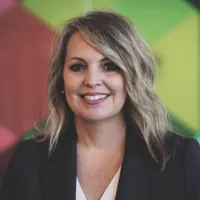
Laura Harmon
Chief People Officer, One Workplace
Burnout is not inevitable: Make wellness your core people strategy.
Episode 310 · August 25, 2025 · 8:58
Burnout is not inevitable: Make wellness your core people strategy.
Key moments
In Laura's words
“I noticed that lots of burnout, lots of people just going along to get along, folks not, and especially during the pandemic, not utilizing their PTO because Where am I going? Everything's shut down. And then if I am going somewhere, I'm probably still working.”
“I think the biggest challenge, not just for my team, but what we learned in the organization is change is hard, especially when folks are used to being scrappy. They're used to rolling up their sleeves. They're used to just like grind culture and hustle culture.”
“I think the biggest outcome has been watching people shift from hustle and scrappiness to wellness at the center of what they do and really taking care of not just themselves, but each other.”
Transcript
Read the transcript1,622 words
HostWelcome to the Built by People podcast, where we share the stories and insights of the world's top HR leaders. Join us as we dive deep into the minds of HR executives, uncovering their strategies, challenges, and triumphs in shaping today's workforce. I'm excited to welcome Laura to the Built by People podcast. Laura, thank you so much for joining us today. And as a starting question, I always love to ask if you could share a little bit more about your career journey.
GuestSure. First of all, thank you for having me. I appreciate you sharing the space. I actually did not start out as an HR practitioner. I wanted to be an orthodontist, which is a far cry. But once I decided I didn't wanna do that, I dabbled in a little bit of this and a little bit of that. I did event planning and I worked in marketing and I worked in IT, and I did a short stint in an IT team, and someone came and plucked me because I asked a lot of questions and said, you might be really good in HR and you might like it. And so I thought I was gonna be in HR for like, just to figure out what's next. And here I am almost 30 years later, still trying to figure out what's next.
HostLaura, can you share a specific time when you recognized that workplace wellness was lacking in your organization, what challenges that created, and why it was critical to address?
GuestSure. So I think, you know, I've seen the need in other organizations that I've been in, but what I noticed here, especially I started during the pandemic, so we were all remote when I came on board, and especially as an HR person, since the industry has changed so much over the past, I'd say 5 to 10 years, and really in these last 5 years, it has just been just utter chaos in our world. And it's nothing that those of us that have been around the block for a while have signed up for. I noticed that lots of burnout, lots of people just going along to get along, folks not, and especially during the pandemic, not utilizing their PTO because Where am I going? Everything's shut down. And then if I am going somewhere, I'm probably still working. And especially in a global world where people are taking laptops on the road and working from different locations. And so for me, it really was kind of like, I know what burnout feels like to me. I know what it feels like in my body. I know what it feels like mentally, and I can feel and sense the signs that they're coming. And so for me, as I onboarded here at One Workplace, I noticed a lot of those same signs in other people. And we are, we design spaces to help put people first and to help build culture cultures and collaborated. And so when I ultimately joined this team, I noticed that we weren't, we were, what is it that the shoe cobbler's kids have no shoes? Like, it was very much like we were there to support and be there for other parts of the organization, but we needed some work on ourselves to help overcome those challenges and dealing with mental health issues and isolation and loneliness and just working around the clock and being a support and sounding board for other people.
HostLaura, can you walk us through the steps that you've taken to improve wellness, both for the organization and HR professionals within it? What actions have you implemented and what obstacles did you encounter along the way?
GuestLet's say the, I guess the, the path to get here to a place where I would say we're in a better place. I wouldn't say we're in a great place. I think it's all iterative and As we change and grow as people, we need something different and we learn to find the words for those things. I think for us, it was really about calling a timeout and listening first and foremost. I think the next piece was really about unpacking what was essential, what was nice to have, and really to kind of say, what work are we going to stop doing? What's no longer meaningful? And then just clarify what new expectations look like and how do we live into that now? That being said, there was like workshopping and they come from a design thinking background. So really putting the client at the center, and in this case it was the HR team. And so what do we need? Because what we need as employees is the same thing that other employees need. And so we started with that approach and came to, there's a lot of tools that we introduced. We had some mental health resources. My entire team is our trained mental health first aid responders now. So my whole team is our, our now first aid mental health responders. We've incorporated a, a lot of wellness activities into our day, physical fitness, taking mental health days, utilizing our PTO, et cetera. I think the biggest challenge, not just for my team, but what we learned in the organization is change is hard, especially when folks are used to being scrappy. They're used to rolling up their sleeves. They're used to just like grind culture and hustle culture. And so I think what we learned in the process, what I learned is you have to lead with taking people through the change from the beginning and giving them permission to say it's okay to rest, it's okay to take a break, it's okay to stop doing things because the ultimate goal is that you are well, you are comfortable, you are better, you are highly— you are functioning, you feel productive. So I think that was the biggest learning and obstacle at the same time.
HostReflecting on that experience, What were the most important outcomes, key lessons learned, and what would you do differently if faced with a similar situation again?
GuestI think the biggest outcome has been like a shift in energy. We were in survival mode previously. It was, and a lot of people were in survival mode in a vacuum. And I think now it's part, at least on our team, it's part of the DNA of our team. We talk openly about how we're doing, how we're feeling. We encourage each other to take time off. We ask each other, what did you do on your time off? And we also are very careful to make sure we're setting boundaries and giving each other permission to live into those boundaries. If I'm off, I'm off, whether it's an hour or a day or a week or 3 weeks, I'm offline. And so I think the biggest outcome has been watching people shift from hustle and scrappiness to wellness at the center of what they do and really taking care of not just themselves, but each other.
HostCan you describe a moment when immersing yourself in the business side beyond traditional HR has made a tangible difference? And how did you approach bridging that gap?
GuestI think one of the things that I have found most helpful is literally sitting in the business. So, we have warehouse operations where we have folks who install furniture and put things together. And so, I spend time when I travel, and even here in our Santa Clara office, with those teams, watching them do what they do, asking questions, learning from our sales leaders. What do they, what are our clients looking for when they're speaking with us? Understanding what does marketing look like? So I think for me, it's been really just leading with curiosity, asking a lot of questions. Some things I still don't understand, but I think just keeping yourself open to asking questions and learning from a day-to-day basis. I think it helps, but I would say, well, and I should back up. I think first and foremost is make besties with your finance people because if you don't understand how you make money, it's really difficult to support the team because where the money goes, the energy flows. And so, you have to really understand where that's coming, where it comes in and where it goes out in order to understand how to support the teams that are out there. Pounding the pavement, trying to make money for the company.
HostLaura, what parting advice would you like to share with our community?
GuestI would say, if I go back to like, um, our original topic or our first topic on wellness, I would say don't wait for exit interviews to look for burnout. I think that, you know, culture is built in these quiet moments when we're in meetings, when we're giving feedback. And so, if you don't ask the questions and look for the signs early and kind of build wellness as I would say it's just not a perk. It's just gotta be part of your people strategy. And so I think if your culture is running on burnout and like the best of intentions, it's gonna be a really hard reboot for you as an organization, as a team to navigate the future. So I would say wellness is a people strategy, not a perk or a nice to have.
HostLaura, thank you so much for joining us today on the Built by People podcast. It was a pleasure to have you involved.
GuestThank you. Thank you for having me. I appreciate it.
More conversations like this