Episode 243 · June 18, 2025 · 16:30
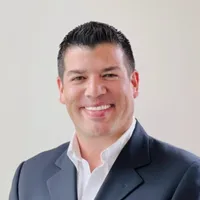
Dan Thompson
Chief Benefits Officer, Vensure Employer Services
From HR Generalist to C-Suite Strategist: Master the P&L, Drive Profit
Episode 243 · June 18, 2025 · 16:30
From HR Generalist to C-Suite Strategist: Master the P&L, Drive Profit
Key moments
In Dan's words
“get aligned with your CFO, get aligned with your CEO, get a place at the table. And that's a transformative step from somebody who's an HR generalist to them becoming an HRO or a CHRO.”
“make it known that you have ideas, fresh ones and innovations and disruptive ones, and make that company go. And I think HR people need to have the insight that they'll be recognized for those types of things, and that allows their career to grow.”
“You don't have to be a finance expert... Go into the chase, get a little bit more financial understanding of the company's financials.”
Transcript
Read the transcript2,948 words
HostI'm excited to welcome Dan to the Built By People podcast. Dan, thank you so much for joining us. And as a starting question, I always love to ask if you could share a little bit more about your career journey.
GuestYeah, Dave, thanks for— I really appreciate you having me on the Built By People podcast. Very awesome. I guess my career journey has been in the kind of— didn't come from a wealthy family at all. Dad was in construction, mom stayed home, but always had the desire to want to go out and make a dollar, right? And support myself. So starting from a young person, I knew that the first tenet was going to be education, right? So went from all the way through grad school and while doing that concurrently, I had either businesses of my own or worked for others. So I fell into the healthcare space working in a local pharmacy. While I was there, I had the desire to be a drug rep. Don't worry, legal drug rep, not illegal drug rep. And I ended up needing to have outside sales experience to be able to be a drug rep. So I fell into this company that a lot of people have heard of in HR today called Paychex. So I sold Paychex territory, knocking on doors and getting involved in selling payroll and did really good at it, but I needed my experience, right? So I have my experience and I went into pharmaceutical sales. So I sold Univast, Uniretic, Verilen, Ulev to about 400 different doctors. That business was a real big crock because you were just taught to incentivize doctors to write drugs for people, whether they needed it or not. And I didn't like that. So as a young 20-something-year-old guy, I decided to do what I presumably started off doing very well at, which was payroll, but the paychecks territory was gone. So I went to ADP and did really well there. But then I feel I found out that having always been a person who understands finance and has always learning and always constantly learning that it made more sense to do insurance and fell into the insurance business, happened to be health insurance. Sold as the number one producer for an agency every year for all 13 years that I was there. Ended up buying the agency, buying into equity, right? So that's important for anybody listening who's getting a start in a business. Sometimes when you start at zero, you've got to work for somebody else and work your way up to be able to establish that equity and that ownership and that growth. And that's what we did. And then the agency sold. So then I was still pretty young and decided I was going to start another one by myself. So I did that one 100% bootstrap. That was Thompson Risk One. And with wanting to take it to the next level, which was taking Thompson Risk Two from just being a Florida-based agency to an agency that does business everywhere. That was 3 years ago. So we formed a partnership with Venture Employer Solutions. I took multiple roles. So I'm chief benefits officer. At the time, it was about 30 companies. It's now a little over 100 companies. Represents about 55,000 employers and about 5 million employees across all those clients, right? So anywhere from what is traditionally known as PEO, payroll only. And then I'm division president of Thompson Risk, too. And we handle about 4,000 employer groups that we have brokerage for and just have about 300,000 people under major medical management. We went from Thompson RiskOne at 12 people-ish to a little under 300 now in the total org. And we're in every single state. And now we're doing some global benefits. So we're learning about getting licensed in and doing business in 4 countries with plans to do at least 10 more. So we've become a formidable competitor to a lot of national brokerages that don't even know who we are. And it all started from the very humble beginnings at zero.
HostDan, thanks for that great introduction. I want to jump in by first asking you, what are the key skills and competencies that HR professionals need to develop to successfully transition from a generalist role to a CHRO?
GuestI love that question because I have, I, my time's very thin, but what I hope that if we have some HR professionals that are listening to the Built by People podcast, which I know you have a great followership with HR, is look, be assertive, right? CFOs, and I have a lot of them, CFOs come to me all the time and say, Dan, what can I do to make HR more effective? And HR leaders today, or HR professionals that are generalists that are just starting out, don't be afraid to get your teeth into what is the P&L side. It's great to have heart, HR, I always say it's the two letters H and R and the word heart, right? Like you care a lot about your people and your processes, and sometimes we tend to own those processes a little too much, or maybe be a little bit guarded, but get aligned with your CFO, get aligned with your CEO, get a place at the table. And that's a transformative step from somebody who's an HR generalist to them becoming an HRO or a CHRO.
HostDan, can you share some common challenges HR professionals face when trying to advance to higher leadership positions and how they can overcome some of the obstacles they might face along the way?
GuestFor those that are listening, many know that when you've seen one company's HR, you've seen one company's HR, right? If you, if I were to say, what are the 3 types of organizations that I see HR? And in its, and its objective of the subject matter of HR, it's essentially the same thing. It's policy management. It's human capital management. That makes sense. Applying policies. Working through employee issues and productivity and promotions and handling people's emotional challenges and return to work and all this crazy stuff like benchmarking and salaries and wages. That's all important. But the issue is on a basic level, a lot of small to medium-sized companies can't afford to get somebody in HR. So they try to have HR tasks being shoved to other non-HR essential staff like controllers, or the CEO's trying to deal with hiring and firing and he hasn't scaled or maybe won't because he just won't do it. Then you have that medium-sized organization where they have a full-time HR person, which runs around the average about 100 employees or so is about the number where they hire a full-time HR person. The problem in those is that the C-suite is trying to get an HR professional on the cheap. So they try to go out to the market and say, let me wiggle $65,000 to $85,000 salary out there. And they get somebody who's either complete base level green. And they're trying to run a $25 million company with the expectation that the competency of the person they hired is maybe not quite what they really needed, but they just weren't taking the risk to go out and get that $150,000 CHRO for that organization. C-level CEOs and CFOs need to be patient. If they bring fresh HR talent into a mid-size organization, let them grow, let— coach them. Get them a seat at the table. And then of course, the more— the largest and last and third one is when you are working with an established organization that's probably, say, 100 or 500 or more employees that has a full-time CHRO, but that CHRO has cooperation with the C-suite. CEO respects their space, CFO respects their space, and the C-suite's all balanced. Now, maybe for those that are listening, they're probably like, Dan, I wish my company was like that. And I hear that all the time. But look, you can't make a career for yourself in HR, which I, by just being an introvert who has ideas and you don't express yourself. So get a place at the table, make it known that you have ideas, fresh ones and innovations and disruptive ones, and make that company go. And I think HR people need to have the insight that they'll be recognized for those types of things, and that allows their career to grow.
HostDan, how important is it for HR professionals to understand business and financial acumen in achieving the role? And what steps would you recommend they take to improve in those areas?
GuestYeah, that is a massive question, right? So take the subject of employee benefits, right? So most HR professionals, at least in the middle market to small companies, they're worried about one thing and one thing only. They're worried about when the benefits renewal comes, is it going to be a soft impact? Can we keep the same carrier? Can we not change anybody's deductible? Let's keep the noise quiet. They're not going into, and by the way, it's not their fault. They haven't been coached in this, but they're not looking at alternative financing arrangements because they're not finance experts. You don't have to be a finance expert. To realize that fully insured is like renting employee benefits. Whereas as you lean into more modern platforms today, like a level-funded or a, for those that don't know, you may not even know this term, unbundled non-commercial healthcare, right? Or even a self-funded plan. Like you don't necessarily, you don't have to have a CPA degree or accreditation to be able to understand how the basics of a health plan flow. You've got to pick the right advisor and there's a lot of really good ones out there. Go into the chase, get a little bit more financial understanding of the company's financials. Where's the company weak? Where are its top 5 expenses? Payroll is probably 1 or 2, right? Capital improvements, leases is probably in that 1 to 2 or 3. Employee benefits is in that top 5. But how does the company's margin work? If you work in a manufacturing plant, understand the products, not just how they're made or the people that are putting their mark on those as they go by the assembly line, but understand the margin. That's the essence of that business and how every decision you make in HR has an impact on that margin. So financial wisdom and financial insights to an organization's profit and loss statement is a really important self-improving place for an HR professional to know.
HostDan, what role does mentorship and networking play in the career development of HR professionals aiming for that CHRO position? And how do you recommend they effectively leverage these resources?
GuestYeah, that's a great question because this goes back to the whole idea of, of networking and getting out of the shell, right? So there's, goes back to what are the different categories of HR professionals? You have the generalists. The new college graduates that want to go work in HR and they're just, they're reading policies and they're learning. If they're in a small company, they've got to join their local SHRM chapter and go to a luncheon and meet peers who are in those HR positions. Ask them, what do you think my next level up is? Or how did you get where you are today as a CHRO? And read books. There's actually a, I have to tell you, because actually Funny coincidence, there's two books that I just recently got that I've already heard about that are phenomenal. This one's called The Way of the HR Warrior, and it was written by an extremely successful two HR leaders, Monica Friedi and Carrie Ulrich, who's a PhD. It's called Leading the Charge to Transform Your Career in Any Organization and Becoming an HR Warrior. I'm gonna read this one just because I wanna help increase my knowledge of how human resources affects a company's bottom line. And then there's another one. There's actually, it's the title's a little bit offensive, but I'm not here to offend anybody. It's called Whatever the Hell You Want. And it's written by the same two authors, Carey Ulrich, she's a PhD, and Kelly Gunther. And it's called An Escape Plan to Break Out of Life's Little Boxes and Live Free from Expectations. And again, this book is written really from several people who have nearly 40, 30, 40 combined years of experience in HR. And I recently picked these up because I spent some time at a conference recently where I was asked to speak called BenefitPro. And I shared some of my knowledge and experience with these really young and upcoming great benefit advisors, like how to coach your clients, what should you say and what shouldn't you say, and like how to talk to the C-suite, right? That's what we try to help. But it's very obvious that the HR industry needs help to make their level up known and get a seat at the C-suite table. Funny coincidence, I had those books. I didn't even, that wasn't planned, Dave. I just happened to have those, but that, that's what I would, that's what would be my input there.
HostDan, how can HR professionals demonstrate their strategic value to the organization to secure a seat at that C-suite table?
GuestJust something that's really important to, to our companies as a national organization, Venture has about 7,700 employees in the US. We have approximately 16,000 people worldwide. And for HR people that aren't working in an organization of that size, you might think, oh my goodness, I'm managing 50 people. How do I manage 7,700 people? We have a brilliant HR team. But we deploy great software, understanding the finances of benefits, but technology and compliance, setting productivity standards, right? So we have software where we can identify, doesn't matter how many people it is, whether it's 500 or 5,000, we understand through the software who is the leading most productive and who is the least productive. And it takes into consideration things like PTO, passive time, productive time. And by the way, we're not managing employees like Big Brother, right? We don't peek into any of their private conversations or any of those types of things, but we want to know where do they spend their time. Is it on Teams? Is it on Excel? Is it on Outlook? How do we help people with time management? How do we help them achieve more things? And then also just making sure that people have work-life balance. How does knowing that or having a handle on that technology and those measures and those areas of knowledge allow the C-suite to move up, it's because the HR person needs to equate that into dollars. If my 80 people in this factory are unproductive and I know why, it's costing me X. But if I improve that and I make them more productive, it will improve or decrease the operating expense or efficiencies of the companies by Y., and therefore it, it translates into a work plan where you can say, if I make these critical people-based decisions, this will be the outcome. And then it's sitting in front of your CFO or CEO, hopefully together, and providing a human capital plan that has dollars attached to it. Not just, hey, we're so busy in the warehouse, we need to hire 20 more people. What's your basis for that? Here's some data. So data, HR data is absolutely critical.
HostDan, what parting advice would you like to share with our community?
GuestI would just say, look, be positive. Things always change. I think things are always changing. It doesn't matter what side of the aisle you're on or what, what area of your career you're in, whether you're beginning, middle, or at the highest level. If you're in the beginning, always ask questions, be willing to be curious, tap a more tenured peer in your industry on the shoulder and say, I need help. I'm learning. Read some good material. The ones that are in the middle ground, keep learning, keep reading, advancing your accreditations, get your SHRM CP and get those other type of accreditations. And then really for the more veteran HR leaders that are listening to the podcast is share your stories, the good, bad, and the ugly, because it's going to help you to reach down and be able to help those HR professionals at that middle level of their career or at the beginning of their career. Move them up. And there's a point of transformation in your career as an HR professional where it is your duty to pay it backwards. So you've had the help from somebody else to mentor you and bring you up to that level. Now it's time for you to share your stories of successes and failures of what, which are the building blocks to how you got to where you are. And at the end of the day, that's how the world should go around. We should all look out to protect one another and I think that's an awesome concept. I really do.
HostDan, thanks so much for joining us today on the Built by People podcast. It was a pleasure to have you involved.
GuestAbsolutely. Thanks for having me on, Dave. Nice meeting you too.
More conversations like this