Episode 265 · July 3, 2025 · 10:18
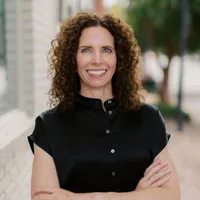
Courtney Samuels
CHRO, National Heritage Academies
Future-Proof Your Business: HR's Proactive Talent Strategy Wins The War
Episode 265 · July 3, 2025 · 10:18
Future-Proof Your Business: HR's Proactive Talent Strategy Wins The War
Key moments
In Courtney's words
“misalignment, we were having some challenges with staffing. Of course, there's a national teacher shortage. It got really bad probably about 4 or 5 years ago, right before COVID And then when you headed into COVID, we were opening the school year with classrooms that didn't have necessarily teachers in them.”
“we said, okay, we know we have this shortage, it's not going to get any better on its own. What are we going to do differently? And developed a whole staffing strategy to be able to early hire those teachers and residents.”
“If you just let them sit out there and get cold, somebody else may come along and snag them. And so really infusing them into our culture early on and making sure that they felt like, I'm a part of this from the moment I get that offer letter until the first day that I start to get into the classroom.”
Transcript
Read the transcript2,028 words
HostWelcome to the Built by People podcast, where we share the stories and insights of the world's top HR leaders. Join us as we dive deep into the minds of HR executives, uncovering their strategies, challenges, and triumphs in shaping today's workforce. I'm excited to welcome Courtney to the Built by People podcast. Courtney, thank you so much for joining us today. And as a starting question, I always have to ask if you could share a little bit more about your career journey.
GuestYeah, thanks for having me, Dave. I appreciate it. A little bit about my career journey. Out of college, I went to an organization that was manufacturing. I had an internship with that organization and got into HR as an entry-level position. And then I started my master's program, and I really started to think about, what do I want out of a career? At that time, I had heard about the organization I actually work at now. I've been here 18 and a half years, and it's a charter school management company dedicated to serving students across all different areas, but especially those who maybe are in areas where there's not great traditional public schools. And so giving them a chance to have an opportunity to learn and grow I grew up with a mom who has a GED. She quit high school, got pregnant at a young age, got married at a young age. And so education just was really important to me. And after she was able to change the trajectory— there are 5 kids in my family— she really changed the trajectory after getting a GED and said, hey, I think that, you know, education is really the key to opening up everything in a lot of ways for people. And through that, I found this organization of National Heritage Academy is really connected with the purpose. And so for my career, that was something that really mattered. And then from there, I've navigated in all different areas of human resources since my time of joining this organization and just really had the chance to diversify my HR background once I got here.
HostCourtney, can you share a specific instance when the alignment between HR strategy and organizational goals— what were the key issues that arose from that misalignment and why was it crucial to address that?
GuestYeah, absolutely. So misalignment, we were having some challenges with staffing. Of course, there's a national teacher shortage. It got really bad probably about 4 or 5 years ago, right before COVID And then when you headed into COVID, we were opening the school year with classrooms that didn't have necessarily teachers in them. At that time, we were called as HR function to say, what are you going to do to change this? So we implemented what we call a teacher-in-residence program. So that we can essentially predict how many people we are going to need to hire for the next school year. We leveraged several different metrics to do that. We said, all right, we're going to write this and say we're going to make sure that not only do we have enough talent, but we're going to beat the competitors in trying to recruit for that talent. So we start hiring for the following school year in March. We really dig into that. And it was a time where we said, okay, we know we have this shortage, it's not going to get any better on its own. What are we going to do differently? And developed a whole staffing strategy to be able to early hire those teachers and residents. And then we place them as openings come up so that we're really ready and have a good forecast of what we're going to need for the following school year. It was really a game changer for us. And now we have very clear metrics. Everybody on the team knows what we're striving for every year. It just really, once we put that plan together, it helped us to realign to where the organization needs to be. Of course, we're here to educate kids. And so having strong teachers in the classroom is first and foremost the priority there.
HostSo once you identified that misalignment, what were some of the other steps you took to realign the HR strategy with the organizational goals? And were there any significant challenges or setbacks you faced during that process? And if so, how did you overcome them?
GuestYeah, so one of the things that we did is we really sat down with our school operations folks and we said, all right, We know there's a national teacher shortage and we know we need more teachers. And so how are we going to get there if colleges and universities aren't producing enough educators? And so we came upon going through alternative certification. A lot of our educators come to us as second careers. And so we had to figure out if there's not enough out there, how are we going to either develop our own and create them? And so we really did a lot of strategic planning around that with our school operations, but then also our professional development function, because if you're bringing in people who aren't traditionally trained, you have to prepare them and make sure that you have a really good support system. So once you attract them, you have to retain them. And so we really drove that. It was bumpy there for a while trying to figure out quality and what does quality look like in an educator in an area where it's very short. And we do have this alternatively certified talent that didn't come from the traditional education space. And we got that professional development branch going. That was a big challenge for us. The other area is if you're hiring all these people in March, but they're not starting until August because of the nature of our business, we had to really think about what are we doing to engage that talent from that time. So we developed an employee welcome program. Let's keep them warm, whether that's handwritten notes being sent home, hosting little events over the summer, bring an ice cream truck in, do things like that, because that was another misalignment at first is we had this wonderful idea to early hire talent, But then if you just let them sit out there and get cold, somebody else may come along and snag them. And so really infusing them into our culture early on and making sure that they felt like, I'm a part of this from the moment I get that offer letter until the first day that I start to get into the classroom. And so I think that's just really collaboration, talking about where we are misaligned and then driving in and developing strategy in partnership with our school partner customer. To say, here's how we're going to deliver.
HostWhat were the outcomes of realigning the HR strategy with the organizational goals, and why do you believe this alignment was important for your organization's success?
GuestYeah, so I would say a couple of the key learnings that we had is what has made us successful historically is not what's going to keep us successful and keep us growing and going forward. And so we really had to focus in on how is our business evolving and changing and how are we as an HR function going to meet that and support the organization? And so to me, it was really— we always know that kind of in the back of our mind that we have to change and evolve with the business. But I think for us it was like, all right, now we're there and the rubber met the road. And so another learning that we had is how do we get more proactive and ahead of those headwinds that we're going to face with the changing times, whether that's— sometimes it's changing in political leaders and how much they support education. Sometimes it's changing in where we're going to do business and spreading to new states because every state is different. So we had a lot of learnings around how are we going to move with the business and then also be much more proactive in how we're going to move with the business and get ahead of those things so that we're being an even better partner in driving forward our strategies as an organization.
HostCourtney, looking back on the entire experience, what would you do differently if given the chance? And are there specific strategies or approaches you would recommend others to adopt or avoid in similar situations?
GuestYeah, so I think some of the things that I would've done differently knowing what I know now, really creating that talent profile. What are we really looking for in a teacher to define high quality or any candidate that's coming through, whether it be for a teacher, paraprofessional, et cetera? So what is it that we are looking for in getting alignment, especially because we're very decentralized. We have over 100 locations in 9 different states. And so getting that consistency of what are we looking for, sometimes it needs to be segmented based on markets and different things of what we're trying to hire for. I would have really had that defined and then had hiring tools and resources to support those. But because we had to move so quickly, that kind of came later on and we didn't have that all built in. The other thing that I think I would have done differently in hindsight is really thought a little bit more about once we forecasted our talent needs and said, okay, we need to hire X amount of people because we're doing pre-hiring, we don't know if these are going to come to fruition. I would have done more focus on where do we have our largest number of schools and more so double down in the talent there, because more than likely, for example, we have a lot of schools in Detroit, Michigan. We're going to be able to place that talent and not necessarily carry a surplus. I would have said, all right, in our standalone locations, we have one school in Gary, Indiana. Yes, we still need to be aggressive. Yes, we still want to make sure the classrooms are filled, but maybe a little bit more conservative there. Looking at our talent needs and how many schools we have in each of those markets or locations we have in those markets.
HostCourtney, what parting advice would you like to share with our community?
GuestI think if I was going to share some parting advice, I'd really think about, you know, what are some of the things that you want to be more proactively thinking about for the future? How are changing times going to influence and impact your business? How, as an HR person, are you being more strategic to get ahead of that? And can you bring some of those things to the table to your fellow executive team or your leadership team to say, hey, I've been thinking about this. Here's some proactive ideas that I think we can jump on to get ahead of what's coming down the way for us. And so I think that's been a big shift for me. I moved to the chief people officer role back in November, and it's something that I spend a lot of my time on is doing a lot of reading and research to say what's around the corner, how do I head it off, and how do I show that the HR function is a strategic partner to our business? Because we're bringing these things forward and ready to go to tackle them and make sure that we're placing the organization in a good place for our people side of the business.
HostCourtney, thanks so much for joining us today on the Built by People podcast.
GuestThank you. I really appreciate the time.
More conversations like this