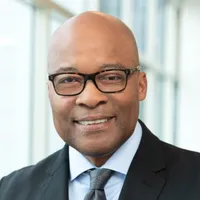
Courtney Samuels
CHRO
National Heritage Academies
Future-Proof Your Business: HR's Proactive Talent Strategy Wins The War
Thesis
“HR must proactively evolve and strategically partner with the business to anticipate and address future challenges, especially in talent management, to ensure organizational success and growth.”
What you'll take away
- 01HR strategies must continuously adapt to evolving business needs, recognizing that past successes don't guarantee future growth.
- 02Proactively forecast talent needs and develop comprehensive staffing strategies, including early hiring and alternative certification programs, to get ahead of talent shortages.
- 03Implement robust 'keep-warm' engagement programs for early hires (e.g., welcome programs, personalized outreach) to bridge the gap between offer acceptance and start date, preventing attrition.
- 04Define clear, segmented talent profiles and provide consistent hiring tools to ensure quality and consistency across decentralized organizations.
- 05Position the HR function as a strategic partner by bringing proactive, research-backed ideas to the leadership team to tackle anticipated business challenges.


What most organizations get wrong
In Courtney's words
“misalignment, we were having some challenges with staffing. Of course, there's a national teacher shortage. It got really bad probably about 4 or 5 years ago, right before COVID And then when you headed into COVID, we were opening the school year with classrooms that didn't have necessarily teachers in them.”
Highlights a critical operational problem driven by HR misalignment and a national talent shortage.
“we said, okay, we know we have this shortage, it's not going to get any better on its own. What are we going to do differently? And developed a whole staffing strategy to be able to early hire those teachers and residents.”
Illustrates a proactive, strategic response to a significant talent crisis rather than passive waiting.
“If you just let them sit out there and get cold, somebody else may come along and snag them. And so really infusing them into our culture early on and making sure that they felt like, I'm a part of this from the moment I get that offer letter until the first day that I start to get into the classroom.”
Emphasizes the critical importance of continuous engagement and cultural integration for new hires before their official start date.
“what has made us successful historically is not what's going to keep us successful and keep us growing and going forward. And so we really had to focus in on how is our business evolving and changing and how are we as an HR function going to meet that and support the organization?”
A concise statement about the necessity for HR to continuously adapt and innovate in response to business evolution.
“how do I show that the HR function is a strategic partner to our business? Because we're bringing these things forward and ready to go to tackle them and make sure that we're placing the organization in a good place for our people side of the business.”
Articulates the desired outcome and strategic value of a proactive HR function within the leadership team.
The problems this episode addresses
- National teacher shortage leading to classrooms opening without educators.
- Inadequate supply of traditionally trained educators from colleges and universities.
- Challenges in maintaining quality and support systems for alternatively certified talent.
- Risk of losing early hires to competitors during the gap between offer acceptance and start date.
- Lack of defined, consistent talent profiles and hiring tools across decentralized organizational structures.
- Difficulty optimizing talent acquisition efforts across diverse geographical markets with varying school concentrations.
In this episode
Built by People podcast features insights from world's top HR leaders
Built by People
Dave Miller shares a little bit about his career journey
Top HR Executives: National Heritage Academy
Courtney says misalignment between HR strategy and organizational goals helped boost staffing
WSJD: The Alignment of HR Strategy and Organization Goals
Courtney says realigning HR strategy with organizational goals was critical for success
Employee Experience Realignment
Courtney Miller shares some parting advice with the Built by People community
A parting message for the HR department
Topics covered
Organizations and entities mentioned
Full transcript
Expand transcript (0 words)
Transcript is not available yet.