Episode 205 · May 20, 2025 · 11:58
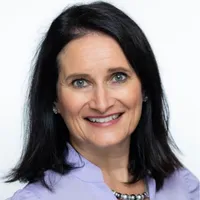
Cortney Worle
Chief People Officer, Cafe Rio Mexican Grill
From Overhead to Strategic Partner: How HR Leaders Drive Business Success
Episode 205 · May 20, 2025 · 11:58
From Overhead to Strategic Partner: How HR Leaders Drive Business Success
Key moments
In Cortney's words
“I will say what I always share with people is the reason my career grew at the trajectory it did in HR is because I never said no to anything.”
“you don't have to pay the most money, and you're always going to have competition for that. But your compensation programs have to be compelling enough that people understand them and it's hitting them at the right times.”
“But the one thing an employee does every single day for us is clock in and out. So if we have that ability to say something to them as they're clocking in and out, we're going to be able to disperse communication a lot more effectively.”
Transcript
Read the transcript2,112 words
HostWelcome to the Built by People podcast, where we share the stories and insights of the world's top HR leaders. Join us as we dive deep into the minds of HR executives, uncovering their strategies, challenges, and triumphs in shaping today's workforce. I'm excited to welcome Courtney to the Built by People podcast. Courtney, thank you so much for joining us. And as a starting question, I always love to ask if you could share a little bit more about your career journey.
GuestSure, love to. I actually started my career in retail management and didn't dislike it but didn't really love the hours. And so I stepped back and said, okay, what do I like about my job and how could I parlay this into a different career? And I, what I loved was recruiting people and training them and seeing them become successful in their roles. So I thought, you know what, I'm going to try to go the HR route. And so from that point, I took my first job as a recruiter and really enjoyed recruiting, but got a little bit repetitive and monotonous. And I was lucky enough to be in an organization at that time that they were making a change in their— they called it an HRS system at the time, but their HMS system, and they needed some extra help with that implementation. And so it gave me an opportunity to raise my hand and say, hey, I'm happy to help. And it expanded sort of my HR knowledge from there and sort of really got interested in multiple aspects and was lucky enough to then become a generalist. And from there, get hired as a manager at a different company, be promoted through that, and then eventually joined Cafe Rio as the VP of HR about 8 years ago and was able to grow in this position as my predecessor left and went from there. But I will say what I always share with people is the reason my career grew at the trajectory it did in HR is because I never said no to anything. I think that there's a lot of, oh, that's not in my job description, or that's not exactly what I do. And I think that's a really limiting point of view because if you're willing to help out with projects or things that aren't in your comfort zone or in your purview, you get a ton of knowledge and then you get looked at very quickly as opportunities become available. And that was really what happened in my career is I was able to really grow quickly because of being able and willing to do that.
HostCourtney, can you tell us about a specific time when you transformed HR from being viewed as just overhead to becoming a strategic business partner? What was your approach and how did you measure the impact?
GuestYeah, I think the most recent examples I have here at Cafe Rio would really be about how we view compensation and what that does to drive things like retention or performance. I think that's one of the biggest ways HR has an impact on the bottom line, right? Because if you have a bonus program or a compensation program that people don't really understand or doesn't drive the right behavior, then you're not going to get the business results that you're expecting. And one of the things that happened several years ago is restaurants are super high turnover, and especially during COVID and the great resignation and things like that, it obviously got worse for everybody because we started losing employees that we didn't lose before to other industries. Industries were opening up their doors to whoever they could hire, and so they were getting stolen from us. And so One of the things partnering with our operations we did is said, okay, how do we engage people in their first 90 days? Because for us, if you can get somebody past 90 days, you have a much greater success rate of keeping them in the long term. And so, we started a program that we call our Nailing the 90, which included a 30, 60, and 90-day review, but it had an accompanying pay rate increase. And so we were able to advertise and talk about, you, you can get 3 pay rate increases in your first 90 days and feedback and things like that. And we were able to dramatically reduce our turnover in that first 90 days, probably by about 25% at that point. And that obviously saves a lot of money for the business in retraining. And then just that customer experience, because a more experienced team member is going to give that better customer experience. And so, I always feel like one of the things that gets taken for granted is you don't have to pay the most money, and you're always going to have competition for that. But your compensation programs have to be compelling enough that people understand them and it's hitting them at the right times. So again, for a restaurant employee, they're not going to maybe even be here for a year to have that review and have that conversation and get that increase. You have to hit them a lot more quickly in order to retain them. So that was So that's one example that we, I worked on with operations here in partnership.
HostTell us about a situation where you implemented a compensation or technology initiative that directly impacted business performance. Walk us through your thought process and some of the results.
GuestYeah, I would say the biggest thing on technology that I would say we're actually still working on is being able to communicate with our team. So one of the things that, again, is a challenge in, I would say, retail, restaurants, any of these industries where a lot of your team members are not in the vicinity of each other, you've got a dispersed workforce, and they are not easy to reach because your communication has to filter through several layers. It's your regional managers, your area managers, your general managers, and then all the way down to the employee. And so, what we've done in the short term is we have done these weekly videos that we send out to the team to give messages on either how the business is doing, so that they understand their impact on the business, give updates of recognition of promotions and career growth, because that's a really big focus of our organization is really growing talent internally and giving opportunities to people internally. The next step that we're taking in that, in using technology, is we are implementing a new time and attendance system that we're in the middle of implementing now called Harry, and they're a very restaurant-focused time and attendance system. We already use them as our applicant tracking system. And what— one of the things we chose about them is they also have a communications platform. And so we're excited to be able to start doing that communication on a more one-to-one level because What will happen is when an employee clocks in for the day, we can have pop-up messages, and that could be specific to a store, it could be specific to a region, it could be for the whole organization to say, hey, it's open enrollment, or hey, we have this new product that we're going to be trying. Make sure and talk to your manager about it. And it's the one way that we've identified at this point to be able to have that one-to-one communication, because a lot of times you don't have an email address, you can't get messages out to people reliably through text messages or email because a lot of times their phone numbers change, their emails change. But the one thing an employee does every single day for us is clock in and out. So if we have that ability to say something to them as they're clocking in and out, we're going to be able to disperse communication a lot more effectively.
HostCourtney, tell us about an experience where you successfully developed leadership skills in a team member who was previously promoted based on technical skills? What strategies did you use and what was the outcome?
GuestYeah, I would probably say that the instance that comes to mind is not a direct report. In this case, we put in place a couple of years ago a mentorship program at Cafe Rio, and I was lucky enough to be partnered with somebody who isn't in my line of supervision or anything like that. But we happened to really click and we've been able to keep our mentorship. And she is somebody who is super sharp, very valuable to the organization, can— and she's on the finance side and can run all the numbers and things like that. But one of the things she's been really hesitant about for a long time is leadership. And so it's been one of those things that we've talked about a lot of the likelihood of her career growing without having to supervise somebody and without having to have that oversight is probably not super likely. Just through more of those monthly conversations and talking about what I enjoy about leadership and why it doesn't have to be looked at as something that is a negative, talking about what the rewards of good leadership are and being able to see somebody grow and develop and be able to thrive in a position is really exciting. I know I'm not the only person that influenced her, but she's gotten to the point where recently she's open the idea up and is excited to start taking on more of a responsibility of having direct supervision.
HostCourtney, can you tell us about a challenging succession planning case at Cafe Rio where you had to balance technical expertise with leadership capabilities? How do you approach that and what were the lessons learned?
GuestYeah, I think this one's an interesting one because we're in the midst of this right now. We're actually starting a more formal succession planning process right now. And one of the most challenging things we have is that we've got a mix of people that have been here a super long time. Organization was really small, and so they wear multiple hats. And trying to do succession planning for somebody who has just taken on a lot of responsibility is difficult because you aren't necessarily looking for one person. To replace that. You have to go, okay, what's the bigger plan? Because most likely there's not going to be an individual that will come in and fill the shoes of this person who does 5 different things that are a little bit disparate. And so what we're trying to do is go, okay, don't assume that there's just one person for every— to backfill every role. Not only is that not safe, because what if that one person leaves, but sometimes you have to look at the roles differently and go, hey, what if we had to split this up, spread the responsibilities among several people? And I don't think that's necessarily the most traditional way that people look at succession planning, but because of the evolution of the company, we really have to do that.
HostCourtney, what parting advice would you like to share with our community?
GuestI think it's just about the fact that you always have to be open to evolution and change and learning new things and not getting stuck. And then the second thing that I think has been really useful to me in being a bigger part of the business and not being pigeonholed in traditional HR things is making sure that you're part of the conversation, building relationships with leaders outside of your HR line, and also making sure that you're not afraid to put yourself out there. If you have a thought, you have an idea that's not necessarily so HR-related, because I've been in that position before where I've been timid. Oh, I'm not an operations expert, or I don't know that much about marketing. In doing that, you don't become part of the conversation. You really have to be able to be part of that conversation and hold your own and not be afraid to share your ideas.
HostCourtney, thank you so much for joining us on the Built by People podcast. It was a pleasure to have you involved.
GuestNo problem. Thanks for having me.
More conversations like this