Episode 204 · May 19, 2025 · 12:11
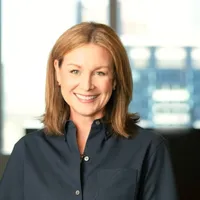
Kate Souza Manahan
Chief People Officer, BusPatrol
Stop Blaming HR: Your Culture is Built by Every Employee, Every Day.
Episode 204 · May 19, 2025 · 12:11
Stop Blaming HR: Your Culture is Built by Every Employee, Every Day.
Key moments
In Kate's words
“I self-describe sometimes as a people person that was raised in the business. Because I actually didn't get into HR and people until about 2016. Before that, I was kind of on the program management and finance side of things.”
“If you know anything about Bridgewater's culture, you know that it's focused on this notion of radical candor and radical transparency.”
“And so a lot of the focus has been on how do we incorporate them into this phrase that I use, our ways of working.”
Transcript
Read the transcript2,300 words
IntroWelcome to the Built by People podcast, where we share the stories and insights of the world's top HR leaders. Join us as we dive deep into the minds of HR executives, uncovering their strategies, challenges, and triumphs in shaping today's workforce.
HostI'm excited to welcome Kate to the Built by People Podcast. Kate, thank you so much for joining us. And as a starting question, I always love to ask if you could share a little bit more about your career journey.
GuestAbsolutely. It's great to be here. Thanks for having me. My career started off a little over a decade and a half ago, and I self-describe sometimes as a people person that was raised in the business. Because I actually didn't get into HR and people until about 2016. Before that, I was kind of on the program management and finance side of things. After college, I joined a firm called Bridgewater Associates, which is a hedge fund in Westport, Connecticut, and I spent the first about 15 years of my career there. And it was an incredibly formative experience. For those of you that are familiar with Ray Dalio and Bridgewater, their culture, I had the privilege of learning from that team and in that culture for several years. I worked in a variety of different departments on a variety of different topics. Then in about 2016, I was tapped on the shoulder to help drive some strategic change in the HR people space across benefits and compensation. And I remember telling my boss at the time that I didn't know anything about HR, and she told me, you'll learn it just as you do everything else as you go. I credit her with seeing what I wanted to be when I grew up before I did, because getting into the people space and especially the transformative side of driving change in people and culture married both kind of strategic business transformation with a content area that I loved, which is people and developing people and building leadership skills. I feel that I've been able to find a career that kind of marries my love for teaching and coaching in the kind of strategic business world. And so after Bridgewater, I then joined a tech startup in Nashville, Tennessee. If you had told me that was going to be my next step in my career journey, I would've thought you were crazy. But I got reached out to by a company called Built Technologies. And again, at first I didn't think much of it because I'd never worked in startups. It's just commercial real estate. And, but I, after a couple conversations with their executive team, I was just really impressed with their business strategy, the quality of their thinking and the executive team themselves. Went and worked at Built for about 2 and a half years, had a wonderful experience. Their CEO, Chase Gilbert, and their COO at the time, again, left a massive impression on me and helped develop me. After about 2 and a half years, then ended up joining Bus Patrol where I am today as their Chief People Officer. So, I've been in the seat at Bus Patrol about 7 months now. And so, somewhat early on in my journey, but feel like I have my sea legs enough to have started to make an impact. I'm really thrilled to be here.
HostKate, how did your experience at Bridgewater influence the way you think about transparency and leadership? Can you share a moment where that philosophy was tested or truly came to life?
GuestSure. So if you know anything about Bridgewater's culture, you know that it's focused on this notion of radical candor and radical transparency. And so having that kind of be my first step in my career and being exposed to that level of truly radical transparency has been really formative to how I think about leading and being transparent with people on business topics, on feedback, et cetera. It's really hard to think about one particular moment where it came to life because truly Bridgewater lived up to its culture and what it said day in and day out. There was an incredibly high bar for transparency and being very candid with each other. Let me give you an example of how it played out on a day-to-day basis. And this is all publicly available, but one of the tools that Bridgewater instituted to make radical transparency on feedback come to life was this notion called DOTS. And on any given day, in any given meeting, you could give each other DOTS to capture feedback, right? So, after this podcast, I could log into my DOTS app and give Dave feedback on how I thought he asked the questions or whether I thought he pushed me enough, or I could give myself thoughts on how I answered the questions. And while some people hear that and go, oh my gosh, that sounds exhausting, I found it so helpful because it was like, you know, imagine— I'm a big sports person, I like sports analogies— imagine you're working with a hitting coach and you get into the batting cage and every time you take a swing, they tell you what you did well and how you need to adjust your form. And you take 20 swings and every swing it's your elbows this, your elbows that. Think about how quickly, that swing is going to adjust to be effective. And when I think about Bridgewater's culture of transparency and that regular feedback loop, it was the privilege of having a batting coach in the cage with you every time you swung. And so, that I would say really led to accelerated development of myself professionally. And I think everyone around me, you know, for those that were comfortable in that kind of environment of radical transparency, because the feedback is flowing constantly and continuously.
HostSo at Bus Patrol, you led the effort to define and embed 5 core leadership behaviors. Walk us through how you rolled that out and what it took to make it stick across the company.
GuestAbsolutely. The thing I'll start with is the 5 core leadership behaviors we rolled out at Bus Patrol, they're not mine alone, right? There was this effort to really encapsulate what we as an executive team wanted those leadership behaviors to be. It also wasn't starting from scratch. There was foundational work to build off of when I joined. But the thing I was seeking to do was codify more clearly what those behaviors were and also make sure that they were rooted in the most important focal areas for our leaders. While there's lots of great leadership advice and behaviors out there, I believe that your core tenets, your core principles, your core values of your organization have to reflect your business needs and your context. So undertook this effort in partnership with our CEO Karun and the rest of the executive team to reflect on what are the 5 things that matter most to us as an executive team today that are a balance of aspirational behaviors that we want to emulate and things that we think will move the needle in our performance. There was a lot of discussion in building those up together. Words matter. I remember we were at an offsite together in Austin, and we were in a room together, and we were debating individual words on a page to describe the things that we were talking about. Got to a place where we were like, these are it, let's hit publish. And then had the opportunity actually during that same offsite to bring in a group, the next group of leadership, about 40 other leaders, and share with them, these are the leadership behaviors that we want us to collectively own and show up every day. So part of the process was creation, right? Aligning not just the most senior executive team, but the rest of the senior leadership group on what those things were. And then I would say like the third phase is what you asked about, which is how do you make them stick? And that's the trickiest thing. You could have the most well-articulated, synthesized group of behaviors, but if you're not emulating them on a day-to-day basis, they're useless.. And so a lot of the focus has been on how do we incorporate them into this phrase that I use, our ways of working. And I'll be the first one to say, I don't think we've perfected that yet, and we're still trying to figure out how to build that muscle. A couple of things that we've done to try and have them cascade through the company. One is we literally developed what we call these ways of working, where we took meetings as an example, right? How many meetings are most leaders in on a day-to-day, week-to-week basis? My Outlook calendar looks like a game of Tetris or Legos or whatever you wanna call it. And how effective are those meetings at driving forward strategic change? Are they thoughtful? Are they organized? Are we showing up against those leadership behaviors every single day? And so working with our leaders on taking what might seem like minute things in their day-to-day and making sure that we're showing up certain ways in those conversations. We've also done leadership development kind of courses or trainings that center around those behaviors that we wanna emulate. And most importantly, we just make sure to talk about it on a regular basis. We have a biweekly senior leadership meeting where that group of 40-ish come together, and we've used it as an opportunity to say, how are we ensuring those behaviors are here in this meeting, and how are we ensuring those behaviors are with us when we walk out the door?
HostKate, can you share a story where the people function played a key role in a high-stakes executive decision, like during an acquisition or a major organizational change?
GuestIt's a great question. One of the— when I think about the way that people function shows up in high-stakes executive decisions, first, the first thing you need to have is a seat at the table in order to influence and do that. And I've been so fortunate that in the past, two companies in particular, I believe myself in particular as a representation of the people function have had that seat at the executive table affecting change. I think that makes a material difference for the organization, and when CEOs see the need for that and say, I need my people person in the room on these strategic decisions, I think it's so powerful. And so hats off to the CEOs that I've worked with for respecting that and valuing that and ensuring that I have that seat. I've been so grateful for it. One example in particular, I have gone through an acquisition where we played a prominent role, but there was also, I think that where I've seen it really have an influence is in large restructures and reorganizations.. And organizations, especially startups, go through several evolutions of what they look like as an organization. A true restructuring is zooming out, looking at what is the right org structure to deliver the output that we need and serve the functions that we need to serve. It's an exercise in truly organizational design and having your people person at the table that can help you think about that, push your thinking, and then say, let's draw all of these boxes on a page, make sure they have clear roles and responsibilities, and then think very thoughtfully about the talent that we are going to fill these boxes with. That not only helps the actual decision at the executive level, but then it also enables the people function to be your partner in playing that out. And sometimes reorganizations require hiring a bunch of folks. Sometimes it requires laying off folks. Sometimes it requires moving people around to meet their potential. And so ensuring that you have a seat at the table to do that, I think is really important. At my last organization, I did go through that a couple of times and think that the influence that I was able to have and the partnership that I was able to forage with our CEO, our president, and our CTO to go through that made a big difference in everything from what the end answer was down to how we communicated the logic of our decisions to people.
HostKate, what parting advice would you like to provide to our community?
GuestParting advice I would like to advise is I always say head of people and culture is a funny title because no one person is responsible for people and culture at an organization. And I think the biggest thing that you can do, whether you're an HR leader or not, even if you're an executive, even if you're an individual contributor, is help foster this mindset that having great talent and a vibrant culture is everyone's responsibility. And how you show up every single day can either contribute to that or detract from that. The way you lead a one-on-one with a direct report, the way that you show up in a meeting, how, how you manage day-to-day operations, everything you do emulates the kind of leader and the kind of culture that your organization is going to be.
HostKate, thanks so much for joining us on the Built by People podcast. It was a pleasure to have you involved.
GuestIt was my pleasure to be here. Thanks for having me.
More conversations like this