Episode 185 · May 7, 2025 · 13:44
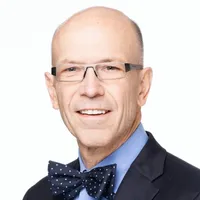
Chris Harry
Chief Learning Officer, TEKsystems
The blueprint for cultural vitality: Strategic roles, integrated performance, empowered managers.
Episode 185 · May 7, 2025 · 13:44
The blueprint for cultural vitality: Strategic roles, integrated performance, empowered managers.
Key moments
In Chris's words
“We had really been doing a lot of work, a lot of evolution of the organization in this matrix world. Of what we do. And we got to a point where the leader's like, if you could really help us define the who, the what, the when, and the how for our roles, it would make our lives a ton easier.”
“At this point today, we have 90% of all of our roles in the company covered globally with a profile. And when you think about that, that creates this greenfield to begin to putting together the idea of performance, development, assessment, internal aspiration, and then the ability to then get talent visibility out of this becomes much, much easier.”
“The idea of creating IDPs and getting performance reviews done and all of that was a challenge. It's a challenge for everybody, I think. And I would tell you that at this point, we actually have 80% of the entire workforce into a performance review cycle and into this moving each year.”
Transcript
Read the transcript2,678 words
HostWelcome to the Built by People podcast, where we share the stories and insights of the world's top HR leaders. Join us as we dive deep into the minds of HR executives, uncovering their strategies, challenges, and triumphs in shaping today's workforce. I'm excited to welcome Chris to the Built by People podcast. Chris, thank you so much for joining us. And as a starting question, I always love to ask if you could share a little bit more about your career journey.
GuestYeah, thanks, Dave. Enjoy being here. Really have had a good time listening to the podcast and the community that you have is incredibly impactful. Excited to be here. I tell you that over the last 35 years of my career, there has been some form or fashion of education, coaching, learning from the beginning to where I sit today. After college, I started teaching as a GA in kinesiology and had a really good experience learning my first kind of a manager administrator role with hundreds of student staff members on a college university campus here in Maryland. Learned a ton at that point and then made a shift from kind of the education, higher education world to corporate and went right into an HCM talent staffing company for a couple of years and led multi-office function there of sales and delivery and recruiters and had a great, again, learning experience, really getting my leadership kind of feet under me. But during that time was really the first time that I had the opportunity to dig into corporate education and got the opportunity to rebuild the nation's program for how we would onboard and bring new people into the company to do about 3 or 4 different roles in the company, which kind of then really turned the light bulb on for me because it's something that always is a big deal For me, I would guess I would say I'm a helper to some degree and like really like to see behavior change. Let's see that light bulb go off. And that's really good. And from there I went to a niche boutique PeopleSoft company, did the 40-week-a-year plane Monday to Sun— Monday to Thursday flight model and really got some great experience working with customers and balancing stakeholders. But again, had the opportunity to build some really big training models for a lot of finance healthcare companies at the time. And so that was another really good experience. And then lo and behold, through a referral of someone that I taught with all the way back when I was a GA, I ended up coming to Allegis Group where I am today. Started my 25th year today. And this has been a wonderful place to work. I've held multiple roles where I sit now in tech systems in Allegis Group. I have a dual reporting role to the CEO and one of the presidents and have a really cool environment to do some really cool work. So I would give you that as a quick run through.
HostThanks, Chris. Chris, can you share a specific example of a transformation project you led that involved talent visibility and mobility? How did you approach it and what were the outcomes?
GuestYeah, I would hop in the car and go back 4 years and I would take you kind of a little bit on a trip and say, we, one of the things that I'd really love to do, I love to ideate and innovate. And we said we needed to go through some process with our leaders in the field and we have hundreds of them. And we brought about 80 of them in. And what we were trying to find out from them is how does OD professional development, change. How do we really impact them to make them better in their jobs? And we were on the side kind of betting through this 2-day process of innovation. We were really betting that enhance the coaching environment was gonna be number 1. And we were looking for the top 3 or 4 things that we could really make, really make some hay on. And lo and behold, this idea of role clarity comes out. We had really been doing a lot of work, a lot of evolution of the organization in this matrix world. Of what we do. And we got to a point where the leader's like, if you could really help us define the who, the what, the when, and the how for our roles, it would make our lives a ton easier. And if you can imagine just really defining and creating a framework that does that, it provides a lot to the organization on the backside of that. So we went through this process, we partnered with a firm on the outside to come inside and really build an internal framework of competencies, skills, behaviors, traits, drivers, and risk factors across all of our roles. So at this point today, we have 90% of all of our roles in the company covered globally with a profile. And when you think about that, that creates this greenfield to begin to putting together the idea of performance, development, assessment, internal aspiration, and then the ability to then get talent visibility out of this becomes much, much easier. And you have this level of clarity now because you know what the jobs are doing, you know what people want to do, you know how they're assessed, and you know what you're doing to develop them, you get to do a lot of really cool work to where now I would tell you some outcomes that I'm really proud of. We have 1,500 leaders globally that have been assessed against the benchmark profile. So we have tens of thousands of data points at this point that are just really rich against that population. We are now at the point 30+ global talent marketplace meetings a year that look at everything from first-line manager to senior VP level for us. We have implemented two new sets of technology for succession and what's called talent with another partner. And probably the most important thing that I would tell you is that these models have now allowed us to move 30+ senior-level leaders globally, either laterally to other divisions, verticals, things like that, or promotion and succession models. I would tell you we wouldn't— without this work, we probably would not have been able to do that as easily as we had. So I would give you that as probably one of the really cool examples that have happened in the last really 40 months.
HostChris, tell me about a time when you successfully implemented a performance experience within an organization. What were the core competencies and skills that you focused on, and how did you measure success?
GuestSo I would— I'm going to continue that exact example because that exact example has fed into what we now call a performance experience. And that's the model, that's the heading for that we use. But go back 2 years in that 4-year process that I was telling you about. And ultimately what we did was we began to create— we had always been doing reviews. We had a form of an IDP. We probably had 100 forms of an IDP at the time. We had mid-year check-ins. We had a lot of different things that were pieces and parts of a system, but they were not holistic and they were not connected. About 2 years ago, when we put this technology in place, we set out to get a rhythm across the entire organization with our leadership. And that has now come to fruition to where we have this end-of-year goal-setting process. We have an IDP process, we have a mid-year skills check, we have another kind of update to the IDP, and then we wrap back into the end-of-year process that gives us a 12-year calendar. And in the middle of that year, we have now a new cycle that the leaders do, which is called a talent assessment cycle. And they are going in and evaluating every employee from a talent perspective. So readiness, aspiration, mobility, travel, all of these really cool characteristics about all of our employees we now have in this system that allows us to create these marketplace views that we can then review in these 30 meetings that we hold. That is now a systematic, calendared approach that has led to the ability to move people around in the organization, putting them into new spaces that we have opportunity Most importantly, when you think about workforce planning and the business shifts to different areas, to different verticals, divisions, and services where we need to place more emphasis, move emphasis around, this empowers our ability to do that significantly. And I would tell you from a competency perspective, that's hard to tell you on this call which ones they are, but I would tell you benchmarking-wise, there are some really important ones. The idea of adaptability and agility, collaboration, complex decision-making, the types of complex or strategic thinking, tech savvy with all of the AI and all the things that we are implementing to make us more efficient and do things better and connect with our customers and consultants in different ways. Those are some high-level ones, I would say. But when you think about each profile in the company or each job, there's 6, 7, 8 core competencies to that role. So the list could be large. But I would say another thing I would point out that is an outcome is prior to us putting this in place, The idea of creating IDPs and getting performance reviews done and all of that was a challenge. It's a challenge for everybody, I think. And I would tell you that at this point, we actually have 80% of the entire workforce into a performance review cycle and into this moving each year. One of the big indicators that we wanted to see is how many people from the IDP, because that's probably the hardest piece to get people to really work and drive and continually update, is how many people can we get across our just under 10,000 employees in tech and 25,000 across Allegiant to deal with the IDP and really make change and edit. And we're well above 50% globally on that. And I would say that's probably one of the greatest indicators of success of that implementation. Yeah, that's just a continuation of that first example.
HostChris, describe a challenge you faced in driving a cultural change within an organization. How did you overcome that? And what lessons did you learn that could benefit other HR leaders?
GuestSo I don't know that I would couch it as a change because we're in the middle of it. What I would say is this reinvigoration probably is what it is. And I think we're all, because you can hear a lot of people talk about it, but notion of pre and post has, you know, for us being together, we are a relationships company that put a big strain on that for us. And when you think about post-COVID and how do you get back the best part of what your organization is and what has made the organization, the heartbeat, your core values, all of those really critical things that, that old strategy culture eats strategy for breakfast. Like, that's real. That's real. And it's been real for us. And what I would say is we're going through a process. We have enormous amounts of VoE data. We have engagement data. We have themes and semantics and all of these things. And what I would say is that we are now working very diligently to connect all of that. And I think as I've— what we have learned is that And this is the advice part of this, is that being really critical of the data that you have, how does it connect to your mission, vision, values? And most all of us write these kinds of things very aspirationally. They're really well written. They have a great definition. But what I think is really needed now is this idea of aspiration to action. And action is actually true behaviors. What are the 5 or 6 things that we can all do as an organization, as, as an individual contributor, as a leader, if open communication is a value, if relationships is a value, if performance, whatever those titles are, what do we define? How can you see it? How can you assess it? And how can you reinforce it? It has to be down to tires on the road behaviors. And that's where we're getting to. And we're actually looking right now as an organization to do this reinvigoration and build some learning experience that allow us to Pump some life back into these really critical things. Know that how we'll be able to see it and assess it. How can we remediate when we find things that we need to continually do? And then connect that to really meaningful things. Leadership and organizational meetings. How do we survey moving forward? What happens to leadership development? Culture's a two-way street. What do we do with a new employee that walks through the door? Daily behaviors that you set in place for them that actually starts you down the road of understanding you're a part in this culture because it is a two-way street. So more to come on that one, like how that goes through, but we are looking to start implementing some things at, by the end of the year. I'm excited. The work looks really cool. We've implemented some really neat AI solutions to help us build these experiences, and that's catapulted some of the work that probably would've taken us much longer. I'm excited. It's really neat and it's the heartbeat of the company. So it should be interesting.
HostChris, what parting advice would you like to share with our community?
GuestYeah, I would tell you, I think we all are going through a massive transformation and change, no matter what it is. I know that we have 3 or 4 big ones going on. And right now, I have seen us do some of the best work in 25 years that I've ever seen us do it. And it's come down to a couple of things. One is, as you go to transform, don't ever take for granted what you think people know and the headspace that they're in with the information that's in front of them. Because we have taken the opportunity to redesign how we do things and how we roll things out. And we overcommunicate to a level that probably would be ad nauseam, but that is critically important. And then secondly, make sure that they are prepared. Train them first, train them heavily, and get them feeling really comfortable. Thirdly, make sure that they are prepared to lead their teams. That what we all know is that first-line managers, middle-level directors, whatever your structures are, They take the brunt, they take the weight. And ultimately what we find is a lot of times we don't give them enough weight to make them good at what they do. I would say we've done some really cool work on some big transformations and they are paying off and it applied a lot of weight to us. But I think those 3 things right now for all of us, no matter how big the change, we're all human, we're all overwhelmed, a lot going on for all of us, but it can be good. And I think if you're intentional, I think you can really make some hay.
HostChris, thanks so much for joining us on the Built by People podcast. It was a pleasure to have you involved.
GuestThanks so much. Appreciate it.
More conversations like this