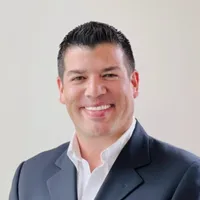
Andrew Bartlow
CHRO & PE Operating Partner
Altamont Capital Partners
Beyond HR Basics: Cultivating the Strategic Mindset of Tomorrow's Leaders
Thesis
“HR leaders must continuously and intentionally grow their foundational skills across all HR disciplines, learn to operate strategically, and adapt to changing business demands to effectively guide organizations, especially in environments where productivity and efficiency are paramount.”
What you'll take away
- 01Seek diverse experiences: work at 'academy organizations' for best practices and take risks at startups to learn 'what fast felt like' and 'figure it out on the fly'.
- 02Build a broad base of HR experience (the 'pyramid' image) across various functions (HRBP, talent acquisition, total rewards, talent management) to effectively prepare for a CHRO role.
- 03In difficult career situations or downturns, persevere and contribute where you are, as this can lead to unexpected opportunities for growth and influence.
- 04Continuously and intentionally grow your skills through on-the-job challenges, formal learning, and self-study, actively pushing beyond your comfort zone ('learning edge').
- 05HR leaders must practically understand what 'being really deeply connected to the business' and 'being strategic really means', particularly in today's environment focused on productivity and efficiency.


What most organizations get wrong
- Challenges the conventional wisdom that one career path (e.g., big corporate or startup) is superior, instead advocating for a dual approach that combines structured learning with high-growth, ambiguous environments for holistic development.
In Andrew's words
“I think I would recommend both of those things, you know, work somewhere where they know what good looks like and you can learn from people and also work somewhere without a, without a safety net. Where you have to figure it out on the fly.”
Offers dual advice for early career development, combining structured learning with high-growth, experiential challenges.
“I've done every element of this job at greater scale than you'll need it. The only thing I haven't done is officially taken that, that top job in the standalone role.”
Illustrates a strategic approach to proving readiness for a CHRO role by accumulating comprehensive, scaled experience.
“My purpose now and for the past few years is to help other HR leaders grow their career, build more confidence, strengthen their confidence.”
Clearly states his current mission to mentor and empower the next generation of HR executives.
“And so many HR leaders don't know how to operate that way. And so I, I'm trying to help other HR leaders. Understand what being really deeply connected to the business looks like, what being strategic really means.”
Highlights a common gap in HR leadership skills and his efforts to bridge it by teaching strategic business integration.
“Don't just stay put and stick it out, like actively look for those opportunities to stretch yourself.”
Emphasizes proactive self-development and seeking discomfort as a critical driver for continuous learning and growth.
The problems this episode addresses
- Employees' number one concern is covering monthly expenses, highlighting a need for solutions like employer networks for financial well-being.
- Many HR leaders lack practical understanding of what it means to be 'deeply connected to the business' and 'strategic', particularly in current economic climates.
- HR leaders who developed in 'growth at all costs' environments struggle with the shift to prioritizing productivity and efficiency.
- Company acquisitions can create significant cultural and functional friction for HR, necessitating strategic change management to integrate different approaches.
- Aspiring CHROs often face stalled career progression in large, traditional organizations with transactional HR models, requiring strategic career planning to gain diverse experience.
In this episode
Built by People podcast features insights from world's top HR leaders
Built by People
Dave Schultz has spent 30 years in the human resources field
Top HR Executives on Their Career Journey
I want to understand some of your career-defining moments in HR
Top HR Executives on Career-Defining Moments
Andrew Miller worked at Wachovia until the mortgage meltdown hit in 2007
Andrew Wilcox on Challenges in His Career
Andrew, you mentioned being on a quest to become a CHRO
Andrew ChRO: The Journey to Becoming a CHRO
Andrew, what's a legacy you hope to leave as an HR leader
Andrew Wilcox on Leaving a Legacy
Andrew, what parting advice would you like to share with our HR community
Andrew Forsythe on How to Purposely Grow
Built by People Podcast features insights from world's top HR leaders
Built by People
Topics covered
Organizations and entities mentioned
Full transcript
Expand transcript (0 words)
Transcript is not available yet.