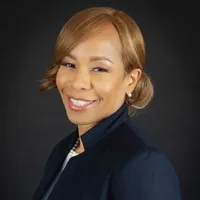
Andrea Cooper
Chief People Officer
Talkspace
Forget Skills Lists: Build an Unstoppable Team Through True Human Connection
Thesis
“Andrea Cooper champions authentic, empathetic, and adaptable HR leadership, emphasizing that true organizational strength comes from empowering well-rounded teams, fostering genuine connections, and having the courage to lead as one's true self, especially during challenging times.”
What you'll take away
- 01Cultivate a holistic view of team strengths, recognizing that while individuals aren't universally skilled, a diverse team can be well-rounded and collectively solve challenges.
- 02Prioritize in-person connections, even minimal ones, for distributed or global teams to build genuine, lasting trust and facilitate more effective collaboration.
- 03Develop cultural competence and adapt your leadership style to individual team members, investing time to understand and listen to their unique needs and preferences.
- 04Master the skill of knowing when to 'go deep' into details and when to 'rise up' and trust your team, ensuring your involvement is for strategic support, not anxiety or control.
- 05Lead with authenticity and courage by being yourself rather than an 'HR persona,' leveraging business acumen and your unique voice to influence organizational decisions and advocate for employee experience.
- 06Acknowledge and address the personal toll of difficult organizational events like workforce reductions on all involved, fostering empathy and vulnerability within your team.
- 07Recognize that even senior leaders don't have all the answers; lean into your team and leadership community for collective problem-solving rather than feeling pressure to know everything.

What most organizations get wrong
- Challenges the notion that individuals must be 'well-rounded,' instead asserting that 'teams can be well-rounded and individuals are not.'
- Advocates for moving beyond a stereotypical 'HR persona' to be oneself, arguing that genuine identity, combined with business acumen, makes a more unique and special HR leader.
- Contradicts the perception of senior leaders as all-knowing and perpetually confident, stating, 'nobody has it all figured out' and leaders are 'doing our best every day... even if inside we don't feel like that necessarily.'
- Encourages taking the 'risk to be genuine' and not an 'overly buttoned up HR leader,' suggesting a less formal approach leads to deeper, more meaningful connections.
In Andrea's words
“The best descriptor for me is a windy path, not a clear road or clear career progression.”
Highlights a non-linear career journey that shaped her adaptable leadership style.
“Teams can be well-rounded and individuals are not. And I really believe that. And I, I think as a people leader, I try to operate that way.”
Expresses her core philosophy on leveraging collective strengths in team management.
“You can't, you really can't, in my opinion, build genuine and lasting connections if you are only virtual, if everything is always on a screen.”
Underscores the critical importance of in-person interaction for deep trust and connection in remote settings.
“You don't wanna be an HR persona. You wanna be yourself and really try your best to understand the business.”
Emphasizes authenticity and business acumen over conforming to a stereotypical HR image.
“I think I missed opportunities to build community, like within my HR team and with my colleagues who were also having those hard conversations. I kind of ignored the personal toll that those conversations can have on the people delivering the message.”
Reflects a profound learning about empathy and self-care for leaders during difficult organizational changes.
“I wish I had known that nobody has it all figured out, and we're all doing our best every day to just make smart decisions, show up as competent and confident as we can, even if inside we don't feel like that necessarily.”
Offers a vulnerable and universally relatable insight into the realities of senior leadership.
The problems this episode addresses
- Building genuine, lasting trust and connection within globally distributed or virtual teams, which impacts team cohesion and collaboration.
- The significant personal and emotional toll on HR teams and leaders during workforce reductions, often leading to missed opportunities for internal community building.
- The pressure on HR professionals to conform to a 'buttoned-up' or stereotypical HR persona, hindering their ability to bring innovative ideas and authentic influence.
- Leaders struggling with the internal expectation to have all the answers, preventing them from leveraging collective intelligence and fostering vulnerability within their teams.
In this episode
Covering monthly expenses is the number one concern for employees in 2024
Built by People
Dave Zirin shares a little bit about his career journey
The Windy Path of Career
How has your leadership approach evolved when managing teams of different sizes and structures
How Has Your Leadership Approach Evolved?
You've led distributed and virtual teams, and how have you adapted your management style
Leading a distributed team with a virtual culture
What are the most critical skills HR professionals need to develop to become effective leaders
What are the most critical Skills that HR professionals need to develop to
Find ways to use your voice to influence organizational decisions and outcomes
What Makes an HR Leader Unique?
Most of Andrea's true learnings as a leader have come through difficult situations
What's Your Best Learning Moment?
Andrea, in 25 years of experience, what's been the most surprising lesson
What's the Most Surprising Lesson You've Learned About HR
Topics covered
Organizations and entities mentioned
Full transcript
Expand transcript (0 words)
Transcript is not available yet.