Episode 102 · February 21, 2025 · 11:16
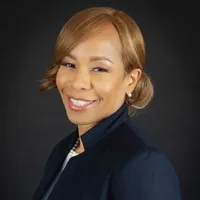
Andrea Cooper
Chief People Officer, Talkspace
Forget Skills Lists: Build an Unstoppable Team Through True Human Connection
Episode 102 · February 21, 2025 · 11:16
Forget Skills Lists: Build an Unstoppable Team Through True Human Connection
Key moments
In Andrea's words
“The best descriptor for me is a windy path, not a clear road or clear career progression.”
“Teams can be well-rounded and individuals are not. And I really believe that. And I, I think as a people leader, I try to operate that way.”
“You can't, you really can't, in my opinion, build genuine and lasting connections if you are only virtual, if everything is always on a screen.”
Transcript
Read the transcript2,041 words
HostWelcome to the Built by People podcast, where we share the stories and insights of the world's top HR leaders. Join us as we dive deep into the minds of HR executives, uncovering their strategies, challenges, and triumphs in shaping today's workforce. I'm excited to welcome Andrea to the Built by People podcast. Andrea, thank you so much for joining us. And as a starting question, I always love to ask if you could share a little bit more about your career journey.
GuestAbsolutely. Thanks for having me, Dave. Appreciate the opportunity to be here. I thought about this question that you actually shared ahead of time, and I would say the, the best descriptor for me is a windy path, not a clear road or clear career progression. For me, I've had a lot of starts and stops along the way. That meant going to college, dropping out of school, becoming a full-time retail manager, going back to college, and ultimately found my way. To human resources by accident, but once I found it, I fell in love with it and have just been looking for opportunities for the last 20+ years to learn something new, to try something different. And even though it's all been in HR since then, it's certainly, again, not been a perfectly scripted path. It's been a little windy, but the theme for me is doing something that I find very deeply meaningful and trying to help employee experience.
HostAndrea, how has your leadership approach evolved, uh, especially when managing teams of different sizes and structures?
GuestSure. You know, when I think about how long I've been in a people leadership role, I would say my first people leadership role was in that retail environment, and I was 22. Somebody who felt like really accountable, like I had such strong feeling of individual responsibility, and that led to a lot of perfectionist tendencies. Kind of like it's all on me. I need to know everything. I need to do everything just right. And I would say where I've really grown and changed is to more of a holistic view of kind of the benefits and the power of a well-rounded team that leans into individual strengths and unique characteristics. So it's one of my, you know, favorite things, sayings that I've heard is that, you know, teams can be well-rounded and individuals are not. And I really believe that. And I, I think as a people leader, I try to operate that way. And so I've become a lot less panicky if I don't know the answer or if I don't know what to do, because I'm confident that I have a team around me that is smarter than me and more creative than me, and together we'll figure it out.
HostAndrea, I wanna talk about distributed and virtual teams. What are some of the unique challenges and opportunities you've encountered in leading distributed and virtual teams, and how have you adapted your management style?
GuestYeah, it's a great question. Long before the pandemic, I had the opportunity, and I'm really grateful for it, to lead a globally distributed team, and that was probably 15+ years ago, I would say. One of the things that I feel really strongly about is that, you know, you can't, you really can't, in my opinion, build genuine and lasting connections if you are only virtual, if everything is always on a screen. I think you can build good rapport, you can get to know somebody, but a true lasting connection does require some in-person connection. And so I would say that it'd be one of the big learnings for me is making time, finding a way, even if it's just once, right? You know, on a global team, there were some people on a team for years that I might have only met in person once or twice. But that made all the difference. From that point forward, the ability to be more genuine with each other, to really trust each other, to challenge each other felt so much more feasible when you'd had that true in-person experience. The other thing, just thinking back to that global team, but it applies whether you lead a global team or not, is that it required me to invest in my cultural competence and adjust my personal style, really treat each team member in the way that worked best for them. That required me to really get to know them and invest in understanding them and listening a lot. So I think those are a couple things I would say in-person really matters, even if it's just minimal and that willingness to individualize their experience.
HostAndrea, from your experience, what are the most critical skills that HR professionals need to develop to become effective people leaders?
GuestYeah, that's another really good question. And I'm sure there's lots of books and articles written on this, but I'll just give you the Andrea two cents and what I have found. I think one of the big things that I've learned the hard way over the years is Understanding when to go deep and when to kind of rise up and take a broader view, where trusting others to manage the details. I think that really requires me to understand the skills and abilities of the whole team and be able to know that it's okay to trust when it's appropriate to let people run with things. And when, on the other hand, maybe there's a need and I have a special skill that can help the team, like when do I need to roll up my sleeves and actually dive into the details? So I think that kind of notion of going deeper, kind of helicoptering up to a higher level to see everything that's going on is something that is not an easy skill, or at least it hasn't been for me. It takes a lot of practice and a lot of trial and error, but once you get in the rhythm of that, it, I think your team can really come to appreciate that when you go deep, they know it's not because you don't trust them. They know that there's a reason that you're going deep and it's not coming from a place of, anxiety or control, but it's really coming from a place of doing what's best for the team. So one of the other things I thought is finding ways as an HR leader to use your voice to influence organizational decisions and outcomes. But it's like, how do you find that balance of business acumen and trusting your own style and approach? Another way I think of it is like trying not to be like the person that assimilates into the stereotypical HR. Function, if you will, or role. You don't wanna be an HR persona. You wanna be yourself and really try your best to understand the business. Those two things together, I think, can make you a really unique and special HR leader. And just, and then I think connected to that is demonstrating leadership courage to stand up for something that matters. I think that's where as HR leaders, we're uniquely positioned. We can be that conscious sometimes, that innovative approach to employee experience.. But if you're trying too hard to be like the picture of what you think an HR leader should be, it's really difficult to be yourself and bring those unique ideas.
HostAndrea, can you share a specific story or example of how you've helped build and shape corporate culture and employee experience throughout your career?
GuestYeah, when I think about specific, I would say most of my true learnings as a leader, as an HR professional, have come through really difficult things, right? The learning is never like in like pretty package, here's how you learn something. It's usually when you're going through something really challenging. And so the specific story or kind of example that comes to mind for me is when you have to go through workforce reductions or reduction in force with employees. Unfortunately, in my career, I've had to do a number of workforce reductions and lead teams through that. When I think about some of my first experiences with those types of situations, I think I took my role and myself so seriously. I think I missed opportunities to build community, like within my HR team and with my colleagues who were also having those hard conversations. I kind of ignored the personal toll that those conversations can have on the people delivering the message. When I think about that, as I've done those workforce reductions over the years, pausing and reflecting on what was that experience really like? For the employees who were impacted, for the HR team members who have to put those actions into play, and also for the leaders who have to deliver the really hard messages. It really helped me to get to a more empathetic and genuine conversation across the board with impacted employees and also with my willingness and ability to be vulnerable with my team and my colleagues who were in the thick of those meetings. That's really tough work, but By shifting how I showed up, I think we created an overall better experience. We built trust and connection. What's interesting is I think back to some of those really difficult reductions and some of those hard employee conversations. Some of them were 15+ years ago. I can say candidly that those HR teammates and those business teammates that I was working with, several are still very close work friends and colleagues that I stay in touch with. I think it's because We, you know, I really quit being the buttoned up, you know, corporate professional, and I really brought more of myself to it and made it possible for others to do the same.
HostAndrea, in your 25 years of experience, what's been the most surprising lesson you've learned about HR leadership that you wish you'd known, you had known earlier?
GuestYeah, do I just have to pick one? You could apply it to HR leadership. I think you could also just apply it to being a people leader in general. I wish I had known that nobody has it all figured out, and we're all doing our best every day to just make smart decisions, show up as competent and confident as we can, even if inside we don't feel like that necessarily. I think looking back, I had a tendency to look up to senior-level leaders as all-knowing, and they certainly had all the answers in my mind, and they certainly had all the confidence in the world. And now I guess I'm a senior leader myself, and I realize, wait a minute, that was never true. No matter how many years of experience I have, there's there's always gonna be situations I'm not prepared for, and there'll always be others who have more, you know, better and more creative ideas than I do. I've come to believe that's a beautiful thing. I tend to lean into my team and my leadership community so that when we're presented with a challenge, I can lean into that community and really come up with what's best for the business without feeling like I personally have to know everything and solve everything on my own.
HostAndrea, what parting advice would you like to share with our
Guestcommunity? Yeah, you've probably heard that this is a trend. Take the risk to be genuine and to not be that overly buttoned up HR leader. You know, I, I joke that I no longer fit into my zipped up corporate suit. Not only is it freeing for me personally, it's been, I think, very eye-opening for the interactions I have with others and the connections that I've made that are so much deeper and more meaningful at work because I'm willing to be more of myself than maybe I, I did early in my career.
HostAndrea, thank you so much for joining us on the Built by People podcast. It was a pleasure to have you involved.
GuestThanks, Dave.
More conversations like this