Episode 17 · December 6, 2024 · 9:14
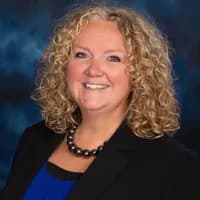
Una Raghavan
VP of Total Rewards, Securitas
Holistic Total Rewards: The Strategic Advantage for Business Growth
Episode 17 · December 6, 2024 · 9:14
Holistic Total Rewards: The Strategic Advantage for Business Growth
Key moments
In Una's words
“Without knowing the business, you really risk a mismanagement between your HR strategy, your talent needs, and your business enablement.”
“The traditional pillars of wellbeing for employers have been physical, mental, financial, social, and professional. But what we're seeing is a shift and an increased focus on work-life balance as well.”
“It sends the message that, you know, leadership cares about their employees, and I believe in turn, employees will care about the business in that regard as well.”
Transcript
Read the transcript1,362 words
HostWelcome to the Built by People podcast, where we share the stories and insights of the world's top HR leaders. Join us as we dive deep into the minds of HR executives, uncovering their strategies, challenges, and triumphs in shaping today's workforce. I'm excited to welcome Una to the Built by People podcast. And Una, one of the first questions I'd love to start with is tell me a little bit about your career journey and some of the key experiences that led you to where you are today.
GuestYeah, so after 24 years as a consulting actuary with large consulting firms like PricewaterhouseCoopers, Buck Consultants, and Willis Towers Watson, I was ready for a new challenge. I transitioned to the corporate world. I initially managed retirement plans, and then I led up benefit strategy and implementation. I then moved to a global organization where I was hired as the VP Total Rewards, for North America during a post-merger period. At that company, I was able to successfully harmonize the benefit plans, leave policies, and bonus plans across North America. And then that led me to my current role now as the VP Total Rewards at Securitas North America, where I'm working on building a total rewards strategy that supports and enables the business growth and development for our organization.
HostSo you've obviously led a lot of HR transformation work in your career. I want to talk a little bit about harmonizing benefits and compensation across organization. What's been key to effectively doing that for you?
GuestYeah, so one of the things that I've really found so to be essential is just understanding the business and the business relationships with the business leaders. I think you really gain important insights from your business that can help you shape your HR strategies. Without knowing the business, you really risk a mismanagement between your HR strategy, your talent needs, and your business enablement. And the other advantage of having a strong connection with the business is that when you're ready to roll out your strategies, these business leaders will become your change agents, and they can really help influence change across the, you, you know, across the organization because they'd been involved and engaged from the beginning. And I think that's one of the keys to success to, you know, to transformation work.
HostI remember when I first discovered you on LinkedIn, you had put together a post that talked about the wellness strategy that you have in place at your organization. What's your view on wellness strategy for organizations?
GuestYeah, so I think that employers have a huge, you know, opportunity to build an employee value proposition that incorporates a strong wellness strategy in their culture. The traditional pillars of wellbeing for employers have been physical, mental, financial, social, and professional. But what we're seeing is a shift and an increased focus on work-life balance as well. And so for companies that embed employee wellness in their culture, what we're seeing is a return on their investment by means of increased retention, increased motivation of their employees, and increased productivity as a result. So additionally, companies with a healthier population have lower medical trend rates, which is also a huge financial incentive also. So more holistically though, if you step back, it sends the message that, you know, leadership cares about their employees, and I believe in turn, employees will care about the business in that regard as well.
HostWhat are some of the key learnings you've had along your journey that can help other company leaders execute a wellness strategy successfully and benefit their employees?
GuestYeah, so I think no matter where a company is on their journey of providing wellness support for their employees, there's always room for improvement. And in order to create an effective wellness strategy, we have to find out what our employee needs are, because there may be a disconnect between what our employees need and what our employers perceive the need to be, right? So it's important to get that right. So this can be achieved by looking at utilization rate of existing programs, conducting employee surveys, asking for feedback during onboarding, promotions, and exits to really understand the needs of our employees, but also listening to our HR team and also listening to our employee resource groups. I think we can gain important insights from those particular groups of professionals. Then there's always the challenge of balancing all of the employee wellness strategies that you want to implement with the budget, right? Because it's not an unlimited dollar amount that we have to spend. So you have to choose the right combination of programs and plans that offer the highest return on investment or the highest value for investment for your employee. It's not a one-size-fits-all. Different organizations have different employee needs, different populations, and different goals. So you have to choose what's right for your organization at that particular time. And as leaders, we should be nimble enough to be able to adapt then our wellbeing strategies as technology changes and labour markets shift. So keeping a constant eye on the offerings is, is really important as needs change over time.
HostCan you share what are the major challenges you faced in your career and how you overcame
Guestit? So, so one of the challenges I felt within in leading a team is when you don't have the full support of team members, you know, every decision seems to be a struggle or there is a feeling of resistance or obstacles along the way. And, and I think that feeling will probably resonate a lot with, with leaders. You know, it's understandable not everyone is comfortable with change, and often in transformational roles, this can be a challenge. And, you know, while I don't have all the answers, I do see myself as a leader and not a boss. And I do feel like it's my responsibility to inspire my team so that they're choosing to work together rather than reluctantly complying because I told them to. And I think that's a really important distinction. And I believe if you can get that balance right, then you're setting yourself up and your team up for success.
HostJust building on that a little bit, I'm curious to get your perspective on what you're doing to inspire employees to work together versus the opposite of people being reluctant to comply.
GuestYeah, I just feel like, you know, frequent check-ins with your employees, I, first of all, I work on, you know, really building your network within the company, the broader HR community, business leaders, operations, finance, tech, and legal, and quickly get an understanding of the business and how they operate. As a total rewards leader, I lean heavily on consultants, brokers, and vendors to understand the broader total rewards landscape, what our peers and competitors are doing, what's on the horizon, and how we can be be best prepared for the challenges ahead. So being able to inspire our team in that regard, I think, I think is super helpful.
HostThat's great. And what parting advice would you share with someone seeking to become a total rewards leader at a large organization?
GuestI think a couple of things, right? If you are lucky enough to be able to hire a team, if possible, and, you know, hire employees with skill sets that are opposite to yours. It's not always possible, but I think you can't be an expert in everything. So surrounding yourself with a team with broad knowledge is essential, but it also enables the diversity of thought as you collaborate and solve problems together. And finally, I believe you'll have the most success if you're fortunate enough to work for a company or an organization where you believe in the purpose of the company and a place that's a good cultural fit for you. And, and that's where I think you'll see the most success.
HostGreta, thank you so much for joining us on the Built by People podcast. It was a pleasure having you involved.
GuestYou're very welcome. It was my pleasure.
More conversations like this