Episode 114 · March 10, 2025 · 11:03
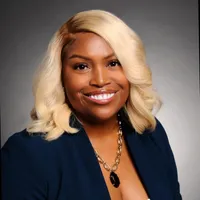
Maggie Ruvoldt
CHRO, LEARN Behavioral
TRANSFORM EPISODE: Maggie Ruvoldt, CHRO at LEARN Behavioral
Episode 114 · March 10, 2025 · 11:03
TRANSFORM EPISODE: Maggie Ruvoldt, CHRO at LEARN Behavioral
Key moments
In Maggie's words
“I always feel as if, if it doesn't scare me a little bit and doesn't give me the opportunity to grow and learn, that it's probably not the right next thing.”
“you can't be good in this role if you don't understand all the other levers of how the business works.”
“Teach me about what you do every day and how it drives the business so that I can partner with you better and support you better.”
Transcript
Read the transcript2,010 words
HostWelcome to the Built by People podcast, where we share the stories and insights of the world's top HR leaders. Join us as we dive deep into the minds of HR executives, uncovering their strategies, challenges, and triumphs in shaping today's workforce. I'm excited to welcome Maggie to the Built By People podcast. Maggie, thank you so much for joining us. And as a starting question, I always love to ask if you could share a little bit more about your career journey.
GuestI'm happy to. I'm thrilled that you asked me to be here, and I'm looking forward to our conversation today. I always say that I didn't have a career, I had a careen, because mostly I didn't have a real 5-year plan or anything like that. I just look at, oh, that opportunity looks interesting, or that looks a little scary. I always feel as if, if it doesn't scare me a little bit and doesn't give me the opportunity to grow and learn, that it's probably not the right next thing. So what might look intentional on a piece of paper was definitely not intentional. Most of the 30 years I have been in, a little more than 30 years, in business roles were spent in HR, but I did spend a good portion of it out in roles doing operations and account management and owning P&Ls. It's been a little bit all over the place, but I've had a really good time.
HostMaggie, you describe yourself as a business leader who happens to do HR for a living. How has that mindset shaped your approach to HR leadership? Why do you think this perspective is crucial for success in HR?
GuestGreat question. You know, and this came from a number of mentors I had over the years, starting with, um, my Aunt Sally, who's actually the person who introduced me to HR. And she taught me from the very beginning that you can't be good in this role if you don't understand all the other levers of how the business works. So you've gotta learn the, the finance side, you've gotta learn marketing, you've gotta learn operations. You really have to be an expert in what your business does. In order to bring great expertise to that. So I feel like all HR folks have to really understand all the mechanisms of what's gonna make a business successful in the same way that a marketing person needs to fully understand the product in order to be able to market it. So it's really shaped me from the very early stages of my career. It's actually why I went back and got an MBA later.
HostMaggie, what strategies would you recommend for early career HR professionals to develop this broader business acumen that you've accumulated over the years?
GuestI'd give the same advice to those folks as I would give to anybody starting out or early career folks, which is, but HR people are better positioned to be able to do this due to the nature of what we do and who we get to interact with every day. So I tell my team and every team I've ever had that what they should do is go out and ask a very simple question. To every department that they work with. Teach me about what you do every day and how it drives the business so that I can partner with you better and support you better. And when you come from that question, the reason I think that's a powerful question is it allows them to open up in a very, you know, they're not gonna be defensive about the question. They're not worried about what your agenda is, 'cause you're being really clear that what you're trying to do is in order to do my job better, I wanna understand your job better and what you are trying to accomplish. And if you manage to do that with every single department across the business, you're gonna end up with the picture that you need of all of those functions. And if you do that consecutively from every role that you have business to business, you're gonna learn the general knowledge that you need, not just like what's specific to the company that you're in today.
HostMaggie, can you elaborate on your perspective about trust being the foundation for innovation? How do you see the current erosion of trust between employers and employees impacting organizational growth?
GuestYeah, I'll admit I have to credit Brené Brown for the beginning of that. So she talks a lot about if you're not, you can't have innovation without vulnerability. If you don't assume you are going to fail, you'll not innovate. That has to be, you know, you have to be willing to potentially fail. You have to believe you're going to fail. That's how you're gonna take those risks. So in order to be able to put yourself in that position to really be vulnerable, to create those innovations, to take those risks, there has to be trust with the other people that you're working with and with the organization. And when I think about the employer and employee relationship, every relationship you have in your life is based on trust. But what's unique about the employer-employee relationship is it's actually kind of a triad. There's the employee and their manager, and then there's this sort of entity up there that we all think about as the company, as if the company was a person that made decisions and that had actions. And for years, we've all been saying people don't leave jobs, they don't leave companies, they leave managers. And I think that's generally true 'cause your direct manager has the highest level of impact on your day-to-day. But what I think's happened in the past couple of years is the company, in a lot of ways, is making big decisions that are having an outsized impact on people's day-to-day. Return to work, commitment to DEI, how we're all handling what AI is gonna do to people's day-to-day work and how much we're talking about that. Where I think the erosion is happening is between not the direct manager and the employee, but the employee and the company, like the logo almost that people are having. And as leaders, we need to think about, as much as we think about company culture, how, what are the ripple effects that those decisions are having on people's, not only employee experience, but on their entire lives, right? When we say you've gotta come back to the office, we're impacting commutes, we're impacting childcare, This has been a wonderful time for people of different abilities who, for whom working from home opened up a lot of access. But we're also saying something about how much we trust that you're going to get your job done. I'm proud to work for a company that other than when your job specifically requires you to be in the office because you're working with children every day or you're in a school every day, we do allow our employees to continue to work from home. So I think those are kind of the trust pieces that are going on across the board that's interesting and sometimes concerning to watch.
HostMaggie, I want to switch gears and, and talk about AI. When implementing new initiatives like AI, you emphasize taking an enterprise-wide approach rather than solving problems in individual domains. Can you share an example of how that holistic thinking has benefited your organization?
GuestSure. And you know, I'll be honest, we're really at the beginnings of this. The reason I say we shouldn't be— AI is this amazing opportunity, and the reason I think we shouldn't be thinking about this as HR's gonna solve it in their space, marketing's gonna solve it in theirs, customer service, billing, you know, all the different places is really partially at cost. 'Cause you'll end up with all these different disparate solutions that you're paying more for that don't talk to each other and don't accomplish a goal together. AI is, I think, a unique technology opportunity that's gonna impact the entire organization. So we should be thinking about what is our strategy? Where do we think we're gonna get the most leverage out of this? How do we wanna make sure that these, all these systems are working together and all these teams are working together? And so I think where it's benefiting us right now is we're having that conversation. Even though some teams might be farther ahead than others, everybody's keeping each other in the loop. As to where are we using it? Where do we think it's gonna be beneficial? What are you learning with your team that maybe is gonna benefit mine? And what are you, what is the impact that of what you are doing that's gonna head in my direction? So I think, you know, from a leadership team perspective, it's the fact that we're having the conversation about it broadly as opposed to each kind of off running our own thing.
HostWhat's your take on the current state of employee experience and what role should HR play in rebuilding trust within organizations?
GuestThat's a great question and a tough one. I love the way you phrased the question because it has a basic implication that employee experience isn't solely owned by HR, because it's not. And I think when companies think of it that way, then it takes the ownership away from everybody else who has such a huge impact on the employee experience. I think where our role is right now is to speak up and to be the voice that says, let's think about what this means from an employee experience standpoint. And, you know, there's a lot of chatter out there about employees, the HR team's not there for employees, they're there for the company. That's true, right? That's a lot of what we're doing. But when we can create and help create an engaged employee base and experience, We're gonna be better at customer service. We're gonna be better at innovation. We're gonna be better at all of those things. So I think we need to be very vocal, particularly around the trust issue, to have those conversations and to be really brave at the table when you need to say the thing that's going to be unpopular and that's going to be challenging. And that can be really hard to do sometimes, but it's critical for us to be doing it right now.
HostMaggie, what parting advice would you like to share with our community?
GuestWell, you brought up AI, and so I would— my advice to everybody is don't leave AI to the comp sci majors and to the technologists. They have a huge part to play, but every single one of us can be learning more and leveraging more about it. And this is particularly true for women. There was a recent study that talked about women are 16% less likely to use AI as their male counterparts are in the exact same job. And so we can't be left behind, and HR in particular can't be left behind. So if you're an HR professional listening, you know, go out, take a course. It's actually oddly easier than you think it is. And start simple. I, I took some advice from somebody when I got started playing around with AI, and he was like, give it a list of what's in your refrigerator and ask it what to make for dinner. Think about going somewhere for the weekend. Tell it where you're going, ask it to make a plan. Just embrace it and get running with it.
HostMaggie, thank you so much for joining us on the Built by People podcast. It was a pleasure to have you involved.
GuestIt was a pleasure to have the conversation. Look forward to further conversations too.
More conversations like this