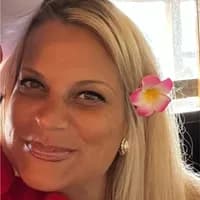
Brian Little
Chief People Officer
Altera
From HR to Business Partner: Authentic Leadership Transforms Workforce Strategy
Thesis
“HR leaders must operate as authentic, commercially-minded business partners, utilizing data-driven workforce planning and empathetic communication to successfully navigate external disruptions and cultivate an environment where employees feel valued amidst organizational change.”
What you'll take away
- 01HR leaders need a clear 'north star' and authenticity to effectively guide organizations through external disruptions and maintain employee trust.
- 02Successful change initiatives, like return-to-office, require transparent communication of the 'why' and active listening to employees, even if full agreement isn't reached.
- 03Proactive workforce analytics and strategic planning are essential to align short-term financial goals with long-term talent needs, preventing reactive hiring and layoffs.
- 04Retaining top engineering talent hinges on ensuring meaningful projects, strong mentorship, and well-defined, attractive technical career paths.
- 05HR's most critical role is to be a strategic business partner, understanding the company's commercial objectives and contributing value beyond transactional tasks.


What most organizations get wrong
- "I don't really believe you can be a successful HR executive if you're just simply baking the cakes." (Pushes back on a transactional view of HR, advocating for strategic partnership.)
- "My advice is you can't go back in time. You can't put the genie back in the bottle, but you can make a case for whatever it is that you want to do in the future." (Challenges the idea of reverting to pre-pandemic work models, emphasizing forward-looking justifications.)
In Brian's words
“I don't really believe you can be a successful HR executive if you're just simply baking the cakes.”
This quote highlights the need for HR to be strategic business partners rather than just administrative functionaries.
“My advice is you can't go back in time. You can't put the genie back in the bottle, but you can make a case for whatever it is that you want to do in the future.”
This emphasizes adapting to new realities rather than resisting change, especially regarding evolving work models.
“The biggest challenge is being able to use, I would say, good workforce analytics and strategic workforce planning tools to really think about getting ahead of that so that you don't, for example, hire a bunch of people that you turn around 6 months later and say, we don't need them.”
This underscores the critical role of data-driven planning in avoiding costly, short-sighted hiring and firing cycles.
“If you're working on a project that you feel that the company doesn't value, you're looking for another job.”
This illustrates the direct link between assigning meaningful, valued work and retaining top talent, particularly for engineers.
“Remember, first and foremost, our job is to be great business people, to actually help these organizations succeed. And using our creative talents that we bring to the table with HR is super important, but our lens has to be very commercial and business-oriented.”
This reiterates the core philosophy that HR must adopt a commercial perspective to effectively create value and be recognized as strategic partners.
The problems this episode addresses
- HR leaders struggle to maintain company competitiveness and employer attractiveness while ensuring employees feel valued and supported amidst constant external change.
- Companies often fail to adequately explain the 'why' behind major organizational decisions like return-to-office mandates, leading to employee resistance and feelings of being interchangeable.
- The challenge of balancing short-term financial goals (e.g., quarterly) with the long-term impact of workforce decisions, often leading to reactive hiring and restructuring.
- Retaining top engineering talent is difficult if they perceive their projects as undervalued or lack clear career progression and mentorship opportunities.
- Maintaining personal connections and preventing employees from feeling like 'just another cog in the machine' in a distributed or hybrid work environment, especially across time zones.
- The struggle for HR to be seen as strategic business partners rather than just an order-taking or administrative function ('baking the cakes').
In this episode
Covering monthly expenses is the number one concern for employees in 2024
Built by People
I worked in operations for a while when I got out of college
Tim Sloan on His Career Journey
Last time we spoke, we talked about how external factors can disrupt careers
An HR Executive's Strategy for Challenging the World
How do you balance keeping your company competitive while ensuring employees still feel valued
The Need for Employee Engagement
Brian, we've talked about the importance around consolidation. How do you do it effectively with a human element
The Need to Consolidate Your Workforce
75% of your workforce are engineers who prioritize the quality of their projects
Reasons to Retain Top Talent
Brian, the return to office trend has sparked a lot of debate
Employee Culture: Virtual Work
Brian, what parting advice would you like to share with our community
Brian Brennan's last words
Brian, thanks so much for joining us on the Built by People podcast
Brian McGuire on Built by People
Topics covered
Organizations and entities mentioned
Full transcript
Expand transcript (0 words)
Transcript is not available yet.