Episode 121 · March 18, 2025 · 11:53
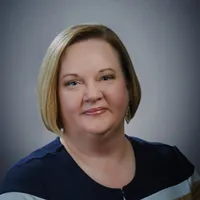
Antoinette Chukudebelu
Chief People and Equity Officer, Murmuration
TRANSFORM EPISODE: Antoinette Chukudebelu, Chief People and Equity Officer at murmuration
Episode 121 · March 18, 2025 · 11:53
TRANSFORM EPISODE: Antoinette Chukudebelu, Chief People and Equity Officer at murmuration
Key moments
In Antoinette's words
“One of the things that I spend a lot of time doing is thinking about our people strategy and how I align that with our business strategy.”
“Scaling well is really hard. This is really for all of the HR folks who are in a small organization and their organizations are growing, and you're really trying to balance the needs of the short-term while building for the long-term vision.”
“I would argue that the skill sets that you need in both of those businesses are relatively similar, right? Except for when you're in a small business or midsize business, you have to both execute and vision set.”
Transcript
Read the transcript2,001 words
HostWelcome to the Built by People podcast, where we share the stories and insights of the world's top HR leaders. Join us as we dive deep into the minds of HR executives, uncovering their strategies, challenges, and triumphs in shaping today's workforce. I'm excited to welcome Antoinette to the Built By People podcast. Antoinette, thank you so much for joining us. And as a starting question, I always love to ask if you could share a little bit more about your career journey.
GuestYeah, thank you. It's such a pleasure to be here today, and I'm very excited about the opportunity to speak on this podcast. And I want to tell you all a little bit about how I actually came into HR. So I actually am an educator. I started my professional experience as a teacher. I was a kindergarten teacher teaching 25 kindergartners in New York and learned a lot about engagement, learning and development. How do you keep people really engaged and thoughtful, but also thinking about the profession of education. And that led me to be thinking about how do we get really strong people in some of the best and most important jobs in the world. And that led me into the talent field. So I first started in the talent field really through learning and development, and so brought my educator background in as a teacher and a professor, as we were teaching about career journeys and management. Then went through all of the different pieces into the recruitment cycle, HR cycle, before I started leading talent teams for organizations that are doing really good work. And so now I have the pleasure of leading in the role of Chief People and Equity Officer at Murmuration, where we're building data tools and technology to increase civic engagement across many different sectors.
HostWhat a great mission. And Antonette, I want to jump in with my first question, that is, How do you approach building an integrated people strategy for strategic impact, and what are some of the key elements that contribute to its success?
GuestI really love this question because one of the things that I spend a lot of time doing is thinking about our people strategy and how I align that with our business strategy. I think a lot of leaders do the same thing as well. And so when I think about this work in particular, I'm thinking about a couple of different things in that question. One is approach. Two is the actual strategy, and I think the third is the impact. So, approaching the strategical piece of this is really trying to understand what the business is actually trying to do. And I know a lot of us leaders say this a ton, but you really have to go deep into what is the long-term strategy of the business, how are they trying to get there, and then how do we actually move our people and the work that they're doing to be able to meet that need. That approach takes a lot of listening, understanding, empathy, and humility, knowing that we are not on the first lines of doing the tech work or doing in the healthcare pieces or whatever business it is, but you've got to have that listening approach to be able to understand what's happening on the business at every single level. Two then is coming up with a strategy that aligns with that. You first start with your recruitment and your people strategy in terms of the people that you're actually bringing in. Then you're looking at your talent that you currently have and what are the skill sets that they need to be able to meet that approach and that business strategy. And then thirdly, we're thinking about that impact. And I think one of the most important things that we've seen through kind of the transition in HR is impact. How do we actually measure the work that we are doing so that we can get our companies to invest more in some of the initiatives and work that we are doing? So That impact piece is really important to thinking about the success of having an integrated people strategy as it relates to strategic impact.
HostAntoinette, can you share your experiences in scaling businesses and the unique challenges faced when growing a company from a small size to a larger scale?
GuestYeah, this is one of my favorite things to really talk about, and I really spend a lot of time trying to think about this, is I've done this at a couple of different organizations, and scaling well is really hard. This is really for all of the HR folks who are in a small organization and their organizations are growing, and you're really trying to balance the needs of the short-term while building for the long-term vision. So the organization, as we talked about a little bit earlier, has that long-term strategic vision, but there are things that actually really need to be done right now. To be able to get us there over the course of time. I think one of the trickiest pieces and the challenges behind this is honestly sustainability, and some of it comes at a cost of culture. So, I'll give you an example of this. At one of the organizations that I was working at when we were really small, around probably 30 people, we used to do like individual birthday celebrations. And we would have everybody in the office getting together for a birthday celebration. And it was a really nice cultural piece that we could really get to know one another and people really understood the culture behind the business. And then as you grow, those individual birthdays become harder and harder to do. So when you hit 100 people, it's really hard to do individual birthdays for everyone. And as you grow to 200 and 300 or more, it becomes really unsustainable, both from a cultural perspective and also from a financial perspective, right? The however much you were paying for that one person becomes harder to do the more people that you have coming on. So when I think about the ability to scale the business, you really have to think about some of the policies and things that you're putting in place now and how they will last over the course of time, right? Pushing it out, 2 years, 5 years, um, and thinking about your growth and long-term strategic plans as you go. So really that balance is really tricky and it's super hard to do.
HostAnd so now what are the differences and similarities in managing a small HR department compared to a larger one? How do you balance vision setting with execution in those environments?
GuestYeah, so this is something that is really fascinating because I think When it comes to the field of HR, sometimes people will say, oh, okay, either you're a large business HR person or you're a midsize or small person in terms of your ability to run HR. And really, I would argue that the skill sets that you need in both of those businesses are relatively similar, right? Except for when you're in a small business or midsize business, you have to both execute and vision set. And so while in some of the larger businesses you have teams of 80 and 90 owner or more, so you don't really have to get down to the weeds and the recruitment and all of those other pieces. When you're at a mid-size to smaller business, you do. And so it really is a seesaw. And so you're finding the balance between your strategy and your opportunities to be more strategic. And then at the same time, and sometimes even on the same day or within the same moment, you're having to go into the weeds and execute on something yourself. And so that skillset is one of the key differences that I think between some of the smaller HR departments and some of the larger ones. And the balance of that vision setting and execution really comes with just an ability to be nimble and flexible. And it is truly a skill set to be able to learn how to balance being up high in the vision setting, um, and come down low super quickly, like within hours and in a day in some cases.
HostAnd so now, how do you see the future of HR evolving, especially in terms of supporting smaller departments and organizations?
GuestI think, like, when we talk about the future of AI, I think anyone would be remiss not to talk about the role of AI as it relates to HR. We've talked about HR as a function not being left behind as AI continues to move forward, and HR as a function really being at the forefront of what AI can do. And so I think that's the first thing. And so when we think about that future, we have to recognize that AI is going to be a big part of it. I think it's important to note that almost 25% of startup or small companies don't have an HR department. And so I think one of the fun sayings that, that, that is out there is usually by the time a company realizes that they need HR, it's too late, and the HR department is already under-resourced. If you're in that kind of situation, AI can be critical for you, and you can be utilizing it to really get you ahead and to move you forward in places where you might already be feeling underwater and needing to be up to speed. I think the other place that I would want to talk about in terms of the future of HR evolving is really updating the HR-to-staff ratio. I think it's, in particular, extremely outdated when you look at some of the research out there for ratios that say it's 2 HR people for every 100 staff members, right? Or whatever the case may be, which has left the function and field really under-resourced and consistently underutilized. And then on the other hand, we have a movement that's talking about the HR function being at the forefront of strategy, right? And we've talked a little bit about that today. And those two things are very difficult to do when you just don't have enough resources at your disposal. So I think the future of AI really has to push HR forward. And I would also say that the future of HR really needs to relook at that ratio and to say, hey, we need more resources. And actually, if you want a functioning HR department, that can do more for your business, here's how to resource it appropriately from the start, right? And really growing it from there.
HostAnd so now what parting advice would you like to share with our community?
GuestThis is really tough because there's so many things that I want to share with the community out there, but I think that the one thing that I would want to mention here is just to think inclusively. I think it's really important as HR leaders that we oftentimes put our organizations first. When it comes to doing things for the org, we think about the organization prior to actually thinking about your own team as a part of the organization. And so I would encourage leaders out there to not only invest in the growth and scaling of the business, but the growth and scaling of your department. And so to think inclusively about the business as it relates to the HR function within it.
HostAntoinette, thank you so much for joining us on the Built by People podcast, an episode put in partnership with Transform. It was a pleasure to have you involved.
GuestThank you so much for having me.
More conversations like this