Episode 97 · February 17, 2025 · 11:11
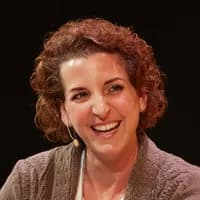
Tenia Davis
CHRO at NORC at the University of Chicago, NORC at the University of Chicago
Beyond Algorithms: Why Human-Centered HR Wins in the AI Era
Episode 97 · February 17, 2025 · 11:11
Beyond Algorithms: Why Human-Centered HR Wins in the AI Era
Key moments
In Tenia's words
“I never said this is not my job, and I never said I don't wanna do it. I just embraced it, willing to learn, and thankful for the people that had confidence in me to continue evolving me and growing me into where I am today.”
“Organizations that are led by servant leaders, are they able to sustain it? Are they able to thrive? And how does that really influence the leadership in, within that ecosystem?”
“Being able to have self-awareness, which I think is very key. Problem solving, the ability to make decision-making, change management, I think is key as well. I mentioned emotional intelligence and the ability to coach and direct in a meaningful way using all the competencies I just listed.”
Transcript
Read the transcript1,829 words
HostWelcome to the Built by People podcast, where we share the stories and insights of the world's top HR leaders. Join us as we dive deep into the minds of HR executives, uncovering their strategies, challenges, and triumphs in shaping today's workforce. I'm excited to welcome Tania to the Built by People podcast. Tania, thank you so much for joining us. As a starting question, I always love to ask if you could share a little bit more about your career journey.
GuestWow. So, you know, just to sum it up quickly, I would say I've had an amazing journey through amazing people. I started off actually in, yeah, as a tech, and then I was kind of voluntold into human resources just to make the story short and loved it ever since. I love the diversity in the job in terms of compensation, benefits, recruiting. There's so many different aspects of human resources. What it is today is strategic HR. It has really evolved into a business that I really enjoy. So I've had great mentors along the way. I've had great opportunities. One thing I will say that was consistent throughout is that I never said this is not my job, and I never said I don't wanna do it. I just embraced it, willing to learn, and thankful for the people that had confidence in me to continue evolving me and growing me into where I am today.
HostTanya, you've written two books, one on servant leadership and another on feedback. What inspired you to focus on these specific areas of leadership development?
GuestYeah, so, you know, I will say this servant leadership, when I was at Harpo, I was with the president, Tim Bennett, who was just an amazing leader. He had a book on servant leadership and he modeled what a servant leader is without ever calling himself a servant leader. And I was always curious, you know, organizations that are led by servant leaders, are they able to sustain it? Are they able to thrive? And how does that really influence the leadership in, within that ecosystem? And so, as I started that journey and started researching and interviewing folks, you know, I was curious, right? You know, when folks kind of evolve as leaders and become a servant leader per se, and they move on to other organizations, are they able to carry on that learning and able to continue to grow as a leader in that leadership style. So that's kind of more out of curiosity to see what creates a good work environment, a good culture, what, what are aspects and attributes of what's considered good leadership. That's really where it started, was it just out of my curiosity of how do we continue to develop what we consider good leadership that supports and propels a good company culture. So that's kind of where all that started. And I took all the learnings and research and put it into a book, and I, I wanted to make it really simple. One thing about, you know, folks don't have a lot of time to read. However, they do want to consume good information that they can use and apply. And so that is what started that journey. And my intention was to provide something that folks can, can consume quickly, apply within their environment, and, and have more or better success.
HostTania, in your experience mentoring HR leaders, what are the key competencies that you see as critical for success in today's HR landscape?
GuestRight. So I would say there are a couple of things. I see this more in terms of having solid EQ skills, having the empathy and understanding of the workforce, and also taking the time to listen. But most importantly, I would say having agility. Being able to have self-awareness, which I think is very key. Problem solving, the ability to make decision-making, change management, I think is key as well. I mentioned emotional intelligence and the ability to coach and direct in a meaningful way using all the competencies I just listed.
HostYou've mentioned in the past the importance of maintaining humanity while using tools and frameworks in HR. Can you share an example of how you've successfully balanced these elements in your work?
GuestYeah, I would say I do it every day. I think it's important to have empathy, to have good listening skills, to understand the, the landscape of the culture in which you are operating in is very key.. And as you are problem solving and doing the day-to-day work, it's important to marry that with how you connect in with folks, right? I think today's workplace is so complex. Everyone wants to be heard and seen. I always say people come from different parts of the city and then they converge in the workplace, and they're all coming in with their different perspectives, backgrounds, mindsets. And so that doesn't go away when they walk into the, the workplace. Place. And so how do you take the best of everybody's superpowers and get the best product? And so there is an artful way of doing that. And a lot of it is how you coach folks through, how you listen, empathy, authenticity. I think those are all important to have and still get to the end product. However, how you coach and mentor and guide folks through that, I think is a little different in the workplace today.
HostYou've developed a framework for constructive insights. Could you walk us through how this framework helps leaders overcome their reluctance to give feedback?
GuestYeah. So listen, I will say this, from when I started my career to now, this is the number one thing that leaders hate to do and employees hate to hear, right? And so, you know, how do you give feedback? And I have spent a lot of time coaching leaders and employees and leaders on how to give feedback and employees on how to hear feedback. One of the reasons why I wrote the Feedback Blueprint is I wanted to give folks an easy tool to have conversations. The Constructive Insights is nothing new. All I did was expand it. So in the framework of Constructive Insights, you have situation, behavior, impact, and what's considered next steps. However, based on my experience, what I found is that there are two other components that must be present in order for that framework to occur. To build the confidence, to build the trust, and that is self-awareness and reflection. Because it's hard to teach or evolve or coach a leader if they don't have self-awareness and reflection, right? So it's more an ex— my model expand is an expansion of the constructive insights. And in doing so, I coach leaders on how to have a conversation in a constructive way., but not in terms of feedback and, you know, a one-time occurrence. How do you continue having a dialogue along the way where you're building a relationship? Because it's hard to give feedback if someone doesn't know you, doesn't trust you, right? So you're not connected. The workplace today, folks want to feel you are connected, you understand, even if you disagree, which is good. How do you have that conflict in a constructive way where there's trust and where there's respect, right? And so, In the Feedback Blueprint, I kind of constructed this in a way, and I gave some examples too. I think humor is always fun so that people can apply it. And then I created some tools that people can just use right away on how to have conversations sometimes that might be a little difficult, or if it's routine, but how do you continue building the relationship to have these conversations to get the productivity out of the, out of your folks? And then also I included How do you help the employee hear the feedback? Because it, it, it, there, it must take, you can't just have it one-sided, right? And I think a lot of times that, that's what hurts a conversation is that the employee doesn't, that's part of the conversation, doesn't know how to hear it in a constructive way to know what to do with it, right? And then how do you create the agreement and moving and partnership and moving forward, right? So that's. So that's kind of the short story around that.
HostAnd how do you see the evolution of HR leadership skills, and what should upcoming HR leaders focus on to prepare for future challenges?
GuestI think we have a very hard job ahead of us. Outside of therapy, I think it's going to be, you know, in all seriousness, you know, I do think there's gonna be some challenges, but I think they're great challenges. I think the, HR space has evolved in such a positive way. And, you know, HR folks come with stronger chops and, and know how to marry, you know, the HR practitioner side of it with the business, right? Still keeping the human side of it, but also focused on business results. What's important, I think, is to really understand the impact and influence of AI. You know, people analytics, I think, is going to be extremely critical. And understanding how to retool organizations, I think, is going to be key. You know, importance of leadership development and what that means. And so, you know, leading a workforce today is so different than leading a workforce, you know, 5, 10 years ago. So, you know, looking at what does the organization need in terms of those competencies, how are you retooling your folks, how are you utilizing AI, how are people analytics helping you make decisions? I think that's going to be extremely key.
HostTania, what parting advice would you like to share with
Guestour community? Wow. You know, in today's climate, I think we all need to hit pause. I do think we need to focus on who we are as human beings and not get so tied up in a lot of the noise that's taking place, but more so how can we continue to help each other to thrive? And I think if we lose that, we lose who we are. As human beings. We have more to contribute collectively and we have more to give collectively. So I do have a challenge, especially in this time. I think all of us can have one act of kindness and test it out. One act of kindness. How can we give positive force out there to combat some of the things that are not positive? There's no judgment there. It, you know, I just think that we have more to give that is good than hurt and destructive.
HostTania, thank you so much for joining us on the Built By People podcast. It was a pleasure to have you involved.
GuestThank you.
More conversations like this