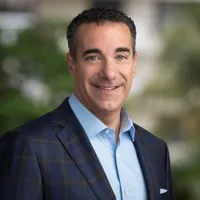
Sinead Condon
Chief People Officer
Guidewire Software
CPOs, your role isn't HR. It's time to lead business transformation.
Thesis
“Effective HR leadership, especially for Chief People Officers, requires moving beyond traditional HR roles to become strategic business leaders who can drive organizational transformation, operationalize scaling, and foster financial acumen and strong relationships across the company to facilitate clarity and achieve business outcomes.”
What you'll take away
- 01CPOs must evolve beyond traditional HR to become strategic partners in designing the operational future and scaling the organization.
- 02Educating employees on financial and operational acumen is crucial for transparency and buy-in during difficult decisions and organizational maturity.
- 03Avoid making assumptions; instead, absorb information, seek to understand, and qualify perspectives with others.
- 04Build strong relationships across the organization to remove blockers and facilitate outcomes.
- 05HR leaders should be curious, ask questions, and focus on driving overall business outcomes, not just HR-specific ones.


What most organizations get wrong
- Initially refused the head of HR role because she "was not interested in being an HR lady" but "interested in leading as a chief people officer," pushing back against a narrow view of the HR function.
- Challenges in the current backdrop are "par for the course"; the focus should be on "staying relevant, learning to build and operationalize and build world-class" rather than dwelling on the difficulties.
- "Your job is not to be a HR leader. Your job is to be a leader."
In Sinead's words
“I was not interested in being an HR lady. I was interested in leading as a chief people officer, which was a conversation that needed a lot of unpacking and education.”
This highlights her strategic vision for the HR role, moving beyond administrative tasks to a leadership position driving business outcomes.
“operationalizing and scaling organizations is probably one of the most difficult challenges that any company is facing.”
This pinpoints a critical and pervasive challenge for businesses in the current market and societal climate.
“A lot of employees don't necessarily have the financial acumen to understand what it takes to operationalize and scale a company.”
This identifies a specific gap in employee understanding that impacts organizational effectiveness and decision-making.
“We make assumptions about everything instead of qualifying our thoughts, our perspectives, our points of view with the people in our orbit.”
This offers a fundamental insight into overcoming interpersonal and organizational blockers through better communication and validation.
“Your job is not to be a HR leader. Your job is to be a leader. And one of the most powerful things that we can do is facilitate clarity and facilitate the removal of assumptions so that we can drive outcomes, whether it's HR related or not. It's not about HR. It's about driving outcomes, period.”
This powerful statement encapsulates her core philosophy on the elevated, strategic role of a CPO, emphasizing business impact over functional silos.
The problems this episode addresses
- Companies struggle with "operationalizing and scaling organizations" in an unprecedented market and societal backdrop, requiring robust, resilient, and agile structures.
- Employees often lack the financial acumen to fully understand the operational costs and the rationale behind critical business decisions involved in running and scaling a company.
- Organizational silos hinder employees from comprehending their holistic role and the interdependencies within the company's overall value chain, leading to inefficiencies.
- Assumptions and a lack of clear, proactive communication among team members create significant blockers, impeding progress and hindering the achievement of organizational objectives.
In this episode
Built by People podcast features insights from world's top HR leaders
Built by People
You're the Chief People Officer at Guidewire Software
COO at Guidewire Software
Can you share a specific challenge you faced in your HR leadership journey
What's the Challenge Your HR Leadership Journey Faces?
Operationalizing and scaling organizations is probably one of the most difficult challenges
When to Operationalize and Scale a Company?
Could you talk about some of the key lessons and takeaways in scaling and transforming organizations
Five Rules for Scalability and Transformations
What parting advice would you like to provide to our community about workplace culture
In the Elevator With CPOs
Topics covered
Organizations and entities mentioned
Full transcript
Expand transcript (0 words)
Transcript is not available yet.