Episode 327 · September 18, 2025 · 9:57
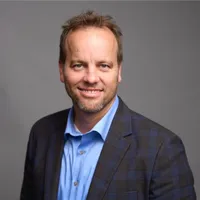
Sean Hartley
Global Human Resources Leader, Safeguard Medical
Why True HR Leaders Prioritize Organizational Impact, Not Personal Legacy
Episode 327 · September 18, 2025 · 9:57
Why True HR Leaders Prioritize Organizational Impact, Not Personal Legacy
Key moments
In Sean's words
“being on the other side of the fence, to look at what HR is providing the customer and how I've done it versus what the customer's actually looking for has been very helpful.”
“Sean, if your executive team came to you and said, We are no longer going to fund HR. The only way that the HR department is going to stay relevant is for your customer to pay for your services. How would you do it differently?”
“I learned a heck of a lot from that to say, you know what, you've got a team, you've hired a team, you put a team in place, make sure that you use them. They want to add as much value as you do. So allow them to do that.”
Transcript
Read the transcript1,725 words
IntroWelcome to the Built by People podcast, where we share the stories and insights of the world's top HR leaders. Join us as we dive deep into the minds of HR executives, uncovering their strategies, challenges, and triumphs in shaping today's workforce.
HostI'm excited to welcome Sean to the Built by People Podcast. Sean, thank you so much for joining us today. And as a starting question, I always love to ask if you could share a little bit more about your career journey.
GuestGreat, Dave. Well, thank you first of all, and excited to be a part of this podcast today. Yeah, look, I don't think I've had a very traditional HR journey, but, uh, it started, you know, to date myself, 25-odd years ago. Um, I was consulting for a software company and I got a call from a friend, as you do. It's about who you know, not necessarily what you know. And they had this opportunity to be an HR leader for, in the automotive industry. And they had a client who was looking for someone to come in and, uh, help with change and change management. So met with them and yeah, 25 years later, here we are. But along that, along that journey, Dave, I've been very blessed to have had a couple of opportunities from expat assignments. I've spent some time in France, some time in the Netherlands, but I've also, you know, taken other roles at the same time. I've also been a COO for a large organization. I've run some business units as well for other organizations. So, you know, being able to go in from an HR perspective, the one nice thing is you get to know the entire organization. That is both a privilege and sometimes a curse in HR is you are exposed to everything, but being exposed to everything also gives you those opportunities. So, yeah, along the journey, I've been really, really blessed to have a non-traditional path, so to speak.
HostJohn, how have those international assignments and also your roles leading business units or being a COO influenced how you lead as an HR professional?
GuestYeah, that's a good follow-up there, Dave. I'll say that being on the other side of the fence, to look at what HR is providing the customer and how I've done it versus what the customer's actually looking for has been very helpful. So that helps to refocus and look through it through a different lens than just an HR side. Right? Our biases will pick out what it is we want to do. But being in the, in the customer's shoes has really helped me to say, okay, well, what is the value that the customer really wants here? And I'll tell you that in one of my expat assignments, I met with an executive at Shell. He was one of the executives on the HR team. And he said to me, he said, Sean, if your executive team came to you and said, We are no longer going to fund HR. The only way that the HR department is going to stay relevant is for your customer to pay for your services. How would you do it differently? And so that was about 10 years ago. And I've taken that thought process through that. If we were not funded internally and we had to be our own profit center, how would we do things differently?
HostSean, can you tell us about a career-defining moment? In your HR career?
GuestYou know, I don't think I've had one particular career-defining moment. I'll go back to what you said about some of the experiences, my expat experiences. I think my career is defined by a number of different experiences and not just one moment, whether it be the, the two expat assignments, whether it be the other positions I've been in and roles I've been, you know, very blessed to have. There's not one particular. Defining moment. However, a number of years back, I was with a company. It was my first, let's say, large HR leadership role I had. And so I was chasing the career. And as part of that career chasing, you know, I was trying to really prove myself, show what I could do, how I could do it. And the one thing that I didn't put a lot of thought into was my team and what my team wanted and what my team could do. And so, you know, we had a 360 360, and that 360 feedback wasn't the best, as you can probably understand. And I learned a heck of a lot from that to say, you know what, you've got a team, you've hired a team, you put a team in place, make sure that you use them. They want to add as much value as you do. So allow them to do that. Give them that direction, give them the tools they need to do their job and let them go do it. And, uh, I was lucky enough to have learned that. A long time ago, and that's kept me in good stead as I've gone forward.
HostSo can you tell us about a challenge that you faced in your career and how you overcame it?
GuestYeah, you know, I'll go back to that, that story there about not giving people the opportunity to do their job. It was a challenge because, you know, I thought I knew the right way. I thought I knew the best way to do things. And so I was really pushing, pushing, pushing, but what I didn't do in that opportunity there was give my team the context and the why behind what it is we were doing. And so they didn't understand where we were going, you know, the journey, what we were trying to do. And so that's the one thing that I learned back then as well was context is really important. Information is not a power tool. It's there to be shared across your team. And to really trust the people. I'm asking them to trust me, but I trust in them too. And so, that moment there, I think, really helped shape how I look at teams, how I deal with teams, and how I deal with performers and non-performers at the same time. So, I was glad I had that at that time in my career, and that's really helped me as I've gone on.
HostSean, what's a legacy you hope to leave as an HR leader and why?
GuestSo I'm going to answer that using the word legacy. First of all, Dave, is that I was in the camp of using the word legacy. I was in the camp of, man, I'm going to leave my legacy. What does my legacy look like? I've done executive coaching. I've worked with executives around leaving their legacy until I realized that you get forgotten very quickly when you leave a company. People's memories are very short when you're no longer there. And so is it about leaving a legacy or stewarding a position, a role, so it's better, you've left it in a better state than what you received it in? So that's the camp that I'm now more subscribed to is my legacy will be what people think it is. Yeah, I can have an impact, of course, to that, but I'll also get forgotten very quickly as I move on, as I leave, when I retire, et cetera. However, what I'm more concerned about is, have I left my role and this company in a better position because of me now that I've left than not? And that's where I'll spend more of my time and my efforts into really stewarding the position for the next person to take it on.
HostAnd Sean, what parting advice would you like to share with our community?
GuestSo it's okay if you don't know exactly where you're going. Or it's okay if you don't know the end step for yourself. I didn't know. Sometimes I wonder where I'm going next anyway myself, but it's all about the journey itself and really enhancing yourself, enriching yourself with the experiences that you can get. So what I mean by that, Dave, is don't be afraid to take something you might not know much about. The privilege of being offered those things is because you perform well. If you're not a good performer, you're not going to get that. They're not going to ask you to do that. So it is a bit of a privilege to be asked to do that. You know, also, if you're doing a good job, you're going to get more work. Okay. But it's, it should be a feather in your cap if that happens. So never shy away from taking on something that you didn't have any experience on because you will learn from it. You will get better at it and you can offer the organization something or a new organization. It might be an opportunity elsewhere that you can go to. And the reason you have is because you decided to take on and take a chance and take on another, another role or another experience or another set of responsibilities that you didn't think you could because you say, hey, I'm in HR, therefore I'm in HR and I do HR. That's not the, that's not what I subscribe to. You know, as I said in the beginning, being in HR, you're exposed to everything across the organization. And sometimes you can see things that others don't. You can connect the dots across functions. People work in silos. You can break that down. And maybe that's an opportunity for you to come in and go, hey, maybe I'm right, the right person for this. Take a chance. What's the worst thing that can happen? Right? So, um, my parting advice would be, don't be afraid. Go do it. And remember, Being given those opportunities is a privilege because you are performing well and they do trust you to do it.
HostSean, thanks so much for joining us today on the Built by People podcast. It was a pleasure to have you involved.
GuestThanks so much, Dave. Really appreciate it.
More conversations like this