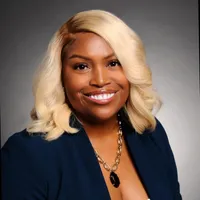
Roseanne Donohue
Chief People Officer | Chief Human Resources Officer
Cybersecurity Company (former)
Beyond Burnout: Why HR Leaders Must Integrate AI & Growth to Win the Talent War
Thesis
“HR leaders must proactively align people strategies with core company goals, focusing on employee growth through structured career development and transparent communication, while embracing AI to enhance efficiency and address challenges like burnout and tool integration.”
What you'll take away
- 01Align HR priorities directly with company goals, especially focusing on recruiting and retaining top talent to ensure organizational health.
- 02Implement structured career pathing programs, providing employees with tools, resources (mentors, classes), and stretch projects to identify and fill skill gaps for growth.
- 03Foster cross-departmental communication and collaboration through initiatives like 'Exec Connects' to provide unrecorded, safe spaces for dialogue and broader leadership exposure.
- 04Combat employee burnout by ensuring managers work with employees to prioritize tasks that directly tie back to company goals, emphasizing impact over sheer volume of work.
- 05Embrace AI in HR to increase efficiency, automate manual processes, and improve internal communication, such as implementing HR chatbots or AI agents for tool integration.


What most organizations get wrong
In Roseanne's words
“Typically focusing on things like career pathing, which is something that employees always want. They want to grow their career, professional development, you know, creating leadership programs to accelerate, you know, succession of future leaders. And then, of course, AI, right? So, you know, really encouraging employees to learn AI, to use AI, just to be more efficient. We've even created in the past— in a past company, I've created with the help of my team, of course, an HR chatbot, which is really cool. So, I'd say, you know, employee engagement, professional development, career pathing, and then, of course, AI are probably super top priorities as of late.”
Highlights her multi-faceted strategic priorities, emphasizing employee development and the practical application of AI in HR.
“I mean, I think every executive executive needs to be hands-on and roll up their sleeves and get involved in things that are not necessarily quote-unquote, you know, strategic. So, things like when you're in HR, you always have to deal with employee relations issues. You know, if there's a change in policy, an exception to a policy, you know, things like that just kind of come up on a daily basis, and you just have to handle it and roll with it. And it may not seem strategic, but those are the things that just have to get done to run a business. To make sure that the company is healthy.”
Underscores the practical, hands-on reality of executive HR roles beyond pure strategy, focusing on operational health.
“Yeah, I think a lot of the feedback that I've seen in engagement surveys from employees is around cross-department communication and collaboration. I think it's an ongoing initiative that we keep chipping away at and trying to create ways to have better communication and collaboration to make sure that employees are on the same page.”
Identifies a persistent pain point in organizations and highlights the continuous effort required to improve it.
“So, something I've implemented in the past is called Exec Connects. So, we actually pair up a department with a different department leader so that they can kind of learn from that leader, but also have a safe space. Like, it's not recorded. It's really supposed to be like a private little coffee chat where you, they can ask questions and it's just very open.”
Describes a specific, innovative program for fostering cross-functional communication and leadership exposure.
“Yeah, I mean, I would love to create AI agents that actually connected all of our tools and automated some of the processes. It's something that, you know, I don't think I haven't gotten there yet, but it's something I'd love to do in the future. So whether it's, you know, something like Abacus AI or something else where it could actually, you know, integrate all the tools that we use, I think that would be helpful. And then,, you know, use agents to kind of, you know, automate some of the processes that are being done manually.”
Expresses a clear future vision for leveraging AI to solve a common HR tech stack integration and automation challenge.
“Yeah, I would— two things. I would say, you know, focus on what really matters. You know, employees are working on a lot of different things. Managers really need to stay close to their employees, make sure they're really working on things that really do matter and tie back to the company goals. And then I'd also say, you know, for those who have not implemented AI, like, AI is the future. Don't be afraid of it. It will only help you. So, embrace it, learn it, use it. It's the future. And yeah, I'm just a big advocate of AI.”
Provides concise, actionable parting advice to leaders, highlighting focus and AI adoption as critical for success.
The problems this episode addresses
- Poor cross-department communication and collaboration leading to misalignment and reduced efficiency among employees.
- Employee burnout due to heavy workloads, especially in cost-cutting environments where roles aren't backfilled, leading to employees taking on more work.
- Difficulty for HR to ensure employees see, understand, and act on critical information amidst numerous distractions and competing demands for their time.
- Lack of integration between various HR tools and manual processes, hindering automation and overall efficiency within the people organization.
In this episode
Intro
You recently headed up the people function at a cybersecurity company
Top HR Executives: The People Organization
Every executive executive needs to be hands-on and get involved in things
In the Elevator With Executive Executives
A lot of feedback from employees is around cross-department communication and collaboration
WSJD Live: What's the Process That's Slow Your Team
Where do you see the biggest opportunity to improve an employee experience over the next year
Top Executives: Improving the Employee Experience
Employee engagement and collaboration being a big piece of improving communication
Employee Engagement Through Better Communication
Are there certain tools that would be broad-reaching across the company
Beyond Microsoft Teams: What If Your Company Expands to a Different
What platforms have been most essential for your operations in that sense
What's the most essential IT tool for your team?
I would love to create AI agents that connected all of our tools
If You Could Build a AI Agent, What Would It Do?
Roseanne shares some parting advice for leaders navigating rapid changes in workplace
Roseanne Barr on the Company's Rise
Topics covered
Organizations and entities mentioned
Full transcript
Expand transcript (2314 words)
Welcome to the Built by People podcast, where we share the stories and insights of the world's top executive leaders. Join us as we dive deep into the minds of executives, uncovering their strategies, challenges, and triumphs in shaping today's workforce. Now let's jump in and get started with our next guest.
Well, I'm excited to welcome Roseanne to the Built by People podcast. Thank you so much for joining us today.
Thanks, James. Happy to be here.
Awesome. Well, as a starting question, I always love to ask, tell me a little bit more about your career journey. How did you get here?
Sure, sure. So I actually grew up in the talent acquisition space, uh, earlier in my career, worked for a very large global financial institution. After that, did some consulting in executive recruiting and even some resume writing. After that, transitioned into more of high-tech cyber companies. So, I've actually been in the cyberspace for the past 10 years, and most recently headed up the people function at a cybersecurity company. So, kind of went from the talent acquisition side to kind of overseeing all of HR and talent.
That's a lot. That's a lot to take over. Okay. So, looking at that, like, what typically are top priorities for you, right, on both quarterly that you kind of focus on and then like yearly goals, right? What are, how do you kind of break those out?
Yeah, so, I think it really starts with looking at, you know, what are the company's goals, right? And then how does the people organization help support that? And usually, one of the company goals is focused around people. So, you know, recruiting and retaining the top talent. So, just to get a little bit more specific. Typically focusing on things like career pathing, which is something that employees always want. They want to grow their career, professional development, you know, creating leadership programs to accelerate, you know, succession of future leaders. And then, of course, AI, right? So, you know, really encouraging employees to learn AI, to use AI, just to be more efficient. We've even created in the past— in a past company, I've created with the help of my team, of course, an HR chatbot, which is really cool. So, I'd say, you know, employee engagement, professional development, career pathing, and then, of course, AI are probably super top priorities as of late.
Yeah. Well, I love it. Well, okay. So, with everything you have going on, right, you've covered multiple areas, you're still covering multiple areas. What, you know, if I were to sit down and shadow you for a week, where do you think I would see some of the time spent on things that maybe don't feel quite as strategic?
Yeah, good question. I mean, I think every executive executive needs to be hands-on and roll up their sleeves and get involved in things that are not necessarily quote-unquote, you know, strategic. So, things like when you're in HR, you always have to deal with employee relations issues. You know, if there's a change in policy, an exception to a policy, you know, things like that just kind of come up on a daily basis, and you just have to handle it and roll with it. And it may not seem strategic, but those are the things that just have to get done to run a business. To make sure that the company is healthy.
Well, this, and this might be a little bit more of a more direct question to that is, you know, from all the companies you've worked at, from the company you're at, where, what's like an internal process that you've kind of found maybe creates friction kind of consistently or maybe slows down your team? Is there something that's been a common thread that you've seen that you're like, man, if I could wave a magic wand, I would definitely streamline that process?
Yeah, I think a lot of the feedback that I've seen in engagement surveys from employees is around cross-department communication and collaboration. I think it's an ongoing initiative that we keep chipping away at and trying to create ways to have better communication and collaboration to make sure that employees are on the same page. So, we're making progress, but I think there's always work to do there. So, I think that's the biggest piece of feedback that I've heard in the past is, that making sure people are aligned and that what they're working on really kind of ties back to the company goals.
Yeah, I like that. Well, okay, so looking at that, what's one initiative you've rolled out that you're really proud of, right? You stamp your name on that one.
Yeah, so there's a few. I mean, I would probably say the career pathing, something that I've worked on most recently that was not in place before. So, literally meeting with, you know, managers of every department to understand what are the current roles, what are the career paths, and then creating tools and templates so that employees can actually use those to identify, here's what my current skills and experience is, here's what my ideal next role is, and where are the gaps, and what do I do to fill those gaps? Is it a class? Is it a job shadow? Is it a mentor? Is it a stretch project? So I think kind of putting formality around having an actual program where an employee can get a mentor, they have the tools and resources that they can actually use to get to their end goal has been, has been great and it's been well received.
Thinking through, obviously, the employee's experience, where do you see the biggest opportunity to improve an employee experience over the next year, right? And this is through multiple organizations and just kind of thinking through all companies, right? Where do you see that opportunity most?
Yeah, I think that, you know, employees tend to feel like they have a big workload, especially when companies are in kind of cost-cutting mode, potentially not backfilling roles, and employees have to take on more work. You know, they may get burnt out. So, I think the key there is really being crystal clear on what matters most and making sure that managers are working with employees to say, if this is really not tied to the goals of the company, like it's not not your top priority. So, can't do everything. You need to really focus on, you know, what's going to really make the impact.
Okay. So, okay. So, now thinking through, you already touched on it, right? Employee engagement and collaboration being a big piece of that. Obviously, after talking with lots of organizations, it seems like there's a pretty common theme that it's, it's getting harder to communicate with the employees and not because they don't want to listen, but more because you're fighting for their time, right? They have so many other projects they're working on. They're dealing with maybe a customer, right? They're on the customer support side, they're on the sales side, the engineering, right? They have so many things that they're— you're fighting for their time. What's one area where you're trying to improve engagement through better communication?
Yeah, great question. So, something I've implemented in the past is called Exec Connects. So, we actually pair up a department with a different department leader so that they can kind of learn from that leader, but also have a safe space. Like, it's not recorded. It's really supposed to be like a private little coffee chat where you, they can ask questions and it's just very open. So that's just another way to kind of get that cross-functional communication and collaboration and exposure for employees, like, to a different leader.
I really like that. Obviously, I've been in a few different organizations and I don't think I've had that before where I've had a leader from a different department come and speak to that because, man, that would actually help out a lot from just the overall What is your vision versus what we're trying to accomplish and how does this align? Because you get it in the big company meeting, but you don't ask the questions usually in there because you don't want to create a certain situation that might not look great. So, I like that approach a lot. Okay, thinking through just, you know, let's see, general communication, right? Whether it's, you know, through a Slack or Teams or email or intranet, right? How do you approach making sure employees actually see understand and act on the information that you are sending out?
Yeah, so in the past, you know, companies I've worked at have done, you know, monthly town halls where they flash up, you know, here's the company priorities, here's our priorities for the quarter. So keep flashing it, keep reinforcing it, and then also provide updates. So, you know, here's what we set out to do. Here's our progress to date. What's working, what's not. You know, I've had leaders send out weekly emails, kind of really being very granular of here's what happened this week, what went well, you know, what, what do we need to still focus on? So I think the constant communication through different channels, whether it's a town hall, an email, you know, a Teams chat, you know, company dashboards, I know that's something that, you know, is— I've worked on that kind of work in progress to get that information out. So using tools like, you know, Power BI And, and AI also helps.
I like it. Okay. So, I mean, you hit on a couple of things already. Is there, like, thinking through all the organizations, let's say you were going to a different organization, are there certain things or channels that you'd be like, we really need to implement this because you've seen such great results in the past? Are there any tools like that that you were like, yep, this is the one I would pick?
So, I, I've used Microsoft Teams, love that. I love Microsoft Loop. That's another one for collaboration. I've used an enterprise AI tool called Abacus AI. That is great. So, those are the ones I think that would kind of be broad-reaching across the company.
Okay. I like it. And I have to ask the question because you have so many listeners that come in and it's more of like, there's so many products in the market, right? And it's like, sometimes it helps to just be able to hear from multiple like, oh yeah, this worked pretty well for us, right? And kind of find some, some consistency to that. So, and, and okay, so now looking at just overall tools, right? Um, platforms, what have, what's been most essential for your operations in that sense?
Hmm, good question. Um, now you saying like for my team specifically within the people organization or like the whole entire company?
No, let's go with your team specifically.
Okay. I think my team probably uses Teams for communication because you can, you know, quickly chat, you can share documents, you can work live on documents. So, I would say that one probably. And then, of course, there's HR-specific tools that we use, our HRIS, and we have an engagement tool, a survey tool, a rewards tool, recruiting tool. There's many tools.
Yeah.
Yeah.
Well, okay, so then my next question for that is if you could wave a magic wand and improve any one part of your tech stack or workflow, what would that be?
Yeah, I mean, I would love to create AI agents that actually connected all of our tools and automated some of the processes. It's something that, you know, I don't think I haven't gotten there yet, but it's something I'd love to do in the future. So whether it's, you know, something like Abacus AI or something else where it could actually, you know, integrate all the tools that we use, I think that would be helpful. And then,, you know, use agents to kind of, you know, automate some of the processes that are being done manually.
Yeah. You're not alone on that one. I think that's a big piece, right? Everyone's like, I have got these 6 tools, but unfortunately, they're not all connecting together. How do I make that happen? Okay. Well, now my last question for you, right, is what parting advice would you share with other leaders that are listening, trying to navigate, obviously, the rapid changes, the rising employee expectations? What would you like to share with them to help them on their journey?
Yeah, I would— two things. I would say, you know, focus on what really matters. You know, employees are working on a lot of different things. Managers really need to stay close to their employees, make sure they're really working on things that really do matter and tie back to the company goals. And then I'd also say, you know, for those who have not implemented AI, like, AI is the future. Don't be afraid of it. It will only help you. So, embrace it, learn it, use it. It's the future. And yeah, I'm just a big advocate of AI.
I love it. I love it. I think that's a big part. Don't be afraid of it, right? It's here and it's here to stay. So, learn to work with it. Exactly. Well, Roseanne, thank you so much for joining us today on the Built by People Podcast. It's been a pleasure having you, and we're excited to have you on here more in the future.
Thank you.
My pleasure.