Episode 214 · May 27, 2025 · 7:53
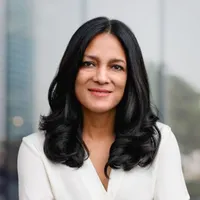
Ren Akinci
Chief People Officer, Emerald
Degree-blind hiring: Unlocking 60% of America's untapped talent.
Episode 214 · May 27, 2025 · 7:53
Degree-blind hiring: Unlocking 60% of America's untapped talent.
Key moments
In Ren's words
“For me, it was when I started reading statistics. For example, the US Census Bureau releases data that shows how many percentage of US workers don't have degrees, and that percentage is 60%. So that's a lot of people that you are not getting access to when you have college degree as a requirement.”
“I think it's actually a talent-first initiative. It's about training hiring managers and recruiters to spot potential and hire based on skills.”
“I think in general, for most companies, when performance issues do occur, they're usually tied to onboarding gaps, misaligned responsibilities, or unfortunately unequipped managers, not someone's education history.”
Transcript
Read the transcript1,283 words
HostWelcome to the Built by People podcast, where we share the stories and insights of the world's top HR leaders. Join us as we dive deep into the minds of HR executives, uncovering their strategies, challenges, and triumphs in shaping today's workforce. I'm excited to welcome Wren to the Built by People podcast. Wren, thank you so much for joining us. And as a starting question, I always love to ask if you could share a little bit more about your career journey.
GuestSure. Thanks for having me. I have been in HR for 15 years at this point across a range of industries— music, startups, media, hospitality, advertising. I also have a background in accounting, though these days I mostly use that for personal financial planning for me and my husband.
HostSo, Red, tell me about a moment you realized that college degree requirements were creating unnecessary barriers in your organization and how you initiated that transformation.
GuestFor me, it was when I started reading statistics. For example, the US Census Bureau releases data that shows how many percentage of US workers don't have degrees, and that percentage is 60%. So that's a lot of people that you are not getting access to when you have college degree as a requirement. And these are highly qualified people who may have developed skills through community colleges, military service, boot camps, certification programs, or even pure work experience. But they're routinely screened out due to degree inflation. I have personally always loved school, and if someone paid me to go back tomorrow, I would. I consider myself a lifelong learner and thrive in more of a structured academic setting. But I also recognize that not everyone learns that way. Some people are more hands-on and learning by doing, and that doesn't make them any less capable or talented. I would also add that early on in my career, I worked as a retail store manager, like throughout high school and college for cash, which ended up being one of the most formative experiences in my career. Because I was hiring at such a young age and training employees, giving feedback, tracking performance, and staying very close to the revenue, because you were responsible to drive revenue every day, depositing the cash. So a lot of responsibilities for someone at their teen years. That experience alone taught me how to make decisions early, which I think builds the confidence that you need later in your career. Not to mention, when I was in college for undergrad, HR degrees didn't even exist. So like many of my peers, I learned by doing. Doing. And that practical experience is what gave me a strong foundation in both business and the people side of work. And it's how I lead HR today. And none of that is really related to a degree that I attained in college.
HostRen, how does your partnership with OneTen work in removing educational barriers while ensuring you're still getting the right talent for your roles?
GuestSo around 4 years ago, my CEO, Hervé Sekki, and I made a conscious decision to remove degree requirements requirements for more than 75% of our job descriptions. Obviously, when we're hiring an attorney, we want the college degree because it's part of the requirements. That decision aligned closely with OneTen and what they were set out to do and their mission, which made the partnership very natural. And they've been a fantastic partner to us. They operate as an extension of our recruiting team, sending us qualified, vetted candidates who are ready to contribute. But what I appreciate the most about them is they don't just stop at the placement part. They bring together participating company CEOs and CHROs together on a regular basis so that we can all share best practices, some of the challenges, the progress we're making, how to hire in a skill-based environment. There's a real coalition effect, which I really appreciate, and I'm learning a lot from my peers just by Hearing their stories.
HostAnd when was a time you saw a direct impact on diversity and inclusion from removing degree requirements, and what specific outcomes did you measure?
GuestSo for me, removing a degree requirement isn't a D&I initiative. I think it's actually a talent-first initiative. It's about training hiring managers and recruiters to spot potential and hire based on skills. We made a very intentional decision not to track who does or doesn't have a degree because for us it wasn't about hitting hitting a metric or proving a point. It was really about removing a barrier that didn't need to be there so that we could hire in a high-growth stage, hire as many great candidates and as many great people as possible. So our focus was more on opening the door wider and trusting that the right talent would be able to walk through it as a result. We've obviously seen clear results that we've accessed new talent pools, strengthened our pipelines. We continue to meet our business objectives. I'll say this very bluntly, we've never had a talent fail because they lacked a 4-year degree. I think in general, for most companies, when performance issues do occur, they're usually tied to onboarding gaps, misaligned responsibilities, or unfortunately unequipped managers, not someone's education history.
HostRight. Can you share a story about an exceptional hire who might not have made it through your door under the old degree requirements? How did they contribute to the organization's success?
GuestSo I don't really wanna talk about one or two people that comes to mind, few of them that are on my team, 'cause that's their success story to tell and not really mine. And I wouldn't really wanna single out their story. What I will say is that we have hired an incredible number of talented people with service industry backgrounds. So we're thinking retail, hospitality, food service, and these are people who solve real problems in real time, right? Keeping customers happy and adapting under pressure. And at the end of the day, that's what every organization wants. We want employees who can collaborate, make decisions confidently, and drive customer satisfaction. When you hire for skills and potential first and you're giving people who may come from these industries a chance at corporate life and corporate careers, if that's what they want, you open up the doors for people who are already strong in some of these quote unquote soft skills that are actually really critical to success.
HostWren, what parting advice would you like to share with our community?
GuestI hope everyone listening today considers doing what we have done at Emerald, which is removing college degree requirements from jobs that deserve skills-based hiring and effort. And if you're not sure how to get started or if you want to have more information, please reach out to me. I'm very passionate about this topic. Wholeheartedly believe in it, and I'm happy to help anybody who's listening that wants to start this at their organization, whether it's all of their jobs, some of their jobs, or even 10 or 15 jobs. Progress is progress, and I think going back to that statistic of 60% of people not having college degrees, if you have talent gaps, if you're looking for people and you can't find people to, to place in the roles that you're hiring for, you're missing out a huge market, and I'd love to help you tap into it.
HostWren, thanks so much for joining us today on the Built by People podcast. It was a pleasure to have you involved.
GuestThank you so much. Happy to be here.
More conversations like this