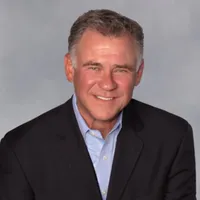
Michael Sloan
VP of Human Resources & CHRO
CommonSpirit Health
The New Leadership Equation: Intangible Qualities Trump Traditional Skills
Thesis
“True leadership and organizational success are not solely driven by traditional qualifications like education and experience, but by cultivating 'intangible qualities' such as adaptability, a willingness to learn, and the ability to foster collaboration and improve those around them.”
What you'll take away
- 01Prioritize intangible qualities like a willingness to learn, adaptability, listening, and collaboration over traditional resume metrics when identifying leadership potential.
- 02Leaders and organizations are obligated to actively provide growth opportunities and mentorship, not just hire employees to perform an immediate job function.
- 03Develop talent by understanding individual aspirations, offering support, and preparing the workforce for future challenges, such as AI, through continuous upskilling.
- 04Foster a team-oriented culture where individuals contribute to making those around them better and collective achievements are recognized over individual accolades.
- 05Organizations must remain agile and empower employees to drive forward-thinking initiatives, adapting to changing industry landscapes to avoid obsolescence.


What most organizations get wrong
- Michael Sloan challenges the conventional wisdom that overemphasizes traditional metrics (education, experience, pedigree) for leadership, asserting that intangible qualities are more critical for high performance.
- He pushes back on the idea of simply hiring people to 'do the job,' advocating instead for a proactive organizational commitment to employee growth and development, which often gets overlooked for short-term bottom-line focus.
In Michael's words
“Well, yeah, mine hasn't necessarily been the straight and narrow, if you will. It's been ups and downs, not really the old way or the usual way, I would say, through HR journey.”
This quote demonstrates a non-traditional career path, reinforcing his later points about looking beyond typical resumes and valuing diverse experiences.
“And the thing that really drove me was I was seeing more and more of what really made people tick, what made people really operate at high level and to hit their ceiling. And it necessarily wasn't always the most educated or most experienced.”
This quote articulates the core inspiration behind his focus on intangible qualities over traditional qualifications for identifying true talent.
“We have artificial intelligence coming into being. That's gonna take a lot of upskilling. I myself have been a novice of sorts... but reading up on it, looking at what the future holds, looking at what's coming down the pipeline to better upskill and to better prepare myself with that so I can adapt to it, pivot if needed, accept it, reject it to some degree, I think is gonna be imperative for anyone with that type of fit and skillset because that can be taught, but the ability to have the acumen, adapt, and learn is gonna be key.”
This highlights the critical need for adaptability and continuous learning, especially for HR professionals, in navigating the rapid advancements of technology like AI.
“IQ is not enough anymore. It's the ability to bring people out, be in unison, working together.”
This concise statement summarizes his central argument, emphasizing collaborative intelligence and emotional intelligence over solely cognitive abilities for modern leadership.
The problems this episode addresses
- Organizations struggle to identify true leadership potential because they often get 'lost in the fold looking at bottom line' and rely too heavily on traditional metrics on resumes.
- Companies face challenges retaining top talent when they fail to provide adequate growth opportunities, open dialogue, and mentorship, viewing employees merely as resources for immediate job completion.
- HR professionals and organizations are at risk of obsolescence if they don't prepare their workforce for future technological shifts (e.g., AI) through upskilling and fostering adaptability.
- Organizations can become stagnant and fail to adapt to changing industry landscapes (like Kodak) if leadership cannot identify emerging trends and persuade the organization to pivot effectively.
In this episode
Intro
You started in government service as a prosecutor, then went into human resources
Career Journey: Human Resources Professional
Unlocking Talent explores what makes great teams great beyond traditional metrics
What Makes Great Teams: Intangible Qualities
Michael Sloan says succession planning should consider technical skills and cultural fit
Michael Sloan on Succession Planning
Michael says focusing on intangible qualities has positively impacted team culture and performance
Intangible Valuable Skills
HR professionals should pay more attention to mentoring and developing young talent
Talent Development: The Focus
How can organizations better identify and nurture leadership potential beyond the traditional resume
How can organizations better identify and nurture leadership potential beyond the traditional four
Michael: Everyone deserves a shot, but you can't just take advice at face value
Michael Drucker on Giving People a Shot
Topics covered
Organizations and entities mentioned
Full transcript
Expand transcript (2691 words)
Welcome to the Built by People podcast, where we share the stories and insights of the world's top HR leaders. Join us as we dive deep into the minds of HR executives, uncovering their strategies, challenges, and triumphs in shaping today's workforce. Michael, thank you so much for joining us. And as a starting question, I always love to ask if you could share a little bit more about your career journey.
Well, yeah, mine hasn't necessarily been the straight and narrow, if you will. It's been ups and downs, not really the old way or the usual way, I would say, through HR journey. I'm trained as a lawyer. I started in government service as a prosecutor, was starting as a prosecutor in the criminal division in Omaha, Nebraska, where I went to law school and where I'm born and raised. Met my wife during law school and fortunately and unfortunately, she was born in the beaches of California and the winters sort of moved us over to the West Coast. Great move that we did and set up shop over there, went into private practice with a law firm doing civil litigation and labor and employment, and was lucky enough to get with an organization representing them and went in-house for them dealing with their labor unions and HR compliance issues. And as I grew into it, the healthcare industry fascinated me because it was ever-growing, was ever-changing. Internally, external factors changing it. And I was lucky enough to get involved with human resources, and it sort of branched out into a lot of things. Number one, not only capitalizing on the biggest asset that any company has, which is its people, but really in the operational context, I felt that human resources and the labor aspect of things really had their foot in the door at everything, whether that be the finance, operational, clinical, and my mentor sort of took me under her wing. When she retired, I was lucky enough to start my journey into human resources, if you will, technically speaking, and just sort of grew with the organization. And here we are. It's really been a fascinating journey for me. The people, the things, the subject matter that I cover, and the things that I do day in and day out make the organization better and more successful with the people that really are the lifeblood of it.
Michael, your book focuses on looking beyond the traditional metrics of education, experience, and pedigree. What inspired you to write about these intangible qualities in leadership?
Yeah, good question. I would first say I always wanted to do something that sort of scared me. You know, a lot of people say, well, I'm gonna write a book about my experiences or about this topic or about this subject. But they really never put pen to paper. And the thing that really drove me was I was seeing more and more of what really made people tick, what made people really operate at high level and to hit their ceiling. And it necessarily wasn't always the most educated or most experienced. It was really people looking for their shot to make a mark, to help not only their teams, but the organizations, and to really reach objectives that were altering the landscape and the industry in which they worked. And the more I dug into it, the more I involved not only myself with my teams, but in other aspects of the companies that I was working for. I began to pick out some things and I began to sort of attribute it from what I was experiencing, what I was working with, who I was working with. And I began to see it sort of traverse outside the business world. Whether that be, you know, from Little League to sports, professional sports, college sports, anywhere where you would see team collaboration that really brought people together from different avenues. And I saw that some of the things that made the most successful teams were the intangibles, not the hard assets, but more Some people relate to them as the soft skills. They made people better around them. They may not have had all the answers, but they were willing to listen. They were willing to question. They were willing to learn. And accepting that not as inexperienced, but something that they could capitalize on with the people around them, they were brought up more into the fold of what the team as a whole is trying to achieve. And I, in my book Unlocking Talent, I talk about the analogy, you know, they're a great locker room guy, right? Everyone has these major billion-dollar stars on these professional teams that their stats are off the charts. But when they get in the locker room, people don't want to be around them. People don't want to execute or be their best around them. They start isolating them. They start narrowing focus from the individual rather than the team.. And, you know, a lot of it had to do with the intangibles that the, the people that may not jump off the charts at you, education, experience, the four corners of a resume, but the ones that really made people around them better, that collaborated, that really executed for the team to move forward. And at the end of that, the other thing that was standing out to me was they used it as sort of a learning curve or as an experience to better themselves and the people around them, but gave props and credit to everyone around them to say, this is what this team did, rather than the individual accolades that made it possible. So it was something that I just kept taking notes on and saying, well, what about this? Another chapter I talk about is street smarts. It's not all the education experience that you can bring to the table. Sometimes it's having the ability to read the room, having the ability to relate to people that maybe sometimes people think, well, they're better than me. Maybe I'm not on their level. But they came off as a way to be integrated into that fold, if you will. So, you know, just taking my own experiences, doing a lot of research around it. You know, I didn't want it to be another book in the business realm of what makes great teams great., but I don't think there was anything really spotlighting the issue. So that's really what made me put pen to paper on it.
Michael, how do you approach succession planning in a way that considers both technical skills and cultural fit?
Well, number one, do we have the right people in the right roles? I always tell people when I interview for positions on my team, I have no problem with people. The work's gotta get done Monday through Friday. I get that. But, you know, I have no problem to the extent that you want to come in here, do your job, and go home. People have personal lives and I want people to balance that work-life. But I also want people that want to grow with us, that want to learn. Where do you see yourself? Where do you see yourself and how do you feel that you're going to get there? What can I do to help? If I have someone tell me, this is where I want to be, this is where I see myself and how I'm going to get there. How can I help? I don't think we are doing a service to anyone that reports to us or anyone that we hire if we just hire them to do the job. I think companies sometimes get lost in the fold looking at bottom line, looking at who can do the job now, today, who's going to take Michael Sloan's spot. So number one, I look at those type of attitudes that really want to grab hold of something, grow with it. And better themselves with it. And the technical skills and cultural fit, that can be taught. Now, again, I mentioned earlier that some people have to have the need to want to learn, and that is a learning curve that comes with any business organization team, if you will. So I think the aptitude and acumen, or let me better rephrase that, the ability to acclimate yourself to to learn a skillset that is going to be needed is gonna be key, not only now, but in the future. We have artificial intelligence coming into being. That's gonna take a lot of upskilling. I myself have been a novice of sorts. I don't state up on high that I'm an expert in any way, but reading up on it, looking at what the future holds, looking at what's coming down the pipeline to better upskill and to better prepare myself with that so I can adapt to it, pivot if needed, accept it, reject it to some degree, I think is gonna be imperative for anyone with that type of fit and skillset because that can be taught, but the ability to have the acumen, adapt, and learn is gonna be key.
Michael, can you share some specific examples of how focusing on intangible qualities has positively impacted team culture and performance?
Yeah. You know, I give examples in the book throughout based on my own personal experience from my own team members, people that have shown me the intangibles for them to be part of a team, for them to jump into other avenues that may interest them. So if you're able to show me skill sets that I don't feel the whole group shares,, but that you share and that you are able to share to make the team better as a whole, to make sure you are gating other opportunities. I've seen directors become vice presidents and above because they're able to jump into different avenues that they may not have been hired for originally, number one. Number two, may not have had the solid experience. If we're working on a financial project, I had known nothing about how to read a balance sheet. I'm willing to learn and I will do that. But being able to roll with the punches, being able to adapt as well as sort of build themselves up, not only their skill sets, but their credibility where other team members say, hey, so-and-so on this team, when I worked with them, I was thinking they were just coming from human resources, from a labor aspect of things. They really shed some light in terms of what I was not thinking outside the box on. They really carried this through the day. They would be good from a clinical or operational context to apply that same mode of thinking. And I've seen people work their way up through that. So there's a lot to say with how people carry themselves, how they show these types of intangible assets that people really notice outside the pedigree of where you graduated from, outside the pedigree of where you came from or what your experience may be.
In your experience, what are the most overlooked aspects of talent development that HR professionals should be paying more attention to?
I would say going back, number one, I think companies as well as superiors have an obligation, just as any parent or coach would with a teammate or a child, to prepare them. To give them opportunities. Now, it's not enough to sort of guess at what those opportunities may be, but it takes that interaction, if you will, to sit down to say, take me through it. What's this look like? What mistakes have you learned from? What are you willing to do to get there? What can I do to help? Giving those opportunities for those people to shine, I think, is really going to be paramount. Number one, are they going to take advantage of it? If they're going to take advantage of it, then I think it's going to be also important to realize that they have the aptitude and ambition to capitalize on those opportunities, and that they're showing you every step of the way is, that's why I chose you. And I think from an HR professional standpoint, being able to look at that, being able to open that dialogue, that interaction, and to gain that trust is going to be, I think, really important as we move forward retaining top talent and hiring top talent. The ability, though, to adapt, to learn, and to capitalize off each and everything and to be successful at it is going to be something that, that is the next person in line that's going to be leading this organization for the future.
How can organizations better identify and nurture leadership potential beyond the traditional four corners of a resume?
You know, going back to what I said before, I think identifying individuals outlined in my book, and again, it's not all-encompassing. You may have something different that you look for on your teams. Someone else may have something different that I don't cover. But, you know, something outside the hard skill sets that I mentioned earlier that really drives an organization forward. Leaves it in a better place. In terms of Kodak, they were the leading front-runner in terms of photography, but never adapted to the digital age. And you don't see Kodak anymore, right? You see everything was computerized. The technology changed. Is someone able to identify the changing landscape and go after it and say, guys, hold up, we need to pivot. We need to really go after this. This is where I see the industry going. Is able to persuade, is able to listen and question, take everything in, and able to draw up a plan with everyone at the table. You know, and I think the last thing I would say is, you know, to nurture leadership, we've got to give everyone a seat at the table to help themselves shine. And I bring that back towards what I said to you earlier in terms of giving those opportunities, but I don't think it's enough just to sit back to say, well, let's see what they do. We need to push these people. We need to give these open doors to make sure they're following through on what they've promised us that they want to do, as well as is it good for the organization? Is it helping the organization? As soon as organizations see that, I think it's going to be a game changer. And there are some organizations that do it well, but there are also on the other half of that coin that don't at all. So I would think that those are a couple of the things to keep in mind.
Michael, what parting advice would you like to share with our audience?
You know, everyone deserves a shot, but I think you can't just take that advice at face value. I think you have to look at what else do they bring. I have 20 other people that work for me that have master's degrees, law degrees, medical degrees, whatever, higher education. That's not enough. IQ is not enough anymore. It's the ability to bring people out, be in unison, working together. And if that takes that one person that may not fit the mold in terms of, well, let's see what technology tells me about this person's resume, or let me see what this education background tells me about this person. What are they doing through the here and now that you can look at to say, that is the next person waiting in the line that I would
say we need to give a shot to? Michael, thank you so much for joining us on the Built by People podcast.
It was a pleasure to have you involved. I appreciate it, David. Thank you for having me.