Episode 227 · June 5, 2025 · 11:25
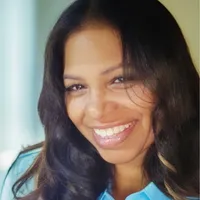
Melissa DiMuro
Chief People Culture & Marketing Officer, Limbach
Beyond HR: How Culture Becomes Your Core Business Strategy.
Episode 227 · June 5, 2025 · 11:25
Beyond HR: How Culture Becomes Your Core Business Strategy.
Key moments
In Melissa's words
“During my time there, I really became known for growing and scaling organizations across a number of different spaces and across the globe.”
“There could be a lot of feedback about things people would like to see, but at the end of the day, we have to be business people with a foundation in talent, organization, and culture.”
“I'm pleased to say 4 years later, that we reduced our salary attrition by 41%.”
Transcript
Read the transcript1,743 words
HostWelcome to the Built by People podcast, where we share the stories and insights of the world's top HR leaders. Join us as we dive deep into the minds of HR executives, uncovering their strategies, challenges, and triumphs in shaping today's workforce. I'm excited to welcome Melissa to the Built By People podcast. Melissa, thank you so much for joining us. And as a starting question, I always love to ask if you could share a little bit more about your career journey.
GuestYeah, absolutely. And thank you so much for having me. At this point, I'm just over 20 years in the people and culture field. And I'm now on my third industry. So I started in printing, made my way through aviation, and now I'm in the building systems and solutions industry. And my learning over that time has been tremendous. I spent the bulk of my career at GE Aviation in predominantly manufacturing and the engineering spaces. During my time there, I really became known for growing and scaling organizations across a number of different spaces and across the globe. And I was blessed to have some tremendous career opportunities there. And when I think about my transition now into my current role, I'm at Limbaugh, which is a building solutions firm located in Tampa, Florida, but represent the eastern half of the US. In my transition there, it was about COVID time, and like most of the world, I was sitting and thinking, what do I want to do next in my career? What do I want to do next in life? And that's when I got a call from Limbaugh, and it's a really special company. Not often you get to join a public company with a 120-plus-year-old history that really had some great foundational aspects to it. And looking at that opportunity and seeing the strong culture, the strong leadership, and the desire to pivot it to a new business model and a transformation of the company seemed like a perfect fit for what I was looking at. So it's been 4 and a half years now and having a ton of fun here.
HostMelissa, how did you approach assessing the strengths and gaps when you first joined Limbach, and what strategies did you implement to build a successful employee value proposition from the ground up?
GuestYeah, absolutely. So every time I go into a new role, I try to make sure I've planned it out very methodically, and I focus the first at least 90 days on a rigorous onboarding plan. My goal is to get out and listen and learn. So I spent my time out in the field meeting with our people, as many people as I can meet, both inside the company as well as those that engage with us as stakeholders, to really understand their insights and what they loved about the company, what they wish they could see done differently. And it's through those intake sessions that I really can put together a comprehensive SWOT assessment of the organization. From there, it's really thinking through what's the biggest priority, and that has to be triangulated with the business need. There could be a lot of feedback about things people would like to see, but at the end of the day, we have to be business people with a foundation in talent, organization, and culture. And so I really went through a process to create a priority list, and a common thread that ran through all of that was an employee value proposition. We had looked at a number of different spaces of where the company was strong and where it had gaps, and it was amazing to me to see just how much commonality I got throughout the organization on why people loved working here and how that translated to value, not only internally but to our customers. So we went through, again, built it from the ground up, good bones, but it wasn't quite organized around a compelling EBP in the way you would think we need to have. And we really arrived to 5 key areas, right? First, that people's work has a purpose here. There's something bigger. It's not just about the day-to-day work, but the end result. Secondly, that people really can make an impact here. There's all different types of companies, size of companies, and we, I think, are in the sweet spot where we're big enough to be impactful, but we are small enough that we can be nimble and react and listen to our people and put their ideas in practice. We're committed to people's development is a central tenet to that as well. And that means not only their career development, but also their personal development and achieving the goals that they set out to. We have a really good core value system, and the number one thing I heard from people is we care about them. And so we care, we call our top core value, and it's really the idea that it goes beyond just what you can do for us in the company at work, but also about what we can help you accomplish from your life perspective.
HostMelissa, can you share a specific story or case study about a time you effectively transformed an aspect of Limbach's culture or brand? What were the tangible results and what actionable steps did you take to achieve that?
GuestYeah, absolutely. So, you know, I can't think of a number, but if I pick one from when I started at the company, it would be looking at our overall attrition rate and how we can reduce that and overall lead to a stickier workforce that was high-performing, aligned to our company strategy. So I started with a real deep dive on the data. You look at the quantitative data and you can see that pretty readily what the trend is, where it should be. And in the construction industry, on average, it's higher than average turnover than many industries that I had been part of. But then you have the qualitative data, right? You have all of the reasons why people stay and go, etc. And some of that data we were lacking. So we did a number of things. We went out and designed a new exit interview process that had both an interview, live interview component, as well as the normal survey approach. We also looked at employee experience and defined moments that matter for our team across the lifecycle of the time that they're with us and figured out ways that we could improve in each of those moments that matter. As I mentioned before, we built our EVP, which was critical because it ties all of these things through. And we made that a living process where there were employee feedback mechanisms, traditional survey approaches, but also ways that people could exhibit their feedback to us so we can incorporate it. We designed a multi-tier leadership development program. That allow people to raise their hands. I'm pleased to say we sell out every year all of the seats we have available in that leadership program to align to that commitment to their development. And we really integrated learning and career pathing into the natural fabric of our process. So I wish I could say it was one thing that was the silver bullet that did it, but it's the comprehensive approach. I'm pleased to say 4 years later, that we reduced our salary attrition by 41%. And so when you think about the impact, that's not just for the company and our financials and our customers, but also it illustrates the quality of the employee experience that our team is getting today.
HostMelissa, can you tell me about a challenge you faced while aligning the company's brand with its culture? How did you overcome it and what lessons did you learn that could be useful for our listeners?
GuestYeah, absolutely. So for our listeners today, I own people and culture, but I also own brand and marketing, which is not your most common combination of functions, but it makes a lot of sense in our organization. One example might be we had inconsistency in messaging internally externally to our customers and to our shareholders. And while in many days we thought about those as 3 independent segments, the more and more that you look at how investors or how our employees or how our customers want to learn about our company, they don't stay in a nice, neat channel. The employees are going to join your investor calls. Your investors are listening to your podcasts that you make live out there. They're all looking at your social media. And so it's ever more important to consolidate and streamline that messaging. So we've really focused on that as a company. Ultimately, not everyone is going to put those organizations together. I have a benefit of having them all under one roof. I think the company has to be very intentional about what's the cohesive brand story, how does it connect across different stakeholders. And while there might be different what's-in-it-for-me messaging that goes to each audience, they have to have commonality and consistency to pull it all together.
HostMelissa, what parting advice would you like to share with our community?
GuestWhen I think about HR transformation, culture, brand, my recommendation is to always make sure you're rooted in the business strategy first. You can look at other companies and the slick things that they're doing, and they're great for inspiration. But the magic happens when you can pair what specific strategy is going to get the business the key outcomes they're looking for. And it also aligns the leadership around those strategies. So it's not just a people and culture thing or a marketing thing. It's a business imperative. And these are solutions to get the business where it needs to go, because culture and brand, at the end of the day, They're the heartbeat of an organization, and they're summed up of the decisions every day that people are making along the way. So it needs to be beyond just our function. It has to be a part of the business.
HostMelissa, thanks so much for joining us today on the Built by People podcast. It was a pleasure to have you involved.
GuestAll right. Thank you so much.
More conversations like this