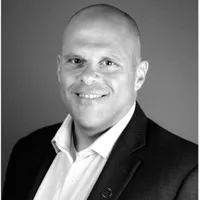
Maddy Niebauer
CEO
vChief
Beyond Burnout: Achieve Explosive Growth with Strategic Delegation and Fractional Leadership
Thesis
“Achieving significant business growth and executive leadership does not require burnout; strategic delegation, automation, and leveraging fractional talent enable leaders to focus on high-impact activities and reclaim their time.”
What you'll take away
- 01Leaders can achieve significant growth without burnout by focusing on high-impact activities and effectively delegating/automating tasks, challenging the traditional 'hustle culture' narrative.
- 02Fractional talent (e.g., part-time Chiefs of Staff, COOs, CFOs) offers a flexible solution for companies to access specialized capacity, particularly valuable during economic uncertainty when full-time hiring is risky.
- 03Effective internal communication in virtual and distributed organizations requires tailored approaches for different employee segments, recognizing that engagement varies based on immediate needs.
- 04Continuously listening to customer needs and feedback is crucial for driving business expansion and developing new, relevant service offerings.
- 05AI can be leveraged beyond basic functions, such as sales call analysis, automated scope of work generation, and performance feedback, to significantly enhance operational efficiency.


What most organizations get wrong
- Pushes back against the 'hustle culture' mentality, demonstrating that an 8-figure business can be built and scaled on a 25-hour work week without succumbing to burnout.
- Pioneered the fractional and virtual Chief of Staff model at a time when both concepts were new and often met with skepticism, proving its viability before widespread remote work adoption.
In Maddy's words
“The work still needs to get done. Who can we, who can we call in to do that?”
This highlights the market problem that fractional talent solutions address, especially during periods of uncertainty when companies need capacity but not full-time hires.
“Our goals are around growth and new industries and building into some new positions and things like that. My goals personally are really more specifically geared towards the intersection of what I am good at, what I like to do, and what will drive the business forward.”
This distinguishes between organizational and personal leadership goals, emphasizing strategic focus on individual strengths for maximum business impact.
“I have built this company into an 8-figure business 5 times on the Inc. 5000 list, and I've never really worked on average more than 25 hours a week.”
This quote directly challenges the conventional wisdom of 'hustle culture' by providing a concrete example of high achievement with work-life balance.
“Unless people need something, they don't necessarily reach out to that group.”
This identifies a core challenge in maintaining engagement and communication within a distributed and loosely connected workforce.
“AI can do so many things. So, that's definitely something that is important to us and we're continually thinking about and looking at and working with our clients on too.”
This demonstrates a forward-thinking and comprehensive view of AI's potential applications beyond basic tasks, including for internal operations and client solutions.
“I would say let go of the hustle culture. Not everything is an emergency. Like spend time on what matters in life and do the work that's needed to get done, but also think about how you can delegate and automate and fractional talent...”
This offers direct and actionable advice on achieving efficiency and work-life balance by prioritizing tasks and leveraging external resources.
The problems this episode addresses
- Economic volatility is increasing the effort required to acquire clients, with smaller engagements, making businesses 'work 10 times as hard for the leads' (13:35).
- Engaging a large, distributed talent pool is challenging, as consultants primarily focus on client communication and may not proactively engage with the central organization unless there's an immediate need (9:20).
- Tracking whether informational communications are seen, understood, and acted upon is difficult, especially with larger, less directly managed groups (11:21).
- Companies are hesitant to make full-time hires due to economic uncertainty, creating a need for flexible staffing solutions (3:08).
- The pervasive 'hustle culture' is leading to burnout among professionals and entrepreneurs, preventing focus on personal life and well-being (5:50).
In this episode
This episode is presented by Previ, the only free tool that boosts internal communication
Built by People
Maddie Niebauer is the founder of vChief
Born By People: The Unexpected Turn in My Career
Tell me a little bit about your top priorities right now for your company
Chief of Staff: Top Priorities
As you look about maybe some of these initiatives or, you know, priorities
Top Executives: Personal Commitments
Employee communication is becoming harder across every organization, says vChief CEO
Venture Capital CEO on Employee Communication
We use Zoho both for applicant tracking and for CRM
Beyond Slack, What are some other important tools in your operations?
Right now, there is so much volatility in the overall economy
What Would You Change Most in Your Organization?
If you could leave one piece of advice for our community, what would it be
Ken Robbins on Working With Less Talent
Maddie is part of the Built by People podcast
Built by People
Topics covered
Organizations and entities mentioned
Full transcript
Expand transcript (0 words)
Transcript is not available yet.