Episode 221 · June 2, 2025 · 16:57
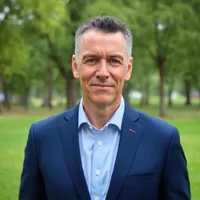
Luc Stefani
CHRO and Global HR Consultant, LS HR Consulting
Your HR Strategy is Broken: Why 'Go Local' Wins the Talent War
Episode 221 · June 2, 2025 · 16:57
Your HR Strategy is Broken: Why 'Go Local' Wins the Talent War
Key moments
In Luc's words
“We didn't have the same background. So the integration was probably more complicated than what we anticipated. The second point that I noticed that we spend a lot of time in system process, but merging is a, first of all, is gathering people and ensure that from two companies, we'll create one company for people.”
“So really what I have learned being an international leader is go on site, visit people, understand also their background and culture, and it will help you to engage them in a common project that is the project that you have a big organization.”
“If you don't bring flexibility to your workforce, whatever they are on site or whatever they are working on the headquarters, you will lose a lot of candidates.”
Transcript
Read the transcript3,181 words
SpeakerWelcome to the Built by People podcast, where we share the stories and insights of the world's top HR leaders. Join us as we dive deep into the minds of HR executives, uncovering their strategies, challenges, and triumphs in shaping today's workforce.
HostI'm excited to welcome Luc to the Built by People podcast. Luc, thank you so much for joining us. And as a starting question, I always love to ask if you could share a little bit more about your career journey.
GuestYes, thank you for welcoming me, David. I was born in Paris, France. I got my bachelor's degree in economics. And after I went to the University of Dauphine where I've been graduated in HR. My early career was working close to Paris. I used to work for a company called DHL where I spent almost 3 years. I was convinced from early stage that people were really at the center of everything in the corporate life and organization life. I moved in 2002 to a company called Bouygues, a large French organization. And we went very quickly after I joined to an integration and we have been acquired by a company called Saipem. And I like to share this experience because I learned learned 3 important things from this, this first M&A deal that we had. Italian and French from a, sometimes an international perspective. I'm like, the way I'm coming from south of France, so not far away from Italy, we look very similar, but from a cultural standpoint, this is the first one that I noticed. It was, we didn't have the same background. So the integration was probably more complicated than what we anticipated. The second point that I noticed that we spend a lot of time in system process, but merging is a, first of all, is gathering people and ensure that from two companies, we'll create one company for people. And that was also a pretty big challenge. And finally, the first experience I really enjoyed being with this global organization, it was the first step for something that is very particular in my professional life, but also personal life is going abroad. And I said, at this point, I start really to discover the world. And finally, I jumped to Suez where I spent 15 years with them, waste and water organizations. I had the chance to be given a lot of opportunities. I spent 2 years in Dubai. I used to manage HR for different countries all over the world. And eventually I landed in North America, in US, New Jersey, where I am based now, a couple of years ago. What I learned from all of this and this international, let's say, experience is, first of all, you need to have this closeness with the business and with the local part. All of us, we are working in, as we are global organizations, We're working in a long-term strategy project integrations. The essential is to find this really closeness and to go local, to understand, to adapt also those concepts that sometimes may be different from one country to another one. So really what I have learned being an international leader is go on site, visit people, understand also their background and culture, and it will help you to engage them in a common project that is the project that you have a big organization.
HostLuke, can you share a specific case study of when you navigated cultural differences in HR practices across various regions?
SpeakerYeah.
HostAnd what practical insights you gained from that experience?
GuestI had a lot of stories about equity and inclusion, for instance. Recently, I was part of a group that decided to implement a new policy, and I've been very early step concerned about the understanding of those concepts because in fact, I grew up in France. In France, the concept of being part of a race is something that you cannot talk about in an organization because it's not something that you track in terms of data. Okay. Where, and that's for discrimination reasons, where in the US we are doing the contrary also for non-discrimination reasons. So it's interesting to see that from this good principle, the approach could be completely different. In a way, what I used to do is, yes, you need to have a long-term vision for those projects, but again, understand that the culture of a country, the history, the background, the context also. I've been sometimes in countries where at a certain point there was a lot of things going on in terms of even war sometimes when I was working in Middle East. So it's important to have a really good understanding of all of this and to adapt those concepts. And to spend time with the team locally just to understand that you are in the right seat. And my advice is don't stay global, try to be local when you have to go with such a project.
HostLuke, could you describe a time when you were involved in a major merger or acquisition? How did you handle the integration challenges and what lessons can listeners draw from your approach to aligning HR with business goals?
GuestI think that as an HR leader or HR executive, all of us, we are involved a lot in due diligence, M&A. Sometimes it's due diligence and not M&A. I was working for Suez at this time and we decided to acquire GWater. That was a subsidiary of G Group. And it was fundamental for the development of our water industrial part. Traditionally, Suez was doing a lot of water treatment for municipality. Acquiring GWater, it was an opportunity to go with more industrial clients where we were not so strong as G. So the first approach is, yes, we acquire the company, but we need to make this new company a success, not only as part of the Suez, but also as a new organization. And that's where the HR came, because we decided to have a very soft integration. So it was not only follow us and you apply for our process and system. We sit with a team of GE that became a company called WTS, and we start to work all together in what we can take the best from the two companies. And we have been very open. And that was essential because sometimes you pay a lot for acquiring companies and those kinds of companies, they are made from expertise. And the expertise is essential. So if after one year's time, after the retention is over and people are leaving, especially in a market like US that is very competitive, because sometimes we don't realize that, but in US, especially for those talented people, After one year, they can go away and take any kind of other responsibility out of your organization. So the people were essential. So we really focused on adapting also to the company that we were buying. They were talking about reverse integration, interestingly, but I think that makes us a success. The people from G-Water that came to us, we really offer a plan, a term of, like, let's say, development plan inside the new Suez organization. And that's, long story short, I think that you need also to adapt, you need also to think as an investment. And it's not only a question of process and system, it's the question as for each of the talent that will join you, what place they will find for them to develop and to grow within your new organization.
HostHow do you foster strong partnership with business units to ensure HR initiatives can effectively support organizational goals?
GuestIt's so key. It's maybe coming from my, my roots. My father is a very entrepreneurial person, so I grew up in in a family that was taking a lot of things around developing business and businesses, and I already pay attention to that. So HR, it can be administrative, IT compliance, but you can make a choice also not to be that, because it's important for protecting the company, but to be more than this, and in a way that you go close to the business and you try really to provide them what they need to grow and to develop. And that's where I believe HR brings really value. Okay. And in this case, it becomes not only a kind of function, it can become a key success factor of your organization. To give you a practical example, when I joined the last company I used to work for, the talent acquisition was completely broken. In a time of, in the US where the market was booming, we were losing a lot of candidates. Our process was too long. I went to the business and we decided the 3 things all together. First of all, that we will find a real leader. That we empower and that will bring really the expertise in understanding, especially in US where the market is very demanding and very sophisticated. So how we can be capable to reduce the time to hire, how we can bring also digital transformation with our process. And that was the first point. The second point that I found sometimes people hiring that never go on site, do not understand the business. Guys, if you want really to be credible, you need to go, you need to understand what skills do we need to succeed. And this closeness, because recruitment, when you are talking about frontline worker in US, is very local. You cannot hire, if you are based in Los Angeles, people that are working in the middle of nowhere, and sometimes in Arkansas. We have a big project in Arkansas, and there was the need to have someone that was really coming on site, understanding the need of the business. So that was my second point. And the third point came and it was always like a kind, each one, each of the part of the business was blaming one and one time it was HR, the other time it was HR operation, one of the time it was operations. And I say, I don't care. We are not paid for that. We need to succeed. So it's a co-responsibility. So if there is a problem in the talent acquisition, it's not only HR responsibility, it's a joint responsibility. And we sit with the business and we found those, all those solutions and we work together. What was the success of this is we reduced the time to hire. That is very critical in US, especially at the time, the post-COVID time where we are sometimes losing the candidate because he was expecting a quick and fast answer. And the second point that we also have a better result in the first year after the onboarding, where sometimes we are losing some candidates because they were not really fitting with the needs of the business. So it was really a strong improvement. But again, is you need to see to the business and you need to be credible. You need to understand their need because if you do any HR for HR, it's not what we need in kind of organization.
HostLuke, when was a time you faced a challenge related to bridging generational gaps within an organization, particularly in adapting to new work trends like remote work? Were there any specific strategies you implemented to reconcile? Those differences?
GuestThank you for the question, Dave, because I'm completely convinced that this is not only a trend, a short trend, it's a trend for the next coming years. It will be a challenge for all those big corporates that we are working for, even small, is how do you adapt to the generational changes? And this pace of change is getting crazy now. If the company like the one I used to work or I'm working for now is not capable to understand that we need to adapt and the generation that is coming and that is ready to work for us is changing, is moving ahead. And even the pace of this move is higher than probably before, is going faster. I used to give one example. My father worked for one company. At the end of my career, when I will retire, probably I will have worked for 4 or 5, and maybe my son will be a freelance consultant working for different clients. So the perception of working for a company has nothing to do, and even in 3 generations were already changed. What I anticipate is even is going to go faster. So what can we do and how we need to adapt? If you take, for instance, working from home, I was working in a water industry that is pretty conservative. It's not like the tech industry where everything is going fast. But after COVID, I was personally convinced that if we are not able to adapt this to a new way of work, it will be a problem because we have been successful in COVID and we were capable to adapt very quickly due to the constraint that we cannot go to some of those offices anymore. And we need to continue to adapt. I've got one constraint that the company I used to work for, there was 70% of the people that are frontline workers. So how you explain to them that they have to go on site every day and the other one that are going to the office, they can stay some time at home to work from home. So that was the main challenge. We sit with the business, we find a compromise of working from home policy. One of the arguments that was very key, it was in a competitive world, if you don't bring flexibility to your workforce, whatever they are on site or whatever they are working on the headquarters, you will lose a lot of candidates. So right now, maybe the trend is different. So you see the storytelling about the company that are coming back to 5 days in the office because the market is more an employer market than an employee market. But I can tell you that if you want to attract the best talent, they will define what they want. So if you don't have this kind of flexibility with your workforce, you will never get access to them, especially for those companies that are not known like big corporate in US. Long story short, when I discussed with the business, I convinced them that we need to find a balance with the working from home and that bringing flexibility to the workforce will be really a competitive advantage when we have to go to the market. I think that it was the right argument and they were okay with that. But again, I think it will be a long journey because I still see a kind of difficulty to go with a different way to work where I'm fully convinced that the future will be to get and to have more flexibility.
HostLuc, what parting advice would you like to share with our community?
GuestFirst of all, I like HR. I spent all my career and I've been asked a couple of times, but what about doing this, doing that, taking more professional responsibility? And I said, HR is my life. I mean, it's a lot. For me. Okay. So what can I tell about HR? A couple of advice. First of all, I'm pretty humble when I'm giving advice based also on my experience in HR. Even I have a large one, I like to be humble because it's, there are ups and downs when you are making a career. But first of all, I think that this is maybe something that non-HR people do not understand, but here I'm talking for both the HR and the non-HR, but HR is very complicated. Is a lot of different skills. So especially for me that grew up in Europe, came here, how do you address benefits issues in US? Even the benefits specialist, sometimes they are a bit lost with the benefit issues. How do you address talent acquisition, the learning? So you have a large domain of skills. So first of all, you need to find the right expert. Okay. And really bring to your team expertise because that will be a key success factor. And those people that are experts, they need you, but they need more, more kind of coaching relationship that on each of that. So first of all, everything starts with the people. The second point, and you will be credible if you understand the business you are working for. I remember that when I started to work for DHL in early career, we used to have some time we spent, we were walking, going on site, understanding the need really of the business, going with those track driver, sharing a bit about their experience to understand the need of the logistics. What does it mean being in the world of logistics? What kind of skills do you need to have? And that's sometimes a bit different, sorry, to be a water engineer. And so if as HR you don't adapt to this and you don't understand, you can bring any kind and you can define any kind of HR strategy, you will miss your initial target. So be close to the business. And finally, my last point is in a time after COVID where personally I think that we have been with a lot right now, The market is a bit different, slow compared to the booming post-COVID period, I like to say. I think that as HR, you need to give a bit of long-term vision to your employees, whatever is your team and the rest of the organization, and find the right empathy. Because what I have noticed during all this period that, and that's where I bring a bit of inclusiveness, if I may say, people, they need to have this space in their work where they can share. Sometimes they can talk, they are the place where They can sometimes share a bit about their worry, concern, okay? Because working in 2025 sometimes is still difficult for some of them. Here we can play a role. And I'm sure that I used to say to my team and to the team in the company I used to work for, my door is open. If you have any problem, you can come and jump and I will be there and I will try to listen to you and to find solutions to your problem. And I think it's really something important that we keep this empathy and even vulnerability for our employees.
HostLuke, thanks so much for joining us today on the Built by People podcast. It was a pleasure to have you involved.
GuestYou're welcome, and see you soon, Dave.
More conversations like this