Episode 77 · February 4, 2025 · 12:53
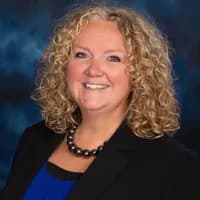
Livia de Bastos Martini
Chief People Officer, Wellhub
Employee Well-being: Beyond a Perk, It's Your Strategic Business Imperative
Episode 77 · February 4, 2025 · 12:53
Employee Well-being: Beyond a Perk, It's Your Strategic Business Imperative
Key moments
In Livia's words
“Today, we can see that the employees value well-being as much as salary. One of the surveys that we conducted said that this is true for 88% of the people.”
“If the company does not prioritize wellness, 83% of them say that they would consider leaving a company. And this from our surveys has evolved from 68% in 2022.”
“If you have something that's one size fits all, it doesn't really work anymore. You can't catch all of the intricacies of the people working at your company. Different individuals have different needs.”
Transcript
Read the transcript1,805 words
HostWelcome to the Built by People podcast, where we share the stories and insights of the world's top HR leaders. Join us as we dive deep into the minds of HR executives, uncovering their strategies, challenges, and triumphs in shaping today's workforce. I'm excited to welcome Livia to the Built by People podcast. Livia, thank you so much for joining us. And as a starting question, I always love to ask if you could share a little bit more about your career journey.
GuestHey, welcome. Thank you for inviting me. It's great to be here. So my career journey was a little bit different, if I can say so. I started my career in investment banking. Um, I'm an economist by training actually. So I started my career in investment banking. I did that for about 4 years and decided that I wanted to go back to school. So I had my MBA. And after that, I decided to do a complete change of pace and try something that could open my view of the world a little bit more in industries and different functions. So I went into management consulting, and in that I saw several different, as I expected, industry types of problems, types of people. And I was really happy doing that, but I missed a lot of the implementation. So the next day view of everything that was happening at the company. And that's what made me make the change back to essentially operating. And I came to Wellhub, um, to be the head of international operations. So I was managing every single country. To which we expanded our operations to make sure that they had standardized procedures, they had all of the materials that they needed, etc. And this was extremely challenging but very rewarding to see how it evolved in the countries, which then led me to participate in, in a round of financing, and I became the CFO right after that. And then in my CFO capacity, it was just a crazy wave of implementation of all of the tools that we needed to have as a more mature company and trying to standardize processes, operations across the different countries and the different functions. And I was never supposed to be a CFO for the full time, so I started hiring a CFO and I looked at the people function and saw so many things that we could do more of, better, different. Um, my ultimate goal was to have the people function be as strong of a function as any other of the business. So the operations essentially existed to make sure that the company was running. The finance was to make sure that we had the money to do everything that we had to do, and the people could be cast to the side. But I said, no, if we don't have the right people, if we don't have the right support, if we don't have the right culture. The business is not gonna move forward. So that's why I came into the people function, and I have never been happier professionally ever since. This is 6 years ago almost.
HostOlivia, how has employee demand for workplace wellness evolved in your time there, and what specific wellness programs have you seen drive the biggest impact on engagement and retention?
GuestSo, I think that wellness has evolved in several different ways, and ironically, I think that my background and industries that I've worked on have shown me aspects of it. And some years ago, this was not necessarily relevant, or it was not at the forefront of anyone, not even the employees, but also the companies. But today, we can see that the employees value well-being as much as salary. One of the surveys that we conducted said that this is true for 88% of the people. And if the company does not prioritize wellness, 83% of them say that they would consider leaving a company. And this from our surveys has evolved from 68% in 2022. So in only a few years, the importance of this more holistic view of wellness and especially the relevance in the workplace has just increased much, much faster than anyone would say, let's say 10 years ago. And then I see that the biggest impact are the types of programs that can be really flexible and personalized. So if you have something that's one size fits all, it doesn't really work anymore. You can't catch all of the intricacies of the people working at your company. Different individuals have different needs. If you have a more of a holistic wellness offering, it's more likely that people just engage with the solution, but also that you actually see an improvement in workforce wellbeing.
HostVivian, with data showing that wellness programs improve both mental and physical wellbeing, How can organizations tailor their offerings to meet the diverse employee needs across different regions and generations?
GuestYeah, this is one of my favorite parts of working at a global company and doing what we do because we can actually see the difference in what people do in different countries and over time. But essentially, you need to understand your audience or your employees in this case. And what's happening in each of the regions. So what we're seeing is that Gen Zs, for example, prefer digital tools like mindfulness apps and things like that. But baby boomers, they really value in-person support. So going to a gym and having a personal trainer or somebody to talk to if they need help. Um, and if you go to countries. There's always a different thing happening. In Brazil, I'm from Brazil, in Brazil now beach tennis is the most important thing and you have to have solutions for beach tennis and different activities like that. But in the US and the UK, for example, yoga is the most popular. Mexico is Pilates. And by the way, this changes over time. But what we see now is that what we're calling the hybrid programs. So you have different types of solutions and different types of delivery, be it in person, be it digital, be in a studio or a full-service gym. All they can help people self-select into what they want to do. So we, for example, at Wellhub, we do have different tiers of membership. And we decided to have the Gold membership for our teams. So we offer that for free for us. And we chose that plan to go because it had the best balance of a broad range of services and providers and solutions. So for us, this was the right, the right thresholds to do because we understand the differences between our teams and what they need. But I think that the key is to really understand what you're trying to solve and what your team needs.
HostWhat trends in hybrid wellness programs and digital tools are shaping the future of employee wellness, and how can HR leaders leverage them effectively?
GuestThat's a very good question. So what we see is that flexibility is key. So the way you structure the culture around this wellness program needs to have flexibility embedded into it. We see from the trends that, for example, the midday wellness activities have been growing for a few months already, and other tools for habit formation that the teams are using to create routines and customize for what they need to do. In our last report, what we saw is that, for example, 6 PM is the global peak for wellness activity. We call that internally the wellness hour. So that replaced the happy hour. It's now your wellness hour. And if you make sure that the solution you have and the culture you create around this solution is flexible enough, people can combine different solutions. Let's say that you go to nutrition, you go to mindfulness, you go to physical exercise, you go to sleep support, and they will feel much more empowered to take advantage of the solution that you have. But it is important that the flexibility is there and they know that they can and are expected even to make use of the solutions that you're giving. So the HR role in, in this is, is really key. In how they shape it.
HostPrograms are just nice to haves.
GuestI always say that when you're interviewing somebody to start at a company, this is a, it feels like it's a one-way street, but it's actually a two-way street. So the person is also interviewing the company and seeing what they offer. So number one, check what people coming into your company, what they want and what they need. Our survey shows that all the employees are gonna shop where, you know, they're gonna tie themselves to companies that think that wellbeing is important. But also what we're trying to put more and more forward is the actual impact of wellness programs. So our data shows that hybrid program participants are more engaged with the company and much less likely to leave. And we all know, everybody who works in HR knows that hiring, firing, training is just extremely expensive. Wellness programs also reduce absenteeism. They reduce healthcare costs, and they reduce the likelihood of burnout. And if you combine that with all of the solutions that somebody would need to take care of their own lives, you can see how this happens, but we can measure that nowadays. So these tangible benefits, they also help to make the case to start a program like this, but also to see it as much more of a strategic investment rather than a perk, because this is— it's way too far from a perk nowadays.
HostLivia, what parting advice would you like to share with our audience?
GuestTo me, I think what's most important is that companies need to focus on their people. The culture that each company builds can be unique as long as it's cohesive and it's a deliberate decision that fits through all companies doing with programs, processes, everything. Um, I would really strongly advise companies to make sure that they listen to the teams, that they leverage data to understand what they actually need. To be proactive in creating this environment where the individuals feel that they can take care of themselves so they can thrive both personally and professionally. People drive business success, so whatever you do to help your people, make them feel valued, supported, is the best way to create the best business results. This is absolutely not a nice-to-have. Everybody has to do that.
HostLivia, thank you so much for joining us on the Built by People podcast. It was a pleasure to have you involved.
GuestThanks for having me.
More conversations like this