Episode 78 · February 4, 2025 · 19:43
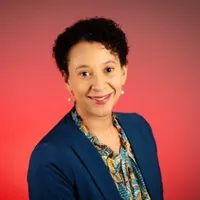
Lisa Hammond
CHRO, Veradigm
Beyond the Caretaker: Build Strategic HR with Business Acumen & Crisis Leadership
Episode 78 · February 4, 2025 · 19:43
Beyond the Caretaker: Build Strategic HR with Business Acumen & Crisis Leadership
Key moments
In Lisa's words
“I thought, how do I get to the other side where I can help prevent maybe some of the catastrophes that I was helping the lawyers defend?”
“The risk is you go to a bigger company, you're a minnow in the ocean versus a king salmon in a small creek.”
“If I'm going to go panic, I'm going to do it away from my computer and my monitor and my team. But I know now I never, I can't present the panic.”
Transcript
Read the transcript3,256 words
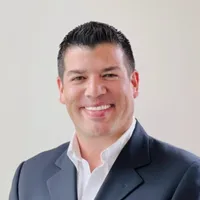
HostWelcome to the Built by People podcast, where we share the stories and insights of the world's top HR leaders. Join us as we dive deep into the minds of HR executives, uncovering their strategies, challenges, and triumphs in shaping today's workforce. I'm excited to welcome Lisa to the Built By People podcast. Lisa, thank you so much for joining us. And as a starting question, I always love to ask if you could share a little bit more about your career journey.
GuestSure. Thanks, Dave. And I appreciate the invitation and enjoying a winter day here in Raleigh, North Carolina. So I, as you know, we, we chatted before. I'm the people leader at Verodime, and I followed a little bit of a unique path to HR and started out life thinking that I was gonna go to law school. And after undergraduate school, I decided to make a poor personal choice that we've all made at least one in our early 20s and landed me kind of in a realizing I needed, you know, to figure out something else to do. And I became a paralegal and that's how I ended up in HR. I worked for a labor and defense firm for a long time. I was watching all these bills come through and all the struggles the clients had. And I thought, how do I get to the other side where I can help prevent maybe some of the catastrophes that I was helping the lawyers defend? And, you know, found my way. And through a friend to Pizza Hut and Pizza Hut's where I started being shaped as an HR professional, HR business partner, and kind of never looked back from there. So it, it's been, it's a dynamic journey full of merger acquisition. I've been sold, I've been reorged, I've been promoted, developed, mentored, all the good and all the, the bad that comes with a long career and all of those things have helped shaped the philosophies and how I approach business now.
HostLisa, you mentioned in the past the importance of taking career risk and sometimes choosing experience over money. Can you share a specific example of when this approach paid off in your own professional journey and development?
GuestYeah, absolutely. So it's interesting. Veridigm, if you don't know, was an acquisition of a larger company named Allscripts back in 2018. Paradigm was acquired and became a wholly owned subsidiary of a larger 10,000-ish person organization named Allscripts that had been around since the mid-'80s. I was at the ti— in January of 2020 serving as a VP of HR and covering some other areas, operations and marketing and different sales and different things for business in Raleigh. And really just was looking to get out of retail and hospitality and really start over and not necessarily start over, but move into healthcare technology, biopharma. Got an open door presented to me at Allscripts, and it was to be a director level, director of operations for HR. And the pay was a smidge lower than where I was. The title was certainly lower. The scope was smaller. And I realized, okay, so I'm not gonna grow anymore where I am. I love that family and I love what I did. I'm still engaged in ways with that organization and have made long relationships, but I knew that I needed to push myself to take a risk. And the risk is you go to a bigger company, you're a minnow in the ocean versus a king salmon in a small creek. And and you're a little more disposable at that level and maybe a little more fragile depending on the business, the economy, et cetera. And I said, you know what? We're fine financially. We plan conservatively, and I owe it to myself to take the risk and see what happens. Maybe it'll work out, maybe it won't. And that was almost 5 years ago now. I started there the week of COVID in 2020. Uh, that was the biggest one that I took. The very first job I had after Littler Mendelson being a paralegal was with a guy that you, again, this is career advice that you don't hear when you're that age. One of the guys that I played co-ed softball with had a brother that had a dot-com and needed an HR person. They were going to give me this opportunity to be the HR lady with zero practical experience. So that should have been. A message to me. It was a huge risk. I took the risk and I wasn't getting paid as much as a paralegal. The risk level about the organization was pretty high and that job lasted 12 weeks. About 2 weeks in, I realized maybe financially not stable. The CEO was in the process of disengaging. I mean, it was everything mythical.com entrepreneurial horrible thing was going on there and I was everything out because I had a dog and an apartment. I was single. And so I took a job as an admin at Pizza Hut and that was very low risk and, you know, worked my way up there. But I do, I have two, those are the two specific, you know, kind of ones that have imprinted on, on me from a career lesson standpoint. It's not for everyone, but I've done, after that entrepreneurial thing, I did a number of emerging brands and sort of startup concepts of their companies. And sometimes it works, sometimes it doesn't. But some of the skills I have today, I don't think I would've gotten if I had played it safe.
HostLisa, throughout your career, you've handled various crises, from salmonella outbreaks to financial challenges. How has managing these different types of crises shaped your approach to HR leadership?
GuestYou know, it's interesting. I sometimes, you know, we tell ourselves stories about how we react to things or how we think we're perceived to be reacting to something. I think one of the things that it's done is dulled my senses a little bit, which allows me to think more widely about the, and I, I'm putting it in air quotes, the crisis, right? Because to that business and to those employees and to those clients or whoever it is, that is a the biggest thing that's happened to them. And no joke, it's true. It probably is the biggest thing to happen to them. But then once you've seen more than 1 or 2 or 4, you realize, okay, let's take stock. Let's take a deep breath. If I'm going to go panic, I'm going to do it away from my computer and my monitor and my team. And I'm going to talk to my dogs and I'm going to calm myself down. But I know now I never, I can't present the panic. And I also have to take it with a grain of salt because what is a crisis to one person may not truly be a crisis organizationally. And while that salmonella outbreak was an unimaginable crisis for that company, but in that one town that it happened in, we still had, you know, 58 other restaurants that needed to operate well, needed to be led well, needed— they needed the engagement, they needed all the things.. And so I think for me, it shaped me as a leader to say, I hear you, talk it out. Let's walk through which parts of this are crisis. And when you say crisis, what are the things that are interrupting business, whether it's a restaurant or a software or anything? And then, okay, what can we control and who needs to help us control it? And then what can we do to prevent it? You know, learning, I don't immediately go to, well, what the hell happened? Right? Because that's not the first question you ask. Like, well, how did this— what do you mean this happened? How did that happen? That's like the last question. You just don't worry about it, right? In a leadership role, you just think to yourself, okay, what can I do to help bring the people together, to bring the resources, to step out of the role that I have and do whatever the thing is that we need to do as a team and to ensure that someone is showing strength. And, you know, I'm not saying be like super cheerleader about it, but you have to maintain at least a neutrally supportive personality or perception about you because otherwise people get even more stressed out. And so I try to be that level one that's like, okay, what questions do we need to ask ourselves? What can my team do? What can we do? And it will pass. You don't know how yet, but it's gonna be okay.
HostLisa, you have a unique perspective on HR having worked at both small businesses and large corporations. How does that diverse experience influence your approach to solving HR challenges today?
GuestYou know, it's so interesting. Someone was talking about in reverse, going from a large company to a small company. And my career has kind of gone the other direction where the companies have gotten larger the more senior I've been. And one thing that's interesting is the people don't change. There are a lot more of them in a large company, but they don't change. The same people that you loved collaborating and partnering with are in the larger company. They're just more of them, potentially. One thing that I learned from a destructive standpoint, you know, that showed itself as an opportunity I needed to address within myself. Is I tend to be pretty scrappy and resourceful. I haven't had the benefit of big training budgets or any training budget at different places. And so I tended to lead with that, right? Like, oh, well, I can't believe you would use a consultant for this, or you would do this. Like, I kind of came with this roll up your sleeves, get her done thing. And as you move wider, one thing to remember is the scale changes and the need of what a team can actually produce itself versus what you need external partners for changes. I think from a constructive standpoint, I learned that and learned that there's really not a lot more valuable than some good vendor partners that can help you really take the journey, right? Because if you're stuck in the trenches building the journey and tooling the journey, then you're not really leading the organization anywhere. But I do think it's remembering that it's big or small, the challenges are the same. The importance of crisis in a small company might seem like a bigger crisis 'cause there's less people to rally to handle it. And so it's really that scope piece that I think was my biggest learning. And really developing relationships at all levels in a larger organization is the biggest key, I would say, as you continue to grow in size, is that you forget, don't just engage at the top level if you're at the top level, but you gotta, you gotta have friends and resources throughout the organization to enhance your understanding and being able to support. I think that's from a positive side, the, my biggest learning on the plus side.
HostLisa, can you share your don't bake the cake parable and explain how it relates to things like women's career development in leadership positions?
GuestAbsolutely. So this sort of happened a little bit ad hoc at a conference. Somebody asked something about how did they effectively change the perception that they felt that people had of her in the office as the mom or the caregiver of the office. And there were 4 of us on this panel. And I, you know, my years ago, my aunt in California was the youngest woman to ever be promoted to VP at a First Interstate Bank that doesn't exist anymore now. And then it became Northern, other Northern, we'll call it Northern whatever bank, because I don't want to go too far. So she was the first VP, the youngest woman. She was, had the largest, I mean, just an achiever. And over the years, I, I am, you know, I had morphed servant leader into some idea that I should always be doing all the things, right? So if there was a turkey that needed to be made or a cake that needed to be made or cupcakes or bring the candy or do the thing, or I'll pick up this or I'll do that. That was always me. I got it. I got it. I'll take care of it. I want everybody to be happy. I remember staying up, you know, at all hours and faced this turkey, you know, and I was a leader in an organization and I came home one day and this was back when we had answering machines and the voice on the phone was my aunt who is my number one mentor and coach in life. And she said, I'm calling to leave you a message because it was around the holidays and she knew about the turkey. I'm calling to let you know that you have to stop baking that. And she added the effing cake. Stop baking the effing cake. You don't get it. You need to understand this does not help you. And then click. And that was it. And then I call her back and she didn't answer because again, we had answering machines. We didn't have texts and all that stuff. So I had to sit with it for a day or two till she called me back. And then I realized I had this epiphany. Maybe I don't have to bake the cake. Maybe I still garner the respect or the recognition or the ability to be perceived as a leader and a solid partner and a servant leader to a business without being the person that's constantly doing all the things. They've done studies that say, um, if a group of people are at a table and a male happens to spill their drink, that the women are 10 times more likely to jump up from the table and get a paper towel. Doesn't mean anything bad or good about us or about men. It just kind of wiring maybe. And I have tried to take that parable forward with me when I coach and work with young women that I'm not telling you to strip away your soul. If you love baking, go bake, right? I love to prep things for people, but I do it now at home. I bring guests into my house. I can unload my need to cook for people in other ways. And I can donate money and I can support, you know, parties and other things in other ways that still retain me and don't diminish my capacity as a
Hostleader. Lisa, you mentioned in the past the importance of understanding business fundamentals in HR. How has your business acumen helped you be more effective in your HR role?
GuestOh my gosh. I think it's been key to my survival, to be honest. And I say survival because I, you know, early in career had a lot of change. Almost every year for like 6 years, I had a new role. I would say that I learned early from Pizza Hut. I give all credit to Pizza Hut's franchise team at the time in about, it was around 1999, 2000, where they were using a balanced scorecard. A balanced scorecard, you know, turned— it was all the metrics of the business, the revenue, the sales, the EBITDA of a business. I have asked people in interviews, can you define EBITDA? HR people, do you know what it is? Do you know what it— what is the impact of knowing EBITDA on the business and how do you manage? And to, to have that early knowledge and to continue growing it gives you a unique ability to build credibility quickly with your business partners. Number 2 is even if they're not including you in financial discussions, you are still able to go and look at the P&L, sit in on business reviews, and understand what the heck is going on. You always have to be ready for that. And understanding the business, even how do your training dollars break out per employee and what return are you getting? You know, if you spend $1,000 on every employee a year in training and development, but you're at 8% turnover, what is the cost of the turnover and what are the dollars that potentially you're either saving with increasing your retention or you're losing because maybe this stuff is not impactful or something else is missing. So I do tell people, you know, start— if you don't, if you're starting from zero, what is your turnover? How do you calculate turnover? What does margin look like for your business? Every business has a margin, whether you're a SaaS business, a food business, a car making business, whatever it is, we, we all have a margin. What is profitability? What do you need to be profitable? What is the cost per employee? That is part of the P&L, right? Some companies it might be 27%, other companies it could be closer to 32%. It depends. But you've got to know all of this because the business leaders need that from you. And you need it from you to gain the credibility faster in, in an organization. And you add value and you suddenly find yourself at more meetings or more seats at the table, as it were, because you have this intrinsic understanding of how the business runs and you can potentially help them see weak spots before they actually happen.
HostLisa, what parting advice would you like to share with our
Guestlisteners? I, my, my parting advice for listeners is every single one of us has a lot to offer. And HR is a function that we get beat up, we get recognized, we're beloved, we're ignored and hated, and all the things at the same time. And if you can continue to say to yourself, what do I value and what am I good at? And continue looking for ways to have those two things in symmetry in your career, it, it alleviates a lot of stress that we put on ourselves that we don't even realize we have. So I try to do that exercise with myself every quarter. What am I good at? What values am I bringing? And then you look at, is the role that I have meeting those needs? Is it not? What can I do different and better? But I would say that's my number one thing. And my number two thing is always be supporting someone else and their growth. In their HR careers because we all want to move on someday or win the lottery or do whatever next. And it's always good to have someone sitting in the passenger seat ready to go when you're ready for next.
HostLisa, thank you so much for joining us on the Built By People podcast. It was a pleasure to have you involved.
GuestThank you so much. I appreciate it, Dave. Great conversation.
More conversations like this