Episode 209 · May 22, 2025 · 15:42
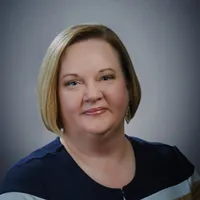
Laura Butler
Chief People Officer, TTEC
Beyond HR Checklists: How Tech & System Thinking Drive Real Business Value
Episode 209 · May 22, 2025 · 15:42
Beyond HR Checklists: How Tech & System Thinking Drive Real Business Value
Key moments
In Laura's words
“And as it turns out, everything in HR is about creating experiences. So it all connects somehow. It all makes sense on the back end. But through my career, this interplay between technology and people has been incredibly— and I would say with the advent of AI, it's never been more topical than it is right now.”
“But goal setting should be fundamentally linked to strategic planning. And oftentimes when you do a goal audit and look at the goals that were set and compare it to the company's strategic plan, there's a mismatch completely.”
“The biggest thing with autonomy is ensuring that people understand the system that they're operating in and that they understand how it interlinks and how it connects. And if they have that level of system understanding and system thinking, then it's easier for them to— for people to be autonomous.”
Transcript
Read the transcript2,335 words
HostWelcome to the Built by People podcast, where we share the stories and insights of the world's top HR leaders. Join us as we dive deep into the minds of HR executives, uncovering their strategies, challenges, and triumphs in shaping today's workforce. I'm excited to welcome Laura to the Built By People Podcast. Laura, thank you so much for joining us. And as a starting question, I always love to ask if you could share a little bit more about your career journey.
GuestWell, my career journey, I put myself through college. I was actually having dinner last night with my college roommate about this very thing. One of, one of the jobs was working in the Department of Affirmative Action and Services for the University of Colorado at Boulder. And it's interesting, at that time I thought, I'm never going into HR. And here I am. And it was interesting because my roommate had the opposite. She actually wanted to go into HR from the very beginning. And so we were discussing that journey. I actually had a love for creating experiences more from a meeting planning perspective. And so I moved to Vail, Colorado, and joined an organization that planned events for corporations and experiences, which was absolutely fabulous. I fell in love with technology, and my path has been back and forth between technology in HR technology and being a practitioner in HR. And as it turns out, everything in HR is about creating experiences. So it all connects somehow. It all makes sense on the back end. But through my career, this interplay between technology and people has been incredibly— and I would say with the advent of AI, it's never been more topical than it is right now.
HostYou've talked about the importance of understanding business language for HR leaders. Can you share specific examples of how you've translated HR initiatives into business outcomes that resonated with executive leadership?
GuestI think that in HR, there are a lot of programs. You can have succession planning, you've got onboarding, you've got things that you do. And when they're managed like a checklist or a check the box, even goal setting, I'll use that as a specific example. Do we set goals? Yes, we set goals. It's every year. Then we do the performance conversation, and then we pay people and rinse and repeat. But goal setting should be fundamentally linked to strategic planning. And oftentimes when you do a goal audit and look at the goals that were set and compare it to the company's strategic plan, there's a mismatch completely. The quality isn't there. Sometimes people create goals that are actually their job description that isn't really a goal. And so What I've had success doing is really looking at the company's strategic plan and helping the goal-setting process connect more to that strategic plan. And how is that actually moving the needle? And when you're looking at performance, looking at it in terms of how did they perform at their core job, how are they performing in goals that are moving the business forward, How are they doing that connected to values? And then what's the outcome? And by creating that stronger link, a couple of things happen. A lot of people don't even have accurate job descriptions. They got hired and then their job description was put in the drawer. Are they doing the work that they're supposed to be doing? And then from a goal-setting perspective, really being clear about what are we going to accomplish this year that's going to move the needle forward? And that's not everything. It's creating 3 to 5 focused goals that will actually move the business forward and then regularly reviewing and having conversations on those. So it's not just to check the box. We're doing those things. Everyone's following the process, but making it part of a living thing. At one organization I was at, we were in project management software sort of space, and we put goal management into that tool rather than an HRIS tool. The benefit of that was that the goals were happening where the work was happening, and it wasn't this other system you go to check on every now and then, but actually connected and tagged. And it's one thing I really appreciate about Asana as an example, is you can tag the work you're doing to actual goals. That's where the magic happens rather than just an HR thing that HR owns goal setting. No, leaders own making sure people are doing the right work. And how do you do that most effectively?
HostLaura, how do you approach building a culture of autonomy while ensuring organizational effectiveness? Can you share an example of how you've aligned policies with desired cultural outcomes?
GuestYeah, so autonomy is fascinating because people love autonomy, But then they've— then it starts getting limited if they start doing things that break things. And the biggest thing with autonomy is ensuring that people understand the system that they're operating in and that they understand how it interlinks and how it connects. And if they have that level of system understanding and system thinking, then it's easier for them to— for people to be autonomous. And it's easier for there to be trust around autonomy. So really, for me, it's about ensuring that there's a connection to the system you operate in. The biggest thing that breaks autonomy is to say, we want people to be autonomous, and here's the 25 approvals that you need to get. That doesn't feel autonomous. So what would need to be true for you to not need 25 levels of approval in all of the views? And that usually boils down to people need to understand the system that they operate in.
HostLaura, as an HR leader who emphasizes self-development, how are you leveraging new technologies like AI and VR to transform HR practices? And what lessons have you learned from implementing these types of innovations?
GuestWell, I'm really excited about this frontier. We've recently purchased some curriculum, and there's some great curriculum online without pointing anyone to any one solution, but Josh Bersin has some terrific AI HR chatbots and interactive coaching platform, the AIHR. Also has coaching. These many providers are coming up with tools that HR practitioners can use to interact with and ask questions that's beyond Google. It's actually giving you relevant, credible, and timely advice. And so we've recently launched such curriculum with our HR team so that they've got tools to use, but also a chat buddy that they can ask questions to in order to uplevel their skills, which is incredibly helpful. We've also used VR. I'm a huge fan of VR. I think that Zoom and Teams and, and this very flat video communication has its place, but there is nothing like being in person. However, travel, dispersed workforce gets in the way, but VR meets that in the middle. We recently had a team meeting using VR on the— it, there was a platform called Engage and we're all sitting around a conference table and we're in our VR glasses. You can only do those for maybe an hour and a half before people get a little bit of motion sickness. And the technology is such a place now you have a full body and it even can smooth your face into an avatar so it looks like you. The tech isn't perfect though, so it creates a lot of laughter and connection as well. I don't think I've laughed as hard in a meeting, and people's arms might accidentally go through another person, and things like that make it very funny, but it also allows collaboration in using sticky notes and doing exercises that you might find in person far more effective. But on Zoom, on a VR platform, it's incredibly impactful. It's multidimensional and it can make other meetings more effective. And so we're leveraging VR for that. Now, VR tools are advancing such with agentic AI that you can even interact on training platforms with a VR robot essentially, and have conversations and role play back and forth. I think this is going to have dramatic impact on the ability to prepare for difficult conversations with employees, helping manage your skills, get elevated, and the role of people in HR will continue to evolve to create the systems that allow leaders to be exceptional managers of people. And using these tools and really becoming masters of these types of tools with VR and AI on our own, will spark ideas on ways we can help leaders and managers be more effective as well.
HostLaura, time management seems to be a crucial skill for HR leaders. What specific strategies have you found most effective in managing the infinite demands while maintaining focus on strategic priorities?
GuestI think time management's actually important for everyone, but there is a phenomenal author Julie Morgenstern, who wrote a book, Never Check Email in the Morning. And what I loved about that book were these grab-and-go strategies, because often in time management, we know what we should do, and then we are like, but I have this demand, or I have that demand, or I don't have time. What I love about the architecture of her book is she'll outline a strategy, and then she has a call-out saying, yes, but. And it's literally the thing going through your head on why you can't implement the strategy. So phenomenal book, but a couple of great tips where sometimes when we're given a task, we think about the way to do it perfectly, and that can be disruptive. We may procrastinate, not even start the task, and not make movement. So she has a concept of the min, mid, and max. For example, you want to give somebody feedback, even something as basic as that task, and you think, I'm going to have to schedule time and an hour, and it's better in person. And as a result, you just don't give the feedback because by the time you do all of those things, it's a month later and it's now too late. So what's the minimum that you can do? There's an architecture I love around outlining the impact or the intention of your feedback. Describe the situation, the impact, and a suggestion. So intention, situation, impact, and suggestion. And so now I just shoot an email off with those characteristics in an email. That's the minimum I could do. They're getting the feedback quickly and timely. And actually it's been very effective, more than I had ever imagined it would be, because all I had in my mind was perfect. And the cost of that was it was taking me too long. And so this notion can be applied in big and small elements. But I love that. The other thing that she talked about was crunching your container. When we act like we have infinite time, and some people with strong work ethics might be fine working 20 hours a day. I've certainly been guilty of that myself. I think work is more fun than fun. But at the end of the day, not everyone has that time. They have other priorities. So when you crunch your container, you actually then treat things with better priority and discernment. If you think, I'll just work until it's done, you're not going to be creating a shorter list of things to do. Just continue to prune your list to say, if I only had 8 hours today, what are the things I would do in those 8 hours? It's hard, but that is a muscle that you need to build.
HostLaura, you've worked across multiple tech companies through various transitions. How has that experience shaped your approach to leading HR through organizational change?
GuestWell, I feel like change agility is something that some people have built over time, and other people are very resistant to change. My having moved through different organizations, I have a strong appetite for change. And what I've had to do is understand not everyone is me and, and really helping understand, are we changing for change's sake, or is this a change that matters? And ensuring that we're allowing the right amount of time for that change management to occur. Sometimes people like me that like change, we change all the time, and those things don't develop roots. They don't last because it's too much change. Not enough was spent really growing the roots and getting the roots deep. So whatever we're doing may be temporary. If you're doing a change, and the thing I've learned is even goal setting, if I'm going to change a methodology that matters and I want it to last, I'd better give it enough time to grow the roots, to gather the stakeholders, to make sure we're solving the right problem. We're not just going off and experimenting, but we're solving the right problem and then ensuring that those roots grow. And not all change requires that level of stewardship, discerning between which ones do and don't and allowing that time. That's something that for sure I've gained an appreciation in over my career.
HostLaura, what parting advice would you like to share with our community?
GuestI would say, and again, this just goes to the conversation I had with my roommate last night. We were talking about why did we get into HR as a career? And Simon Sinek had this wonderful post around, if you don't understand people, you don't understand business. And the advice I would give is really leaning into understanding people so that you understand the business that you're in.
HostLaura, thank you so much for joining us today on the Built by People podcast. It was a pleasure to have you involved.
GuestThank you so much for having me. I appreciate it.
More conversations like this