Episode 163 · April 17, 2025 · 19:32
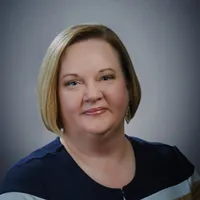
Karen Greene
Vice President Global Human Resources, Escalon Services
Mastering Rapid Change: HR's Proactive Guide to Private Equity Success
Episode 163 · April 17, 2025 · 19:32
Mastering Rapid Change: HR's Proactive Guide to Private Equity Success
Key moments
In Karen's words
“Unlike large organizations, there's no long pilot programs or longitudinal R&D work. Your entire leadership team and everybody around you has a single goal to maximize and scale.”
“Lastly, if you are going to be involved in any level of M&A work, it's about how does HR come to the table in partnership evaluating cultural fit of the M&A targets, because we know that cultural fit is the number one reason that integration work fails.”
“Everybody will come together with their thoughts and ideas. They'll debate them and come to agreement without losing respect for each other or succumbing to power plays.”
Transcript
Read the transcript3,142 words
HostWelcome to the Built by People podcast, where we share the stories and insights of the world's top HR leaders. Join us as we dive deep into the minds of HR executives, uncovering their strategies, challenges, and triumphs in shaping today's workforce. I'm excited to welcome Karen to the Built by People podcast. Karen, thank you so much for joining us. And as a starting question, I always love to ask if you could share a little bit more about your career journey.
GuestHello, Dave. So fortunate to be here with you today and for the opportunity to share some of my experiences with my CHRO colleagues. I've spent about 25 years as an HR practitioner, and my formal education is in psychology and economics, and I've done some graduate work in management and business. Originally, I aspired to be a counseling psychologist, but I found that I really could impact a broader group of people by moving into HR, which I find a lot of similarities. Most of my career has been focused in the professional services industry, and I always assume what better way to showcase the value of strategic people programs than to build learning and development and career programming by investing in those team members whose value, thought leadership, and the work they do becomes the revenue for that company. So, I've had the pleasure of leading global teams in talent management programming, performance, global onboarding, and I've done it in the Big Four as well as in global management consulting firms. In those positions, being surrounded by so many incredibly smart colleagues, I realized the power of iteration, how syndication, gaining buy-in for your ideas and allowing others to really invest in the content enables you to come out on the other side with a fabulous, stronger program than going in. More recently, I've taken on an executive role in smaller middle market PE-backed companies, helping navigate transformational change and evaluating not only the strategy, but also creating lasting impact in the operational side of the business. So fast-paced, high-growth environments. I'm currently the Global VP of HR at Escalon Services, and our organization provides fractional accounting, CFO, tax, and HR support to PE and VC-backed clients. So really my whole world is navigating the dynamics of small and medium-sized businesses that are PE-backed. Most importantly, I balance the day-to-day with my husband. We split our household duties and we support our 4 kids in all of their activities, and we also give back to the community. So I support a few organizations that are close to my heart. I'm a regular contributor to the board of trustees and executive committee for a religious organization, and I've supported their personnel and comp committee for the last 6 years. My husband and I also support our elementary school. And in that program, we provide administrative and fundraising support for the Strings Program, which allows students to have the opportunity to learn a musical instrument free of cost during the school day. So, I'm excited to be here, Dave, and looking forward to our conversation.
HostThanks so much for that great introduction, Karen. I want to jump in by first asking about your experiences working in PE-backed organizations. How does the HR role differ in these environments compared to traditional Fortune 500 companies particularly regarding pace and communication with the C-suite?
GuestGreat question. There are a few meaningful differences from my point of view. And first, I'd say it's scale and structure. PE-backed organizations are more smaller and more mid-sized and generally more flexible. And sometimes that can be code for there really isn't a lot of structure, and that's why you've been hired to bring that structure to play. Secondly, there's a much faster decision-making process, and it's influenced heavily by the PE investor. Group. So, most importantly, that pace of change is rapid, it's aggressive, and there's a significant focus on efficiency and building high-impact initiatives that create value. So, for you and your leadership team, you could easily be balancing 5 or 6 key interdepartmental initiatives. They all have equal importance and they're all high priority. So, your role is not only to help everyone understand the pace of that change,, but evaluate, is your organization ready for the change? Communication takes on a very large role in getting behind the change curve. So your leadership discussions might be a few times a week, or they might be every day, and each day then results in a list of to-dos that are relatively immediate or near-term. Unlike large organizations, there's no long pilot programs or longitudinal R&D work. Your entire leadership team and everybody around you has a single goal to maximize and scale. So pretty easy, right? I know that if you find yourself in this environment and you're new to it, you ask, what should I do first? And I think focusing on change readiness, understanding the capacity for change in the organization and the employee sentiment related to flexibility innovation. And that's part of kind of the cultural makeup of your organization. Do you think that your team members will adapt to change easily and they're interested in scalability and growth, or have they been in an organization that's been founder-led that moved much more slowly? And so that all of this new change will be important for them to understand. Understanding that you're on the tight timeline and your HR team needs to also know that projects are gonna come fast and furious, and how are you gonna best showcase value? So I find that positioning your people programs in a manner that's credible and speaks the language of your investor group. So that can be things like anticipating skill shortages, being proactive in your workforce planning, including like how to predict, are we gonna have a hiring slowdown? Are we going to have hard-to-find skills? And How do we build a workforce plan that helps us mitigate the cost of labor so that it's manageable and within budget? Really understanding compensation is key as well. Having a formal approach so that when you're faced with an employee retention issue, it's not always, let's just increase our payroll costs by giving that individual more money. So you have to have a balance and alternatives to be able to manage your entire compensation structure as well as your incentive comp. Ensuring that incentives are aligned and everyone's focused on that growth. Lastly, if you are going to be involved in any level of M&A work, it's about how does HR come to the table in partnership evaluating cultural fit of the M&A targets, because we know that cultural fit is the number one reason that integration work fails. So really getting behind that and understanding that there needs to be harmony and a plan, an effective plan to bring in not only the target organization, but prepare your current organization organization for that change.
HostKaren, what are some of the unique challenges HR leaders face when operating in lower to middle market PE-backed transactions, and what strategies have you found to be effective?
GuestSo, I think there's 3 or 4 things that come to mind. First is the founder's mentality. And if you're not familiar with that term, it's really how did the individuals, the 1 or 2 people that generated this wonderful company that you're at, How did they get there? Did they take a bootstrap approach where there was very little investment or rationalization of resources in order to achieve growth? Or was the founder's experience something that was easy to do and natural and the organization grew at a steady pace over time? So, understanding that story is incredibly important. It is the foundation of the culture of the organization that you're currently in. And so you need to figure out how to bring that founder's mentality along with you as the organization changes. Sometimes you have to keep that founder engaged because many times your role is to actually scale and change the processes that they've built. I think there's another role that you play in supporting your C-suite colleagues, and that's when the team that you're standing next to, it may not be the team that's there in a couple of years when you move to the second exit. So, PE environments aren't for everybody. And so, how do you build a high-performing team with that C-suite group? And how do you know how to help them become their best selves? That means that you are doing a lot of listening and you're doing a lot of connecting the dots in order to make sure that you're adopting an environment of positive conflict. And what I mean by that is, Everybody will come together with their thoughts and ideas. They'll debate them and come to agreement without losing respect for each other or succumbing to power plays. So your role in supporting the C-suite is really key because you're playing a bit of a glue that holds that group together in a high-performing way. I think the last thing I'll say is technology and infrastructure to scale. Lots of times lower to middle market PE-backed organizations, have not invested in the systems that they need for scalability. So maybe you have a proprietary technology and it's in its foundational stages, it's not mature. And so there's a significant amount of investment to make sure that system comes up to code, or that maybe you're getting involved in a SOC 1 or SOC 2 exercise to make sure that your cybersecurity and data protection programs are complete. You may be looking at those processes that aren't repeatable, and because they've been performed in Excel or outside of ERP platforms, they're not going to be able to get any larger without adding additional people or additional headcount or additional costs. Find those technology-scalable areas and invest in the right tools. Specific to HR, it's a real evaluation of your HRIS capabilities and the way that data flows through your organization. It could be the adoption of BI platforms and dashboards. And all of those things are important because you are going to be asked for those key metrics every day, all the time. So, if you don't have your handle on your workforce plan, your lever data, costs of labor, your compensation, you're going to be behind the game as you're kicking off this program. I'd also say you're gonna be asked about where's AI in all of this and how are we using generative or predictive AI? To, and where does that fit into the strategy? And that's the buzzword of today, but it is something that your investors and your board care about. It's a good idea to start planning where that can nestle into your organization.
HostKaren, that leads me into my next question. That's with the growing concerns around AI, how can HR leaders effectively address the fear and resistance from employees while also ensuring proper adoption and utilization of tools like AI?
GuestYeah. So we know there's a lot of capabilities that AI brings, and you can expect questions about what's your digital transformation plan. A lot of these ideas are untapped. They're brand new. We're in this discovery phase. It's about where can you deploy AI. Your employees have a very different outlook. You're gonna have a leader group that's really excited about that change, but you're gonna have a significant amount of your population that might be fearful. In fact, a recent survey by Ernst Young indicated that about 65% of employees say they're anxious. It's two things. It's, will AI replace me or my job, or will it have a negative impact on the pay because my skillset is no longer unique? Leaders also have a bit of a fear around AI because they're concerned about responsible usage. And is there a legal landscape that they need to be aware of or monitoring that they need to be aware of related to cybersecurity or other uses of AI? What do you do to solution that? I think it starts with governance and objectives. What do you want your program to look like? How do you want to adopt AI and who do you get on the bus with you on this initiative? You might collaborate with your InfoSec team members or your general counsel. Start with policy and basic outlined governance and goals. How will you use it? Will it be something that's customer-facing? And how do you define the oversight structures? I think then you're really gonna start talking about what are the use cases and do we have a sunny day scenario or are there some risk cases that we need to talk through? And then implement training and communication. Right, monitoring mechanisms, reviewing your policy, making sure your communications are clear. We talk about it at Escalon because it is part of protecting our clients' data is key to our brand. And so our leaders talk about that in their team huddles, in their one-on-ones, so that we decrease the fear that some employees and managers have about AI.
HostKaren, what practical approaches have you found successful in helping employees understand AI's value proposition without feeling threatened about job security?
GuestYeah, it's a tough one. I think first you've gotta shift that mindset. So back to change readiness of your organization, help people understand that it's an enabler, no different than any other technology, and it's not going to replace you. However, it will become something that enhances the work, and it can replace repetitive tasks. I like to find champions in my organization that can help me because they're early adopters, and usually these are Gen X or millennials, and they have grown up with a different understanding and relationship with technology. So they're largely in favor of and will help you champion your digital transformation launch program. I think once you're starting down the path of shifting the mindset, you need to focus on training and upskilling. So I may no longer have to put the data entry in, I may not have to analyze the data, but I may need to convert that information into something else that's going to add value and create value for the organization. I think adding components to your milestone programming, like onboarding new manager, new supervisor, new leader programs. Giving people an interactive space and providing them with real-life use cases where they can discuss the pros and cons of the usage of AI in real-term settings is incredibly important. At the end of the day, you're building a culture of confidence and you're empowering employees that it's gonna be a tool that you harness to get you to a higher level of potential. And so that leads to, this is exciting, there's cultural retention here, there's a growth mindset. And so if you can really shift your organization into that type of growth mindset, your leaders and all of the team members will follow in upskilling across the board.
HostKaren, from your experience coaching HR professionals, what are the key differences in approach when leading HR in a PE-backed organization versus a traditional corporate environment?
GuestYeah, I think it's really important that your team is highly capable and resilient, and those two things are day-to-day conversations that you're having with your HR team. What do they need to know and what do they need to be thinking about today and in the immediate near term to stay ahead of the business strategy? We know that the HR strategy and the people programming will follow the business strategy. So how do we think proactively about where is that business strategy going? And helping your team really understand what are the steps we need to get there. I like to share what I know when I know it, and help my team understand the rationale for a change and the core questions and concerns that they might be faced with from our employee base, specifically the HR business partner team, right? They are going to be the frontline of the questions going on in the organization. I think it's table stakes for your HR ops team to be scaling and running seamlessly. This is even more critical if you have grown organically in the past and now you're focused on some M&A targets. Do you have a scalable infrastructure, HR hierarchy? What does our org design look like? Are teams and the leverage model in the organization operating effectively? Are there parts of the organization that won't continue on because there's been a business decision that we're going to refocus on core responsibilities and core value creation? And so all of those things are changes that an HR team member may see once in their career in a large organization, but it could be a repetitive process when you're in a smaller PE-backed organization. So, in summary, priorities are gonna change rapidly. And just encourage a lot of team member bonding and trust.
HostKaren, what parting advice would you like to share with our audience?
GuestYou know, I know that the role of the HR leader is never boring, but not every day's an easy day. And so there are two strategies and philosophies that I'd share. First, find those opportunities to lean in to solve business problems. When you get busy, our nature is, ooh, I should think that's not my job, that's not in my lane, that's somebody else's concern. And I guarantee you that every business problem or key initiative that's going on in your company is touching your people. And so, the closer you are to some of those business problems, the more effective you'll be in the role in helping be a change advocate, helping be a key advisor, and helping bring high-performing teams to the table. The second piece of advice is I wake up in the morning and I frame work in terms of, I get to tackle this project today, or I'm excited to have this meeting even though I might be dreading it. And that's instead of saying, oh, I have to do these things. So by reframing in a sense of optimism, I feel like I come at my day and I coach my teams to come at their days with a sense of, This is going to be a fun day, and we're gonna make the most of it. And even if we only move forward a few steps and we move back a few steps, we're still making forward progress.
HostKaren, thanks so much for joining us on the Built by People podcast. It was a pleasure to have you involved.
GuestThanks, Dave. Great to speak to you today.
More conversations like this