Episode 151 · April 7, 2025 · 16:02
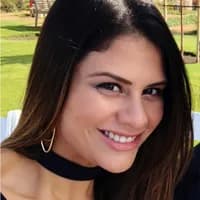
Judith Nelson
Chief People Officer, Weee!
Beyond Support: Why HR Needs a General Manager Mindset for Growth
Episode 151 · April 7, 2025 · 16:02
Beyond Support: Why HR Needs a General Manager Mindset for Growth
Key moments
In Judith's words
“I describe myself as a general manager who just happens to work in the people space.”
“One thing I've learned from working around the world is that fundamentally people want the same thing from their work...They want to be treated with respect. They want meaningful work, they want to learn, develop, and grow.”
“My biggest learning with hiring though is the culture fit is key. Hire for will and train for skill.”
Transcript
Read the transcript2,322 words
HostWelcome to the Built by People podcast, where we share the stories and insights of the world's top HR leaders. Join us as we dive deep into the minds of HR executives, uncovering their strategies, challenges, and triumphs in shaping today's workforce. I'm excited to welcome Judith to the Built By People Podcast. Judith, thank you so much for joining us. And as a starting question, I always love to ask if you could share a little bit more about your career journey.
GuestThank you for having me on this podcast, and I'm really looking forward to sharing my experience. I'm really lucky to have had such a diverse and rich experience, both personally and professionally. I've predominantly worked in the consumer sector. I've got experience in two huge corporates, as well as hypergrowth scale-ups. I've worked in 22 different markets across three continents, and I've lived in the UK, in Hong Kong, and now in California. I've led the HR function in a business with 350,000 people with a $60 billion turnover, and one with 1,000 people and a billion-dollar turnover. So, huge scale and small scale. I actually have quite an unconventional start. I trained in hospitality as a chef, so food has always been in my life, until a bet with my sister led me to a role in Tesco. Which is an international retailer where I worked my way up from the shop floor— first day was jamming donuts and cutting cheese— to the boardroom over 23 years, both in the UK and across Europe and Asia. This experience was just an incredible training ground for me to understand what good looks like from a people perspective, and it really started my passion for understanding and being close to the business. Following this, I wanted to future-proof my skills, so I invested 2 years in my own development and I set up my own consultancy business. And I purposely chose businesses to work with that were very different than what I've done before. Different sectors, different company structures, and different size. This was my first real immersion into tech and hypergrowth, and it went— that feel like I'd gone from a huge tanker to this supersonic speedboat. I went from a team of 1,000 to 4. So I worked in tech, financial services, family-owned businesses, PE, VC, and many different types of businesses, all very different to my previous corporate life. After 2 years of incredible learning, I had the opportunity to work and live in Asia, an area that I'd always loved, and to lead the people agenda for a leading Pan-Asian retailer that was going undergoing significant digital transformation. I moved to Hong Kong at a time of social unrest and COVID, which was another personal and professional challenge. Following this adventure, I decided that I wanted to enhance my startup and scale-up experience. So this brought me to my current role. Having not worked in the US nor been here for many years, I moved from Hong Kong to California to be the Chief People Officer here at WE. Despite having a super cool name, is North America's largest and fastest growing ethnic e-commerce business. This has allowed me to bring together my vast experience of many companies and geographies to build and grow an amazing business serving the underserved communities of the US. All of my roles since I started my career have had a business focus, And I describe myself as a general manager who just happens to work in the people space. In the last 8 years, my accountabilities have been much broader than just HR. I've led ESG, sustainability, transformation, external, consumer, and corporate comms. Like many HR leaders, COVID was part of my responsibility. And I'm currently overseeing the legal team here at We. Which is quite a challenge. All of these experiences have stretched me considerably and a huge learning opportunity and has given me a much broader business perspective.
HostJudith, what have been some of the key lessons from both startup and corporate environments that help accelerate the growth of a mid-sized business?
GuestI think it's a great question and one that you reflect on. So as you develop your career, you build up like a toolkit of skills and experiences. For me, the challenge is which tool to use when and how to apply it to the business that you're operating in. One thing I've learned from working around the world is that fundamentally people want the same thing from their work. They may express it a bit differently or use different words due to language or meaning. However, at the core, it's the same. They want to be treated with respect. They want meaningful work, they want to learn, develop, and grow. They want to work with people that they like working with and get recognition for the contribution that they make. The other thing that's the same is the end-to-end employee experience. So the key is how do you adapt your tools and adapt your people strategies to deliver business success? I think the key lessons for me is that you have to have a vision in your mind, and then everything that you do is towards building that vision. Sometimes you need the vision and work backwards, and other times you need the actions that you take lead you to the vision that you've created. The one thing I've learned in hypergrowth businesses, you need to move fast. Decisions are made quickly. You can't be 100% right in everything that you do all of the time. You've gotta test and learn and create a culture of it's okay to make mistakes as long as you use those as learning experience. The other thing that I've learned is that you've got to be really comfortable with ambiguity, and it's like building a house. You've gotta build the foundations first before you can start worrying about the carpet or the furniture. You've gotta balance strategy and execution. You've got to not be afraid of rolling your sleeves and getting stuck in. You've got to be resourceful and scrappy where needed. Another key learning for me is you've got to reset your hiring mentality. Being successful in this type of environment, you've got to hire people who thrive in ambiguity, know what good looks like, and have built from zero to one, and they've got a learning mindset. My biggest learning with hiring though is the culture fit is key. Hire for will and train for skill. You've got to lead through change. Communication and transparency are really important. And you've got to become a real expert at crisis management because you just don't know what's going to hit you, when, and how big. I think my final learning is it's not about applying the corporate playbook. It's about agility and resourcefulness in aligning the people strategy to enable the business strategy. So build for today and tomorrow, learn and pivot where needed.
HostJudith, you mentioned earlier in the conversation that you consider yourself to be a general manager who happens to fulfill an HR role. How can HR leaders adopt a general manager mindset to drive business success while still prioritizing people and culture?
GuestI think if you speak to a lot of CEOs, they say that talent and capability is the thing that keeps them awake at night. And this is at the heart of every great business. In my view, a great HR leader doesn't just run HR. They think and operate like a general manager, understanding the business whilst aligning and delivering the people priorities. To achieve the desired outcome of long-term business success. Our role as Chief People Officers or HR Officers is not just about culture, talent, and capability. It's about organisational growth, efficiency, and long-term business success. Especially like in my career where you've been heavily involved in consumer businesses, you build a company brand from the inside out. That's why people are critical to business success. And finally, in order to achieve this as a chief people officer, it's critical we understand how the business operates and that every people decision, we connect the dots from a people and a business perspective.
HostJudith, what challenges arise when blending startup agility with corporate structure especially in a growing organization, and how do you navigate those challenges?
GuestOh God, there's so many challenges. One of the hardest challenges is around how do you decide what to do, to what level, and when to do it. It's hugely important. And for some reason, deciding what not to do is really hard. But critical. You can't do everything, that will just lead to failure. Short and midterm planning is important to longer-term planning, and longer-term has a different horizon. So when you're in the corporate world, it's probably 5 years. In, in the hypergrowth, it's probably 2. The other challenge for me from a talent perspective is, as the company gets bigger, How do you really create and retain that entrepreneurial mindset and creativity? How do you not constrain people with sort of corporate frameworks and policy? And when you grow, how do you retain that talent and help them adapt when they really just want to be scrappy and startup-like? The view for me would be is how do you become corporate light rather than suffocating the businesses with policies and processes? Focus on the what and the why and use frameworks for the how rather than rules and policies. So those would be my key lessons.
HostJudith, how do you ensure HR is seen as a business driver first rather than just a support function?
GuestI think for me, it's about your mindset. It's about thinking like a business owner. It's about asking the right questions and just being constantly curious. Another one for me would be part of developing the business goals so you can truly develop an effective people strategy to achieve them. So don't just let other people define the business goals and then give them to you. Be part of that building process. One of the things that I've really learned from WE is being data-driven. And get really close to the business, be a true business partner, and really use data to enable the growth of the business. Going back to what I said earlier about choosing what to do and what not to do, I think you've got to really ensure that the people work has meaningful impact. Test the return on investment from the changes that you've introduced, check that they've been embedded and sustained. And achieve the desired outcome, or are they just seen as another initiative? One of the things I always try and do as well is be a real thought partner to the CEO and the leadership team and help them to understand how people are at the heart of most things that we do. So I guess my summary would be understand the business strategy, focus on impact, as well as policies and processes to drive business and people outcomes.
HostJudith, what strategies have you found most effective for scaling teams, processes, and culture while also maintaining operational excellence?
GuestI think for me, and all of the people roles, I talk about the 4 Cs. It's about compliance, so having really strong foundations. It's around building capability, that's both of the people team and of the managers. It's around driving change, and that's sustainable change that's embedded and drives business performance, not just another initiative. And then the final one, and probably most importantly, is culture. So it's how do you frame all of your work around those four C's? And it's about making sure, as I said earlier, about having the strong foundations. The other thing that I've learned as well is about having a real flexible org design. I always thought when people went through org changes, it's, oh, another org change. But you just have to keep being agile and reflecting on your org design and the skills that you need to build the team for the future. But also don't go too far ahead, just make sure that you're always just ahead. I think the other thing is around focusing on the what and the why and deciding what needs to be done everywhere and what needs to be different. And if it's different, why, why is it different? And then my final C around culture. One of the things that I have never had is a culture plan. I think it just over-processes culture. So for me, every piece of work that you do should be a stepping stone towards building the culture that you want to create.
HostJudith, what parting advice would you like to share with our audience?
GuestOh God, the only thing certain in this world is that life will be increasingly uncertain. So adaptability and agility as leaders. In my view, our role is to bring clarity rather than certainty and learn to work in an ambiguous state and embrace the challenges and the opportunities that are given to you. I think the second thing I'd say is focus on doing the right thing and doing it in the right way. I've learned that if you adopt this approach, this will drive the most meaningful impact. And I think my final lesson or advice would be Everyone's got stuff going on in their lives that we don't know about. So, put yourself in their shoes and try and treat them how they would like to be treated. Be kind. Kindness is not a weakness. For me, it's a real leadership strength, and one that builds trust, it fuels collaboration, and overall it just drives long-term business success.
HostThank you so much for joining us on the Built by People podcast. It was a pleasure to have you involved.
GuestThank you.
More conversations like this