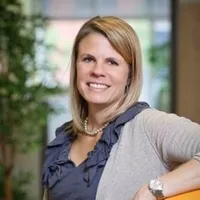
Jacob Little
AVP HR
Cornerstone OnDemand
Unlock True Culture Change: HR Leaders Must Become Changemakers
Thesis
“Jacob Little advocates for HR leaders to be 'changemakers' who drive cultural transformation by deeply integrating values and adopting human-centric, skills-based approaches to foster belonging, fairness, and engagement within organizations.”
What you'll take away
- 01Leverage your unique, human-centric perspective as an HR professional to drive business change, rather than focusing solely on technical aspects.
- 02Implement change using a structured model like ADKAR, emphasizing peer-led training and reinforcement mechanisms for greater adoption and success.
- 03Integrate company values into every stage of the employee lifecycle—from interviewing and performance management to leadership development and rewards—to achieve true cultural transformation.
- 04Shift to skills-based assessment and decision-making to introduce objectivity into talent processes, counteract bias, and enable dynamic allocation of talent beyond traditional hierarchies.
- 05Embrace the 'changemaker' role with persistence and a structured approach, prioritizing relationship building, buy-in, and critical self-care to overcome resistance.


What most organizations get wrong
- Instead of corporate trainers, empower peer managers to train their colleagues, as people receive information better from peers than from corporate leaders.
- Challenge traditional talent assessment methods that favor personal affinity or pedigree by adopting skills-based decision-making for fairer access to opportunities.
- Move beyond rigid organizational hierarchies and silos by leveraging a skill taxonomy and talent marketplace to 'swarm' employees to high-priority business problems based on capabilities.
In Jacob's words
“That experience was a really pivotal one and has allowed me to build a passion around advancing fairness and inclusion and belonging in organizations... that passion for creating belonging, building community, and making people feel welcome so that they can do their best work has really been the theme and the driver behind whatever I've done. And it's helped me see my role in organizations as a changemaker.”
Explains the personal origin of his passion for HR and his self-perception as a changemaker.
“For every organizational change and for every process change, you have to get every human interacting with that process to change their behavior. And as we know, changing human behavior is not an easy task. And so, I'm a huge fan of Prosci's ADKAR model.”
Highlights the fundamental challenge of change management and introduces his preferred model.
“rather than having corporate people fly in and do the training, we actually pulled a group of store managers, trained them how to train, and then had them train all their peers because people can receive it better from people who are peers versus corporate leaders.”
Provides a specific, actionable strategy for effective change implementation that challenges traditional methods.
“We implemented a what and how framework to performance management so that it didn't just matter what you accomplished, but how you modeled our values while doing so mattered just as much.”
Demonstrates a practical way to integrate values into performance evaluations, fostering cultural alignment.
“When you add a prerogative to make decisions based on skill, as opposed to personal affinity or which college somebody went to or the pedigree of the brands they've worked at, it creates a lot more fairness and gives folks who have the skills but may not have the resume that looks as sparkly as somebody else, it gives them equal access to opportunities.”
Articulates the significant benefits of skills-based assessment for fairness and equal opportunity.
“to be a changemaker is to always feel like you're pushing water uphill. Status quos and old mindsets and processes and programs that don't work anymore are really hard to change. So just be mindful that you're signing up for hard work, and that requires persistence... and it also requires a lot of self-care.”
Offers a realistic perspective on the challenges of leading change and emphasizes the importance of resilience and self-care for HR leaders.
The problems this episode addresses
- Employees' number one concern is covering monthly expenses.
- Companies often neglect the human aspect of change during technical implementations, leading to resistance.
- Historical talent processes are often biased, favoring pedigree or personal affinity over actual skills.
- Traditional organizational structures and silos limit an organization's agility in deploying talent to critical business problems.
- Leading cultural transformation or challenging the status quo is inherently difficult and can be discouraging.
In this episode
Intro
Dave has a unique background that really informed how he approached his career
What's Your Career Journey?
You led a cultural transformation initiative using the ADKAR Change Management Model
Exploring the ADKAR Model
Can you tell us about a time when you successfully integrated company values across the talent ecosystem
Integrating Company Values into the Talent Pipeline
Jacob, could you discuss how focusing on skills development has impacted career growth
WSJD Live: Skills-based Assessment and Decision-Making
Jacob, what parting advice would you like to share with our community
A Change Management Champion's Final Words
Topics covered
Organizations and entities mentioned
Full transcript
Expand transcript (1546 words)
Welcome to the Built by People podcast, where we share the stories and insights of the world's top HR leaders. Join us as we dive deep into the minds of HR executives, uncovering their strategies, challenges, and triumphs in shaping today's workforce.
I'm excited to welcome Jacob to the Built by People podcast. Jacob, thank you so much for joining us. And as a starting question, I always love to ask if you could share
a little bit more about your career journey. Thanks for having me, Dave. Happy to be here. My career journey— I have a bit of a unique background that really informed how I approached my career. I was the son of pretty fundamentalist missionary parents. And so I spent a lot of my life moving around overseas and grew up in a culture where it was not okay to be gay. And when I finally did come out, it was a long, hard process. I found my first community in my first job at the world's largest company, Walmart. They had a Pride employee resource group meeting, and attending that meeting was the first time in my life that I had met other out, proud people, and it changed my life and probably saved my life. And that experience was a really pivotal one and has allowed me to build a passion around advancing fairness and inclusion and belonging in organizations. Whatever role that I've had within HR, and I've done most of the COEs within HR, from L&D to talent management, recruiting, organizational development, that passion for creating belonging, building community, and making people feel welcome so that they can do their best work has really been the theme and the driver behind whatever I've done. And it's helped me see my role in organizations as a changemaker. Which I think really informs my passion around cultural transformation and leading change.
Jacob, thanks for that great introduction. I wanna jump in and start by asking that you share a specific case study or example of a cultural transformation initiative that you led using the, the ADKAR Change Management Model. What were the key challenges and successes that you encountered?
Yeah, I had one of those experiences when I was switching jobs where between the time that I signed the offer and started, the whole company had reorged and the manager that I was supposed to report to wasn't there anymore. And I was put— I was actually taken out of HR and put in a business retail team. So, I was a bit of a fish out of water and really had to figure out like, what is my unique contribution to this group and this function that's very different than anything I've ever done before. The business, it was a large fashion retailer. They were rolling out this new inventory management technology across their global fleet of stores. I was brought into the, to the project to do the learning and development component. And what I noticed is that they were focused solely on the technical aspects of implementation. And I realized that I had a unique voice in helping them understand the human aspect of change. For every organizational change and for every process change, you have to get every human interacting with that process to change their behavior. And as we know, changing human behavior is not an easy task. And so, I'm a huge fan of Prosci's ADKAR model. And so I applied each stage of the ADKAR model from building awareness of the need for change, creating desire for the change by highlighting what's in it for me, providing the knowledge and the tools and the ability, and then the reinforcement for the change. And for example, we had— rather than having corporate people fly in and do the training, we actually pulled a group of store managers, trained them how to train, and then had them train all their peers because people can receive it better from people who are peers versus corporate leaders. We gamified it. We had reinforcement mechanisms. We rewarded people. And so, it was a very different way of implementing change at that company and became a best practice that they still use today. So, for me, it was a lesson on using your unique perspective as a people team professional to bring that human perspective to the business.
Can you tell us about a time when you successfully integrated company values across the talent ecosystem? What strategies did you apply to ensure alignment and engagement across different levels of the organization?
Yeah, when I pivoted from retail into tech, my first project at this tech company I joined was to roll out new company values. And I think because of my experiences reading ERGs and really helping large— this one, my first company, this large retailer, I helped be a part of a cultural transformation there, which gave me a perspective on how cultural transformation actually happens and what it looks like for values to be truly integrated. For us, they weren't just something we announced in a company all-hands and put on the wall, but we really intentionally thought about how do these show up at every stage in the employee lifecycle. So, we started developing interview guides so that we could assess whether candidates would add and contribute to our values. We implemented a what and how framework to performance management so that it didn't just matter what you accomplished, but how you modeled our values while doing so mattered just as much. We built them into leadership development programs and outlined specific behaviors for leaders that modeled each of the values. And then we had rewards and recognition programs tied to them. It became a lot more than just words that you heard in the quarterly all-hands, but it showed up when it mattered from leaders, from programs, from processes. And that truly creates a cultural transformation.
Jacob, could you discuss how focusing on skills development has impacted career growth and talent assessment in your organization? Yeah, I— World examples where this approach led to significant outcomes?
Yeah, sure. I'm, I'm really excited about this focus on skills-based assessment and skills-based decision-making, because I really think it has a couple key opportunities. One is adding objectivity to talent processes that have historically favored certain people or certain groups over others. And so, when you add a prerogative to make decisions based on skill, as opposed to personal affinity or which college somebody went to or the pedigree of the brands they've worked at, it creates a lot more fairness and gives folks who have the skills but may not have the resume that looks as sparkly as somebody else, it gives them equal access to opportunities. And it also can counteract some of the favoritism and bias that comes into play within organizations when we're making decisions about who to develop to promote to positions of leadership. So, objectivity is one big thing. I think the second thing is that this sort of skill taxonomy in a talent marketplace allows organizations to think beyond traditional hierarchies and silos. And if we actually have an inventory of all of our employees' skills, we can swarm talent to whatever business problem is highest priority. And align folks based on skills to achieve a goal, rather than say, oh, this isn't your silo, so you can't contribute to that as this person. So, it allows a lot more cross-pollination and flexibility and dynamism when organizations are trying to solve problems.
Jacob, what parting advice would you like to share with our community?
I think for those of your community who choose roles, in change management and cultural transformation and see themselves, as I did, as changemakers, just know that to be a changemaker is to always feel like you're pushing water uphill. Status quos and old mindsets and processes and programs that don't work anymore are really hard to change. So just be mindful that you're signing up for hard work, and that requires persistence. It requires a structured approach. It requires a lot of relationship building and buy-in, and it also requires a lot of self-care because pushing water uphill can feel discouraging and it's a lot of work. So take care of yourself, prioritize your wellbeing. I think the second thing that I've learned big possible voice or contribution can I have with this team or with this project? And when I found bringing the human-centric perspective to business problems, that's where I tapped into my value and my passion. And then the third thing I would say is, yes, follow your passion, but also follow your flow. Notice the things that you do where you get into that special headspace where everything else fades away and you're solely focused on the job in front of you. And pay attention to when those moments happen and follow that flow and follow that energy, and it will lead you to a place where your passion intersects with your preparation to create opportunities for you.
Jacob, thank you so much for joining us on the Built by People podcast. It was a pleasure to have you involved.
Thanks, Dave.