Episode 90 · February 12, 2025 · 15:51
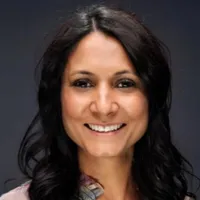
Hope Harris
VP Human Resources, Real Floors
Transforming HR: From Compliance Checklists to Strategic Business Impact
Episode 90 · February 12, 2025 · 15:51
Transforming HR: From Compliance Checklists to Strategic Business Impact
Key moments
In Hope's words
“Successful HR cannot operate in a silo. I think people have a misconception of what HR is sometimes, and I think just due to the innate nature of, of the way things go, it's our job as HR professionals for folks to see our value in that space, right? It's not often that HR professionals step into a role where people are like, oh, I understand HR and I got it, right? You know, at the end of the day, you have to understand the business as a whole, understand how your decision-making impacts the bottom line.”
“I'm a true firm believer that HR professionals have to move beyond that compliance-based focused work and become strategic advisors, business partners, and have that business mindset first.”
“no matter where you go or what you do, people want to feel valued and heard all the way from the executive level to the individual contributor level. Regardless of whatever industry you're in, employees, you know, they thrive when they feel that their contributions matter and that their voices are heard and respected.”
Transcript
Read the transcript3,367 words
IntroWelcome to the Built by People podcast, where we share the stories and insights of the world's top HR leaders. Join us as we dive deep into the minds of HR executives, uncovering their strategies, challenges, and triumphs in shaping today's workforce.
HostI'm excited to welcome Hope to the Built By People podcast. Hope, thank you so much for joining us. And as a starting question, I always love to ask if you could share a little bit more about your career journey.
GuestYeah, so a little bit more about my career journey. I always say, yes, I'm in HR right now. I say a lot of people either landed in HR by accident or by by fate. I say mine was by fate. Started off early in my career in hospitality, which I think is the most rewarding industry. I mean, you learn so much in it and I think everybody should dive into hospitality at some point in their lifetime. Learned so much about servant leadership, budgeting, working with folks from all demographics. I think for me it was a pivotal moment in my life of learning so much. Outside of that, I predominantly spent most of my career in all facets of construction. So grew up in the construction industry. All parts of me love skilled trade and seeing things come to like tangible fruition. So it's been really, really fun in that capacity. I've spent my career navigating various aspects of the construction industry. I've worked in for-profit. I've also took a little stint and navigated nonprofit, which is really, really fun. A lot of moments in my career, just some pivotal things that have stuck out to me in my career journey is, you know, I've spent a lot of time in some pretty pivotal parts of kind of US history in the economic space, you know, went through the housing crisis, market downturn, so many things. All of which lended to, you know, tough times, but they also lend to so much professional growth and kind of catapulted me into the space in which I am today. I will say from a career standpoint, I haven't always necessarily landed in one space, consider myself kind of a jack of all trades and a master of none on so many spaces. But if I got to pick one place where my heart is happy, it's HR and it's with people. I say it was all me. It's had a lot of people who poured into me along the way in my career path and my career trajectory. And have really made sure that I've really understood all facets of business, which lended to the opportunity for me to kind of choose where I wanted to be. Just some of the things that I took advantage of along the way, just kind of figuring out what I wanted to be when I grew up, right, were just a lot of learning opportunities. So I've had a passion for learning throughout my whole entire career. And like I said, just kind of leveraging those folks who poured into me along the way, learned all aspects of business throughout my journey. And again, like I said, just kind of choosing where I wanted to land was amazing. And that's how I landed in HR. I will say the one thing about my career journey and why, if you went and looked at my LinkedIn or if anyone asked, like, because half the stuff's not even on my LinkedIn that I've done, I'd say, you know, one of the things I never did was say that's not my job. And so if you ask me what swim lane is, it's all over the place. So it's, but it's been really, really fun.
HostHope, I know some of your specialization is in operations and finance. How has that cross-functional experience shaped your approach to HR leadership and Why do you believe it's crucial for HR professionals to understand the broader business context?
GuestYeah, definitely. Successful HR cannot operate in a silo. I think people have a misconception of what HR is sometimes, and I think just due to the innate nature of, of the way things go, it's our job as HR professionals for folks to see our value in that space, right? It's not often that HR professionals step into a role where people are like, oh, I understand HR and I got it, right? You know, at the end of the day, you have to understand the business as a whole, understand how your decision-making impacts the bottom line. You also innately have to build trust with your senior leaders. And part of that's cross-functional collaboration and them understanding that you respect what they do and they respect what you do and how y'all can work in lockstep to make things happen together. I will say, you know, just throughout my career, operations, HR, finance, accounting, if you're not in lockstep together around your internal customer support initiatives, you're not going to meet your deliverables, right? Everyone's going to be kind of stepping on toes and working over each other and it's not going to be as efficient and effective and impactful as it can be. I'm a true firm believer that HR professionals have to move beyond that compliance-based focused work and become strategic advisors, business partners, and have that business mindset first. That's how you're going to get the team to lean on you. That's how you think a team's going to build trust, but it's also how you're going to be able to impact the most folks from a customer service-based standpoint internally. I always tell my team, everything you do in HR needs to be scalable and visible. They even have a sign in my office with all my HOPINs, as they call them on it. Scalable and visible has been on there forever. But it's one of those things that as an HR professional, you can't think scalable and visible if you don't understand the business as a whole. It's super important because otherwise you're taking on an initiative or implementing something or formalizing a change management plan in a siloed space, and that doesn't help the organization as a whole because HR is that— our job is to support everyone.
HostHope, you've worked in a lot of different industries from hospitality to construction I'm curious how that diverse experience has influenced your perspective on effective people management and organizational development.
GuestYeah, I think the coolest part about navigating various industries is you learn that all industries come with their unique set of challenges, right? But it is the hugest opportunity for you to grow as an HR professional or any professional. And you, you know, kind of spanning the different spaces and learning to grow working alongside all demographics, right? There's a lot of lessons learned to be able to navigate different organizational cultures and different team dynamics and adapting to diverse work environments. For me, innately, you become more empathetic and agile as a leader. I mean, there's a lot of business practices that I always say, well, that's business, right? You could take that and that, that can transcend anywhere. But for me, like two things that really stand out and, and being able to navigate that from a people management perspective is no matter where you go or what you do, people want to feel valued and heard all the way from the executive level to the individual contributor level. Regardless of whatever industry you're in, employees, you know, they thrive when they feel that their contributions matter and that their voices are heard and respected. You know, part of why I love what I do and I love working in a space that's got a very diverse workforce is, you know, you can create an environment where all team members get to share ideas, give feedback, they can see the impact of their work, they can see how their work affects the strategic mission and vision of the organization. And, you know, it just lends to being able to do that if you're in diverse industries. Another thing is, you know, no matter where you go, what you do, clarity and communication drives success, right? And so miscommunication, I always say, is like the universal pitfall in the workplace, right? And so you get to navigate the different industries and try to figure out the best way to clearly define goals and make sure that you're aligning the team's initiatives with the organizational initiatives. And so it's been a huge learning curve getting to navigate the different industries. You know, I end up in some industries or professional services where formalized change management plans come into place and, you know, PowerPoints and all the fun things, and then I get over over into a super feely, people-centric culture where they're like, we don't wanna do it that way. You need to communicate it verbally and, you know, that sort of thing. So it's been a really fun learning curve and dynamic for me throughout my career.
HostAnd Hope, you've been really passionate about mentoring throughout your career and, and you've worked in a lot of male-dominated industries like construction. I'd love to get your perspective on some of the strategies you've used to support and elevate emerging leaders, especially women in those male-dominated industries?
GuestYeah. So first of all, I wanna shout out to all the women who navigate this on a day-to-day, but also the male advocates who support women in this space. I have been very fortunate to spearhead some pretty large industry initiatives. I've worked in several women in leadership programs. I've been able to help spearhead some things in Women in Construction Month and different things in the construction industry. I most recently was able to support the Women in the Flooring Industry initiatives. But for me, where I've seen the most impact personally and been able to give, I feel, the most impact personally is I think people have a misconception of how you can impact women in industries, thinking there has to be some monumental shift or change in what you're doing. But really, at the end of the day, you know, finding a few people that you can mentor either within your organization or within the industry or even outside of your organization that you can pour into. And meet them where they are. Because women navigate things so differently on a day-to-day basis. Their understanding of how they want to navigate the situation is so different. So to me, it's finding like those 1 or 2 people that even if you pull in a male colleague to help work alongside you in that mentorship space and just pouring into them, uplifting them in the space, working alongside them a little bit more personally in that space has been where I've seen the greatest impact. At the end of the day, it doesn't have to be a huge monumental shift. If you start to do that, it can become the catalyst for taking on a larger initiative within your organization or industry. Currently at the organization I'm at right now, we're working on building mentorship and development programs, and it's something I get super excited about. But along the way, you can see those interactions and those one-on-one things happening. So don't feel that you have to take on a huge shift in it.
HostHope, I want to switch gears and talk about post-COVID workplaces. You mentioned in the past the importance of being in the room. How do you ensure meaningful development and engagement opportunities exist for both in-person and remote team members?
GuestYeah, being in the room is so important to me. I've been fortunate enough to, to be invited to the room. And then there's times too where I always giggle. I'll say I'm not scared to kick a door down, right? But not everybody operates in that space, right? Or has that confidence in that space or even been given the opportunity. So number one, I think it's super important that as you're growing and developing your team members that you bring them in the room, right? It gives them that level of You know, respect to, hey, you're welcome to the room. Your ideas are valuable. You can come in the room and you can learn. And when I say room, it's physically room or virtual room that you bring them into. I can tell you just in passing and in office buildings and hearing people talk and watching the engagement and interaction, you know, it's, it's so much from a visibility and growth standpoint and collaboration standpoint that you learn. I will say, like, when you see the remote workers operating that space, it's something they miss out on. I did spend roughly 3 years working from home with a fully remote team during COVID and prior to that, a hybrid team. And you know, one of the things that you have to make sure you're doing with those teams, because innately not everyone can be in an office, right, is just making sure that you've got meaningful touchpoints, you know, that you have structured virtual check-ins, you know, hybrid mentorship programs. Clear communication strategies are key. I will say that. And it's important that if you are going to meet, keep that meeting. A lot of times, you know, people sit with their own thoughts when they're at home alone. And those sort of things. So from a mental health space, you know, just making sure you're keeping your finger on the pulse with the team. I always say overcommunicate from a virtual standpoint. But again, if there's any way that y'all can get together in person and collaborate, I mean, you can't put a price tag on that. I'll say that the organization I work for now, it's been really fun. I shifted from a full virtual role straight into everybody loves being in this office space, including our CEO, our CFO, everybody's in here every day. And if you're not, you can tell a person's missing.. And it's really neat to see the dynamics of the team and the collaboration, but also how much efficient and effective work gets done when you're actually in the room together, kind of just all the way down the hallway, jumping into someone's office, all of those things. But yeah, I mean, my biggest thing from a leadership perspective was whenever you can, bring people into the room. And sometimes you're going to get the pushback. That's not the level of leadership we're looking for in this room. But if you are wanting to grow your team and develop them, be their advocate. Let the senior leaders know why that person's in the room. I always say to my team, it's my job to lead the team and to help them grow and go and develop in whatever they want to do, but they're the subject matter experts in what they do. They know what they do on the day-to-day, and they're the ones who can add the most value in the room.
HostWhat's your perspective on work-life balance? And I know you've got a unique perspective on this and would love to hear that and how you're helping your teams and the organization embrace that perspective.
GuestYeah, so this has been an iterative mindset thought process that I've had and not necessarily where I always landed throughout my career. I will say at the end of the day, work-life balance balance is becoming, like I said, kind of, it's, how do I say this in the context of thing? My expectations in this space have changed as I've grown in my career. And one of the things in my mind is, you know, you always heard you gotta make sure that your work and your life are separate in this space, or that you're not working too much or overlap. And what I've learned is that whole saying, like, if you love what you do, you never work a day in your life, right? And so you realize at the end of the day, the approach that I'm taking, and I recently just wrote my own mission statement on it too, on how I wanna move forward, is focusing on aligning your work with your passion and your purpose. For me, reframing my mindset towards meaningful work rather than a rigid balance. Organizations can support this across the board. Obviously you want to be mindful of people's personal time, but if you find passion and purpose in your work, there's ways to encourage your team finding your time for self, but ways to encourage their team around the opportunity to pour into others. I will say I see it, and I may be in a different space in my career, that my work is the space in which I have the opportunity to impact people the most.. And that's what I love to do. And so from a positive impact standpoint, it's almost like it's a whole big world out there of ways to impact and what my passion and purpose is in life. I try to figure out how I can better integrate the two, use them to drive my passion and purpose to positively impact people, and then also make sure that, you know, those people are taking care of their families in that space. And, and again, I respect the fact that some people fully want to differentiate that, and I've worked and been alongside a lot of people who, you know, are like, no, your work can't overlap your personal life. But truly myself, I've had so many mentors. Mentors, some unfortunately most recently just passed away, that when they, even in their last days, were pouring into people through their work, and I got to see it, and I'm like, that is it. That, that's where the impact comes from.
HostHope, any parting advice you'd like to share with our audience?
GuestYeah, so a couple things. For me, embrace continuous learning and just remain curious about the business that you're in, or, you know, your role and those things and beyond. That continuous learning is vital. I mean, there's always something out there, so much to learn, and you don't want to become stagnant in your career and your thought process. And then, like I said, sharing your belief in the power of mentorship. And, you know, at the end of the day, the importance of paying it forward in your career is that's what makes it all worthwhile. I mean, we could sit here and do all these task-based things in a day-to-day, but for me, if you can pay it forward to others in the career through mentorship and pouring into them, do so. And then last, just do whatever you can to find ways to lead with authenticity, with your passion and your purpose. And like I said before, I recently just kind of wrote my personal mission statement. Took me 43 years to land where I'm landing, but Really at the end of the day myself, I said through faith and excitement, I wanna pour into others and use my work as a catalyst to impact as many people as I can in a positive way. And by excitement, one of the things I've learned is that when you're passionate about what you do, you get to be your true, whole, authentic self. Because again, we get to do this journey in life one time, right? So why not have fun doing it? And so that's my thing. Just if you can bring people along the way with you, pour into 'em, have fun doing it, have a positive impact to provide for people and their families. Leverage your work in that space.
HostHope, thank you so much for joining us on the Built by People podcast. It was a pleasure to have you involved.
GuestThank you so much. I appreciate the invite.
More conversations like this


