Episode 229 · June 6, 2025 · 17:12
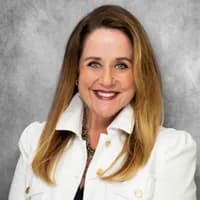
Heather Daniels
Chief People Officer, ICBD Holdings
Beyond HR: Why Business Acumen and Data Drive Strategic People Growth.
Episode 229 · June 6, 2025 · 17:12
Beyond HR: Why Business Acumen and Data Drive Strategic People Growth.
Key moments
In Heather's words
“I think as a business person first and an HR person second.”
“So I literally would schedule time on my calendar every week to just go walk the floor because otherwise we get, we all get so inundated with meetings that it's really easy for that just to take, hey, I'll someday get to it.”
“And within TA, you're in sales. So, A, you gotta understand your business and be able to sell it to people externally. So, you've gotta have your elevator speech of why do you wanna work at our company? But then you also need to be able, just like any good salesperson, is manage your pipeline.”
Transcript
Read the transcript2,965 words
HostWelcome to the Built by People podcast, where we share the stories and insights of the world's top HR leaders. Join us as we dive deep into the minds of HR executives, uncovering their strategies, challenges, and triumphs in shaping today's workforce. I'm excited to welcome Heather to the Built by People podcast. Heather, thank you so much for joining us. And as a starting question, I always love to ask if we could share a little bit more about your career journey.
GuestYou got it. Thank you for having me on. I appreciate it. I'm excited to be here. Early in my career, right out of graduate school, I am a University of Minnesota alum. I started in GE and in their HR leadership program. And I intentionally chose that program because it was one that guaranteed me a cross-functional rotation in the rotational program. Since then, I've had a lot of opportunities that I have taken across the US. I've taken them internationally. So, I've been with a number of companies like the Honeywells, the IBMs, the GEs, Cigna, and then I've also gone and done some PE-backed companies and also done most recently a couple healthcare startups. I feel like I have a taste of a lot of different companies, various industries. I've been in manufacturing and in healthcare for a large part of my career and very intentionally with the purposeful work in healthcare specifically that is done.
HostHeather, when was a time you effectively used your business acumen to address an organizational challenge? Can you walk us through the situation and the outcome?
GuestYou got it. Most recently, I was at a healthcare startup where we were growing at about 32,000%, and that is not a typo. In 4 years, we had grown 32,000%. So staffing, just being able to scale was a really big deal, and we just continued on that trajectory. One of the things to get ahead of staffing, and instead of it being very reactive, I met with my business leaders to really understand, and so I could anticipate what was coming down the pipeline so we could actually do workforce planning and be able to get ahead of the curve because we were constantly on our back foot. Even if we had the speediest time to fill, we were always on our back foot just because of our hypergrowth. So what I did is I met with my business leaders, I met with our CFO because it's also a budgeting issue, but budgeting was less of the topic. It was more of just go get it done however you can get it done. So I went, met with my business leaders and talked to each of them and each of the regions that had significant hiring to do. To walk through, and oftentimes they didn't even understand what they needed because we were growing at such a high rate. So it wasn't just meeting with them to be able to do workforce planning so that I could come back to my TA team and be able to manage that and try and get ahead of that curve, but it was also understanding some of the difficult roles because we had a couple key roles that were absolutely part and parcel to us being able to do business that there's just a supply and demand issue. There's a huge supply issue. So being able to anticipate, hey, I'm going to need this particular position 6 months down the road, and knowing that the fastest time to hire one of those positions was about 4 months, it gave us a leg up to be able to do some additional due diligence and work to be able to meet what the business demand was. So meeting with the key leaders, going out in the business, not just doing it over the phone, but getting out to the field too, to really understand and be able to talk their language, what it meant to be hired in the field, what it meant to be hired at one of our centers, and then ultimately to bring that back to my team was actually going out to the field in many cases as well, but ultimately so that we could get ahead of that curve. And we did. I would say in hypergrowth, you can never really get ahead of the curve, but in various areas I'm proud because we definitely made some really good progress from where we started.
HostHeather, how do you encourage others in organizations to develop their business acumen, and what strategies have you found most successful in aligning HR initiatives with business goals?
GuestSo I'm going to take that as a two-part question. The first one, I would say very early in my career, and maybe it started when I was at GE, but it's truly how I'm wired, is I think as a business person first and an HR person second. And it becomes easier, I think, once you grow in your career, but just some little nuggets that were suggested to me that I really have taken advantage of my entire career. So I've grown up in manufacturing, I've been out in the field in anywhere from Beaumont, Texas to upstate New York to Phoenix, Arizona, and everywhere in between, is making time to be out in the field and making that a part of not just your first 90 days, no matter what level you're at, but making a part of just your normal cadence in how you do business. One, I think it keeps you connected to the business. So I literally would schedule time on my calendar every week to just go walk the floor because otherwise we get, we all get so inundated with meetings that it's really easy for that just to take, hey, I'll someday get to it. Additionally, one of the things just as a more senior leader that I've done is not only in doing the one-on-ones when I'm doing my first 90 days and getting to know my peers and the leadership team, But getting like the marketing, the marketing materials so I can really understand, because they're doing pitch decks for the outside, sometimes for the inside, sometimes M&A stuff, that getting that information and it's packaged in a really nice way, it's a really nice package to get a really quick and dirty look at what's going on in the business. So, from a competitive landscape perspective, from a business deliverables and priorities. So you get a really nice, fairly easy, straightforward way of learning the business pretty quickly. So, earlier in the career, although I still suggest it and I still do it, is everyone to get out in the field, whatever that means. So if you're in a manufacturing site, go sit on the floor for a day and surround yourself. You get employees to engage in a much more connected way. The other thing that I say, if you're in manufacturing, and this is a no-brainer for me, but a lot of times people don't think about it, is dress down. If you're going to go out to the field, instead of if you're a senior leader or even a mid-level manager, dress down and dress appropriately for the audience that you're gonna be talking to. Sometimes there's an appropriateness. These are little tidbits, but it's about connecting and learning from the inside out versus, hey, we're doing the dog and pony show when Heather or some leader is coming on board. So going out to the field, Being intentional about your time and spending it with the teams, being a really good listener and asking great questions that encourage people to talk. So then you really understand the ins and outs, and not just when there's things to do, whether it's an employee engagement survey, but when there's no agenda, that's the best time. And then from a senior leadership perspective, just as I said, coming in and asking for the marketing decks, the commercial organization decks, to really, if you, especially if you don't come in right before kind of annual strategy sessions, either a 1-year or 3-year lookout, is making sure that you get copies, like that work, that heavy lifting was already done. Take advantage of it to learn it, and then use those resources within the organization, meaning your business partners, to just go ask questions and say, hey, can I go do a roadshow with you? If it's not already part of your onboarding plan, make it a part of your onboarding plan. When you go out to the field, whether you're in manufacturing, whether you're at a service operation, whether you're at— I've been in electrical services. Go out to the field. You earn a lot of credibility and respect that way too.
HostHeather, can you tell us about a specific instance where performance management played a critical role in your team's success? What were the key actions you took, and what impact did they have on the organization?
GuestSure. So, I'm a big data person, and I think for organizations to be successful, you have to be data-oriented, and there's varying degrees of that, and especially with AI these days. But I'm going to take a really basic example, and it was with my TA team, and my TA team wasn't at the level that we needed them to be at, and I needed to teach them just some different ways of managing a funnel. So that's understanding— so I was talking about being in a hypergrowth organization, but Understanding what's coming down the pipeline, how do we get ahead of the curve, but then how do we best as a function manage our own? So, how do we manage that internally? And within TA, you're in sales. So, A, you gotta understand your business and be able to sell it to people externally. So, you've gotta have your elevator speech of why do you wanna work at our company? But then you also need to be able, just like any good salesperson, is manage your pipeline. So you manage it just like a funnel. So the performance management piece is knowing your numbers. If you need to net 10 people per week on hires, what does that mean that you need to have at the top of your funnel? What does that mean that your conversion rate is all the way to the bottom of the funnel? And the bottom of the funnel meaning a hire that actually starts. So the performance management piece is Understanding they needed to understand specifically what the goal is and break it down by week. So it was something that was manageable. And then from that is if your hit rate or your conversion is only 20% from the top of your funnel, you have to do the math and then obviously do that multiplier at the top of the funnel. That may not be your traditional sense of performance management, but it is netting better performance for the business and instead of the individual performance management that we often talk about. But it was truly, it was elevating our game from a performance management perspective. And there was a lot of just teaching in that because a lot of people didn't have a traditional recruiting background. So some of those, I'm going to say, pretty basic things that were, you know, have been learned along the way, they didn't necessarily, they hadn't been introduced to that. So the performance management is helping them, teaching them those tools. And then I actually sat with them within the area that they sat in, and we had vision boards and we had daily trackers, not from a micromanagement perspective, but specifically to be able to show the progress that we were making because we were doing visual management and doing day after day and how we were improving, how our conversion rates were improving, and ultimately how we were improving to deliver to the business.
HostHeather, how did you overcome initial resistance to performance management systems within a company that you've worked at, and what practical insights can you share for others facing similar challenges?
GuestSo, just to clarify and make sure that we're on the same page, performance management systems, you know, are a part and still a large part of a lot of, I'm going to say, more evolved companies. And I know there's even some bigger companies that have actually gone away from it, and there's— that's a whole different conversation. But I think that they're, there is resistance often because people don't understand that when you— or don't appreciate necessarily that when you sign up to be a people leader, it's a privilege, and that comes with a responsibility to give feedback. And feedback can be really hard to give to people, good, bad, or indifferent. I just think that it's tough for people to give direct feedback in a humane way. There have been Honestly, probably at every organization, including GE. I was at GE in 6 different businesses. GE's known for their performance management systems, for their Session C. A lot of companies followed suit. Even at the GEs of the world, it wasn't perfect. We still had resistance. Specifically, what I would do is meet with leaders throughout the year and help them understand some different tools. One of the tools that I suggest to both my team and my business leaders is keep— if you have direct reports, keep a running tab of, and I suggest this to their direct reports, but keep a running tab of wins that you have every single month so that when it comes time to do your mid-year or your year-end, you actually have a running list. I don't know about you, but sometimes it's hard to remember what I did last week, never mind what I did at the beginning of the fiscal year to then report out on some of these performance management systems and year-end performance use. So I spend a lot of time with leaders to just engage them in conversation of the value of it, not telling them the value, what I think the value is, but helping them to see the value of how it actually elevates their organization. And ultimately, even in a selfish way as a leader, it actually makes their job easier. So if they're doing it in bite-sized pieces throughout the year, it makes the year-end or the mid-year stuff a whole lot easier. I've had many direct conversations with leaders of either they're late in doing it, which I don't know a single leader in my career that has finished performance reviews ahead of time. It's always shepherding people in the process, but giving them the tools and tricks that I mentioned and engaging them on a more regular basis and making sure that they're having regular and ongoing conversations with their managers. Because as we all know, the number one reason that people leave companies is because of their manager, or they stay with managers. So if you've got a great manager, I know my significant other actually has a fantastic manager, and I mention it because I'm constantly floored at the two-way feedback that is given between the two of them and Nothing that when it gets to mid-year, when it gets to a year-end, nothing is ever a surprise. And the conversation is just an extension of a conversation that's been having the entire year.
HostHeather, what parting advice would you like to share with our community?
GuestGo learn your business. And what I mean by that is understand, so at a 30,000-foot level, understand the ecosystem in which your business and your business leaders are operating within. So having been in healthcare for a long time, I've been in tech for a long time, you've got to understand the reimbursement world. You've got to understand politically what's happening because it does affect different things that can happen in different areas of med tech. So that's zooming out at a 30,000-foot level is understand what's affecting the way you can and will do business. I'll give you just one example is when I was at GE many years ago, we got behind the 8-ball and we were losing share, we were losing price. And it turns out that we were so inter— like, GE was very good about month-end and quarter-end deliverables and having transparency around those, but we became so insular and so focused on hitting Wall Street numbers and being prepared for that, we lost track of what was going on externally. So we started calling that external focus. So never losing sight of what's going on in the total ecosystem is my advice. And I say that sitting in a senior leadership position today, but that could mean just knowing what's going on if you're in a mid-level manager or even an early career manager, knowing what's going on with your colleagues, your cross-functional partners, that's going to affect the way that you can do business, either the timing of the business or what's coming down the pike. Just pay attention to something that is beyond your purview, but at a senior leadership perspective, making sure that you truly understand the ecosystem in which you're operating, 'cause it, absolutely can either propel you forward or tie your hands up and limit what you can do.
HostHeather, thanks so much for joining us today on the Built by People podcast. It was a pleasure to have you involved.
GuestThank you so much, Dave. I really appreciate it.
More conversations like this