Episode 70 · January 29, 2025 · 12:07
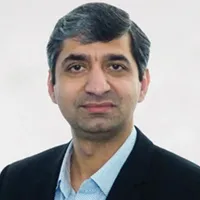
Dr. Charmion Patton
CHRO, Hillsborough County Public Schools
The Unstoppable Current: Mastering Organizational Change for Lasting Success
Episode 70 · January 29, 2025 · 12:07
The Unstoppable Current: Mastering Organizational Change for Lasting Success
Key moments
In Dr.'s words
“The Four Stages of Change is really a concept that I created and implemented when making change at an organization.”
“The term gamification really is defined by AI as the use of game mechanics such as leaderboards, points, badges, levels. People often do that when they play games.”
“The best way to have the balance is really through communication of expectations and to clarify the definition of roles.”
Transcript
Read the transcript2,228 words
HostWelcome to the Built by People podcast, where we share the stories and insights of the world's top HR leaders. Join us as we dive deep into the minds of HR executives, uncovering their strategies, challenges, and triumphs in shaping today's workforce. I'm excited to welcome Dr. Charm to the Built By People podcast. Dr. Charm, thank you so much for joining us. And as a starting question, I always love to ask if you could share a little bit more about your career journey.
GuestWell, thank you so much for having me. My career has been a rather unique one. I've had about 25 years experience working in both domestic and international human resources. Human resources is my passion. It was a choice in my career that I decided to do, and in doing it, it's allowed for me to not only change the lives of those employees, but also change my life by understanding that I need to be able to move and groove with all of the new things that are happening and all of the changes that are happening in the world today. So, Again, I appreciate being here and I'm looking forward to our conversation.
HostDr. Sharma, how do you make the Four Stages of Change, being modification, manipulation, maintenance, and manage, actionable for teams, especially during a major transition?
GuestSo the Four Stages of Change is really a concept that I created and implemented when making change at an organization. Over the course of my career, I've seen many attempts to implement projects, new systems, and programs., and usually in the beginning, the initiatives worked out well, but over time, they did not achieve what they expected and what they hoped for at the end of the project or the change management piece. And as a result of not finding success, I wanted to do something different to say, how do I ensure success when you go through change process? So I reimagined the change process using the adverse modification, which that's to the definition of alter— the definition of it is that I'm altering, adjusting, converting, adapting, manipulation, associating it with some type of guidance around and influencing that part, maintenance, the preservation, looking after it, making sure that it's working, and then the management of the administration, just running it. And so for each of the words, they were really a pathway of installing and instilling something new in the organization. And the way to make them actionable, I'll just give you an example. Is that okay? I think it makes it easier when you take a slice of the pie and sort of give an example of it. A good example of that is if someone says that they have a leave system, you know, leaves, a person's going out on leave, employees go out on leave and they have a system, but it doesn't work well, they're not able to manage it effectively. This is a big challenge for human resource professionals all the time because people are always going out. One of the things out of the modification portion of change is you need to have the team look at what's the process? How do we use the process to manage leaves? Do we have the right documentation? Do we have the right forms? Do we have the right context, the processes? Who are the stakeholders? So you're really modifying and looking to see, okay, what do we need to look at in order for us to understand the existing processes? In the manipulation piece, that's where the opportunity is for them to have conversation and discussion around, is it working? That often doesn't happen in organizations. You put something in place and you're saying, that's it, we're done, one and done. But this is the manipulation is where you're having that conversation to say, how do we need to manipulate it to really work for our organization? Work for those that are using the system, and even work for the employees that are being involved in it. During the discussions, the idea of manipulation is really to guide or influence the existing operation through the process of collaboration. Once they identify the manipulation of it and they say, okay, we realize that we need to tell managers in advance when someone's going out on leave, then communication's important. The communication piece has to happen to say to the manager, this is what's going on. So that's the linkage of making sure that that particular word happens. And then we move on to the maintenance, where the maintenance is this, how do we improve communication? What do we need to do to keep this working well? How do we make sure that our process is looked at again, just in case what we said we do is not working? And then if we do have something that's working, how do we make sure it's staying there? So that's kind of the maintenance. And then finally, in the last stage of it, the management piece, that's where you're saying, Now we're just going to make sure we're managing it successfully. And we're going in and we're checking on it. We're saying, okay, we did this 5 years ago. Is it the right thing? And there's someone having oversight because sometimes you change and fix something and then you look away from it. You never look back again. So the management piece is the oversight.
HostDr. Charm, what role does gamification play in change management and how have you used it to drive engagement and adoption?
GuestYou know, I'm so glad you asked this question. I'm a fan of gamification and its applications to the change process. It's funny when you think of gamification, people often don't understand it and they think that change is tedious and that it's hard and it's a difficult concept and let's just go hire some consulting firm to do this for us. But the term gamification really is defined by AI as the use of game mechanics such as leaderboards, points, badges, levels. People often do that when they play games. You know, now you have the Candy Crush, all the little games on your phone that you— that's gamification. It's modifying your behavior, right? It's making you do something and it's exciting you enough that you actually will go to that, you know, whatever that program is every day because you want to get that thrill and excitement of it. And so, That's usually how I like to use it to drive and motivate engagement and influence performance and create accountability. And when I say create accountability, there's levels. And Candy Crush, I'm at level 1. I wanna go to level 2. It's the same thing when you think about HR and change and how can you bring change in. You have to have gamification. And one of the applications of that is in a health and wellness program. Those programs, usually a person gets in the program, but then they'll say, We want to make sure we have good outcomes, and the way to do that is to say, if you eat an apple a day, you'll get 5 points. That's gamification. If you go and join a gym, you'll get a badge. That's gamification. If you get your family member involved, or if you take your medications regularly, that's gamification because, again, it's behavior modification, but you get a reward at the end of it. You just don't realize that they're using it as a way to motivate you. And so that's why I really enjoy it a lot, because when you're working with managers and teams, you need to find a way to keep them engaged. It also allows you to create dashboards because you can say, okay, there's a dashboard for you to go see how well you're doing in the program. So you go and look and you're like, oh, I lost 5 pounds. So that's how you can use a leaderboard. The board's gonna show you the dashboard, leaderboard, whatever the organization calls it. And in doing that, again, the person's engaged, so you're not having to force them to wanna participate. It makes them want to participate.
HostDr. Sharma, how do you balance employee involvement and leadership direction when navigating through each stage of
Guestchange? So both of these are really key when navigating through the stages of change. The best way to have the balance is really through communication of expectations and to clarify the definition of roles. Oftentimes, we don't want to take the time to do that little bitty piece of it, and leaders are not successful to allow teams to go through the process of change, which is, again, as I went through the four quadrants, that's the maintenance and the management piece of it, because they feel that the leader has to do it, the leader has to always have the answers., but in order for you to make sure that it's actually going well, you need to have employee involvement. You need to hear their perspective and allow them to do the jobs that we're paying them to do. And, you know, as deemed appropriate, there's a time where you might need to say management's making the decision, but as part of the change process, you have to communicate, you have to engage, and you have to allow for the employee to participate.
HostWhat strategies help sustain change during the maintenance stage to ensure long-term success?
GuestSo, again, it's that constant communication. Sometimes the communication's daily, which that doesn't have to be difficult. I mean, we all do stand-up meetings for 15 minutes. Let's just do a check-in. Let's see how things are going, what's not working. And oftentimes when you implement something new, You do it, but you don't check back in. And so it's that constant communication. It's that regular going back and saying, did we sustain what we said we would do? It's sort of the same thing as— and I'll just kind of stay with the same thing that I had of the weight, the wellness management. When you're trying to lose weight, you go weigh yourself. That's like the communication. You go back to see, is what I'm doing working? And it's the same thing in the change management piece and the maintenance piece. It's going back and saying, is what I'm doing working? Because if it's not, then I need to now do something different, or I need to see, am I sticking to the program that I said I would?
HostAnd how do you measure the effectiveness of change management efforts and adjust your approach as needed?
GuestSo, you know, the ways that I found successfully to manage it is by doing surveys. Because oftentimes a survey allows for someone to give you feedback. It can be an anonymous survey, it can be a survey that's very well directed so that we do get specific feedback from groups. Dashboards and metrics. You can create a dashboard, you can go check on a daily basis, or you can say, here's some specific metrics that we're going for, that we're working towards, so then that way you have that detailed information. Also, focus groups. Oftentimes we don't want to do focus groups because it's taking too much time, but I think individuals like to be able to share their perspective, and a focus group allows you not only to hear yours, but other people's. And so it allows for more openness in the communication. And then lastly, I think direct one-on-one feedback is really important because one-on-one you can sit down and say, let you and I talk about this, let you and I understand this and come to some clarity around it. Dr.
HostCharm, what parting advice would you like to share with our audience?
GuestI'm saying embrace change. It's going to happen anyway. If you're going to have it happen, don't let it happen to you. Really think about what are the 4 stages that you can go through that I've shared, or find your own 4 stages. I mean, what I have has worked well for me, you know, and I'd be willing to help anyone that has any questions or concerns about how to add it into what their daily work is. Embrace it because it's going to happen, and don't make it be something that's difficult to do. Don't make it be a chore or a problem. Make it be a part of life. Just like when you're born, you know you're going to grow up, which is change. Every day you change, every year you change, season you change. It's like the weather, you know it's going to change. You can gripe about it, but nothing to do, so you might as well embrace it and understand it and learn
Hostto evolve with it. Dr. Charm, thank you so much for joining us on the Built By People podcast. It was a pleasure to have you involved.
GuestIt was my pleasure to be here. I really appreciate it. Thank you so much. And, you know, this is an amazing format that you have, and it's, it's really an honor for me to be asked to participate with you.
More conversations like this