Episode 175 · April 29, 2025 · 12:06
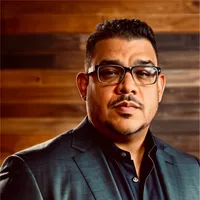
Douglas Parks
Strategic Advisor and Consultant
Unlocking HR's True Value: Quantifiable Impact in an AI-Driven World
Episode 175 · April 29, 2025 · 12:06
Unlocking HR's True Value: Quantifiable Impact in an AI-Driven World
Key moments
In Douglas's words
“My career journey, the way I describe my career is in 3 parts or 3 acts.”
“But what I wanted to do was take some of that savings and reinvest it in employee engagement, employee experience initiatives.”
“This is where HR can flex its muscle. You're empowered with data and analytics and now artificial intelligence, and you're competing and allowing for the organization to compete with people and be differentiated through people.”
Transcript
Read the transcript1,963 words
IntroWelcome to the Built by People podcast, where we share the stories and insights of the world's top HR leaders. Join us as we dive deep into the minds of HR executives, uncovering their strategies, challenges, and triumphs in shaping today's workforce.
HostI'm excited to welcome Doug to the Built By People Podcast. Doug, thank you so much for joining us. And as a starting question, I always love to ask if you could share a little bit more about your career journey.
GuestAwesome. Good to be here. Thank you for having me. My career journey, the way I describe my career is in 3 parts or 3 acts. Act 1 marked by business development, various sales roles while pursuing the undergraduate degree, the front end of a business and business development and sales more on the client-facing side. And then along the way met a gentleman, a partner at a consulting firm. He had a project and he said, boy, it'd be nice if I could solve this problem. And I wound up facilitating a problem-solving session with him to help him solve an issue he had with a customer. He said, you'd make a great consultant. You should get into consulting. And so at 2 of my career, I began to transition or morph into OD consulting and strategy consulting. And then along the way there, after several years, and then was on a project where within HR, and said, my gosh, I think you're pretty good at this connecting culture and people to a plan. You would make a good HR guy. And so we tested it. He put me on a consulting assignment in Germany and we did well with it. And he said, I told you you'd make a good people guy. And Act 3 became more marked by people and the role that people play in value and creating value for organizations. And so that's how I would describe it.
HostDoug, can you tell me about a specific HR initiative you led that successfully connected business strategy with performance? What were the key steps and challenges involved, and what was the impact on the organization?
GuestHmm, good question. So prior organization, the business challenge was to figure out ways to streamline costs or to optimize costs. And so that was put to all of the department heads, pulled together the team and said, hey, what are some of the people levers we can pull here to optimize the HR budget or people budget? Through a series of brainstorming sessions, came up with 20, 21 ideas. One in particular, though, strikes me as one that really resonated with the team. We figured out a way where we could reduce benefits cost on the organization by a little bit more than 20% in the form, mostly in the form of rebates and the like. And so here's an example of where you can take an HR line item or budget, in this case on the benefit side, which happens to be probably the largest line item within an HR budget, would be the budget benefits expense. And so we figured out a way to reduce that spend by a little bit more than 20%, and we presented that to the CFO and CEO. And interesting in the response because we kind of held some of that back. And I said, look, here are the savings here. But if we take— and these are hard dollar savings that are going to immediately hit the P&L. But what I wanted to do was take some of that savings and reinvest it in employee engagement, employee experience initiatives. And so in that sense, we were able to hit two big five value drivers, as I like to call them. We were able to hit both the P&L or hard dollar cost takeout savings, but then take that and reinvest it back in employees. And that hit the second value driver, which would be employee engagement or employee experience.
HostDoug, tell me about a transformation project that you've been a part of where you applied your 4-phase approach. How did you ensure each phase was effectively linked to value creation and what were some tangible outcomes of this transformation? And if you could talk about what that 4-phase approach is, that'd be great.
GuestAwesome. Yes, this is one where I've developed this 4-phase approach throughout my career. It's morphed a bit as technology has become a tremendous enabler. It was sort of phase 1, I guess, is what I call a stabilization phase. This one is marked by what I like to call when you enter into a function, you de-risk it. This could be things associated with compliance. You could have things associated with performance and the like. And so I like to go through what I call an assessment phase where you're focusing on de-risking and you're implementing low-hanging fruit, quick wins, things that you can immediately begin to build. There are other things inherent in it, but it's mostly about de-risking and understanding where both the downside risk is in the function and the upside risk. So what are the things that we can do as a people function to capture the upside risk as well. And it's very important to look at it along both dimensions. Second phase is what I like to call then a shape phase. And so this is where you've done your assessment. You understand where both risk, upside and downside are. So you begin to shape your transformation design, performance management, rewards, reward strategy, the people strategy and the like. So you begin to form that after you've completed the stabilization and assessment phase. Act 3 is a scale phase, and this is marked really through the implementation and adjustments that you're going to make. You don't always get everything right, and so you begin to scale the things you've just implemented in the shape phase. You scale those and flex those up and/or down because again, you don't get it all right out the gate. And that's marked through intelligence, through things like data. As you become smarter about the things that you've implemented, that allows for you to scale them and flex them up or down. And so now that you've gotten technology in, you've got your operating model built, you're servicing the organization, the fourth phase is what I like to call a strength phase. This is where HR can flex its muscle. You're empowered with data and analytics and now artificial intelligence, and you're competing and allowing for the organization to compete with people and be differentiated through people. And AI is playing an instrumental part in how that happens today. And so that's the 4-phase approach. Recent engagement, this was exactly the phase. I've used this sort of a phase lens framework by which to think about transforming any organization. And so took the team through this 4-phase approach. I recall telling the leadership, that this would take 3 years for us to do. My gosh, Doug, we don't have 3 years. This is going to take 3 years. And lo and behold, we begin the march down that path. We're looking at things like back contracts and technology implementations and the like. You fast forward and you look up 2 years later. And so we had gotten through what I would again call the shape phase, you implemented a bunch of things and we were embarking down the scale phase and it was beautiful in the sense that what we were able to accomplish, implemented technology, got ourselves out of some bad contracts, streamline the architecture or infrastructure of the entire function where we had redundant capabilities and functionality. And as a result of implementing the new HRS tool, we were able to consolidate a lot of that technology and capability. New reward strategy that included the identification of this big potential benefit, cost reduction, that really funded a lot of the development that would allow us to both hit the cost expense line item and then also in taking some of that and investing it in upscaling and reskilling some of our customer service folks that would then enable us to hit the revenue generation or top line growth. And so overall, it's the type of transformation that I love because there are many levers that we can pull. Transformation works beautifully.
HostDoug, tell me about a time when you had to articulate the value of a program to senior executives. How did you communicate it in a way that resonated with the CFO and the CEO? And what was the result?
GuestSo again, this is where the overall approach takes that into account, right? So as I'm working with the team, it's building the initiatives that we're going to embark on as a function. And so the one thing I always challenge the team and myself to think about are the 5 points of value or the value creation arc, if you would, where I want to ensure that we as an HR team are doing the consequential things, the things that matter. And so if I can't tie an initiative to one of the 5 points of value, then it's probably something we may not want to embark on. And so we look at all of the initiatives and all of the ideas through a revenue generation lens. So does this enable revenue generation? Is this going to lead to us optimizing the function or taking cost out of either the organization or the function itself? The third lever, cost avoidance. So is this going to allow for us as an organization, as a function, to avoid some unnecessary cost? And so that usually is the third lens by which we look at. The fourth lens is risk. And so are we de-risking the function, de-risking the organization? And so we'll look to check that box. And then finally, the fifth one, which is a little bit softer, employee engagement and the experience, or are we enhancing employee engagement and employee experience that will allow for us to enable discretionary effort on behalf of our people? And so we look at each of our initiatives, we categorize them through one of the 5 points of value along a value creation arc, and we communicate that back to the CFO. And the one thing about CFOs is they love that because they tend to want to focus on the hard dollar savings most of the time. Or the revenue generation line, but the other 3 are just as important. And so that allows for me to have a different conversation, usually with a CEO or CFO.
HostDoug, what parting advice would you like to share with our community?
GuestPeople matter today more than ever. I know that AI is here. It is real. We compete with it. Very important that we understand that. It's not going away. So that would be one thing. I think the other important thing is with the community to just be sure that we're talking about HR in a way that the leadership teams are going to get. And in this day and age, the 5 points of value and talking about a value creation arc of how the function HR, how people and how we compete through people, how people are the last sort of bastion of competitive differentiation. I think looking at it through that 5 points of value lens allows for us to have a different conversation with our teams and with our organizations.
HostDoug, thanks so much for joining us on the Built by People podcast. It was a pleasure to have you involved.
GuestAwesome. Thank you.
More conversations like this