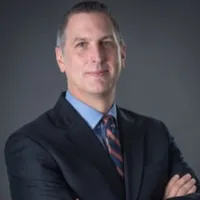
Deanie Ilukowicz
Chief People Officer
TPI Composites, Inc.
Beyond Policy: HR's New Role in Driving Strategic Business Growth
Thesis
“HR must be a strategic driver of business outcomes, deeply understanding and solving real-world business problems rather than being purely policy-driven. This involves empowering individuals through intentional choices, continuous learning from experiences, and consistent personal renewal to prevent burnout and foster growth, especially during major transformations.”
What you'll take away
- 01Anchor people strategy to business strategy, ensuring HR solutions solve real-world business problems and proactively drive business outcomes.
- 02Practice flexibility with HR policies (beyond non-negotiables) to adapt to business needs and retain critical talent, making exceptions where appropriate for top performers.
- 03Manage career energy by making intentional choices, seeking challenging experiences for growth, and prioritizing personal renewal, which may not always mean rest.
- 04During major business transformations like IPOs, prioritize intentional communication by sharing what is known, when it's known, in the most thoughtful and engaging way possible, even with information restrictions.
- 05Build inclusive cultures in global workforces through transparency, empathy, clear expectations, and creating platforms where all voices are heard, fostering a sense of belonging.


What most organizations get wrong
- Challenges the concept of 'work-life balance,' advocating instead for 'choices' with intentional awareness of their consequences.
- Pushes back on HR professionals being 'too policy-driven,' urging them to prioritize understanding and solving business problems over strict policy adherence.
- Suggests that 'renewal doesn't have to mean rest,' emphasizing physical activity and other non-rest activities for recharging one's energy.
In Deanie's words
“I tend to approach HR as a driver of that business outcome, and how do we align the people function as not just the people function, but really the driver of how we're going to achieve the business strategy.”
This highlights her core philosophy of HR as a strategic business partner rather than a purely administrative function.
“I'm one of the, the lone voices out here that says I don't believe in work-life balance. I believe in choices, right?”
This is a contrarian perspective on a widely discussed topic, emphasizing intentional decision-making over an elusive balance.
“My general mantra about communication is we communicate what we know, when we know it, in the most thoughtful and engaging way possible.”
This provides a concise and practical guiding principle for communication during complex organizational changes.
“I tell HR people, I tell leaders all the time that I'm about to give you this burden of knowledge. That now you have to tuck away.”
This quote perfectly captures the challenge of navigating sensitive information during transformations like an IPO.
“I think inclusion or belonging also starts with listening and finding a platform to ensure that all voices are heard.”
This emphasizes the foundational role of active listening and creating safe spaces for diverse perspectives in fostering inclusion.
“But to pause the conversation and really listen to what problem the leader is trying to solve is going to help you understand and maybe think through different options to solve a problem than just jumping to, no, you can't do that.”
This advice encourages HR leaders to be consultative problem-solvers rather than gatekeepers of policy, building trust and engagement.
The problems this episode addresses
- Companies struggle when HR is 'too policy-driven,' leading to missed opportunities for talent retention or business adaptation (e.g., losing a top performer due to strict compensation or remote work policies).
- During major business changes (like IPOs or M&A), organizations face challenges in communicating effectively and transparently without oversharing sensitive information, leading to potential talent flight or disengagement.
- Employees (especially leaders) struggle to maintain career energy and avoid burnout without intentional strategies for 'renewal' and understanding the consequences of their 'choices.'
- Large, global workforces face the challenge of fostering genuine inclusion and ensuring 'all voices are heard' across diverse cultural contexts, which can impact engagement and feedback.
- Business leaders often view HR as a reactive/administrative function rather than a strategic partner that drives business outcomes, making it hard for HR to be 'pulled in' to critical discussions.
In this episode
Covering monthly expenses is the number one concern for employees in 2024
Built by People
Denia Lukwitz is currently the Chief People Officer at TPI Composites
Inspiring leaders: Denia Lukwitz's story
Deanna says it's crucial for HR professionals to understand business first
Deanna and Tom: People Strategy
Dana says many HR professionals can be too policy-driven
Are HR Policies Too Policy-?
Deena says choices, experiences and renewal play a role in career energy
The Career Energy Triangula
On the third side, you have renewal. For me, renewal is physical activity
The 3 Ps of Career Renewal
Having gone through IPOs and also significant organizational changes, what have you learned
Leading HR Through Major Business Transformations
With TPI Composites' global workforce of 13,000 employees
TPI Composites CEO on Building an Inclusive Culture
Deanie, what parting advice would you like to share with our audience
A Final Word from Deanie Jones
Topics covered
Organizations and entities mentioned
Full transcript
Expand transcript (0 words)
Transcript is not available yet.