Episode 59 · January 23, 2025 · 14:36
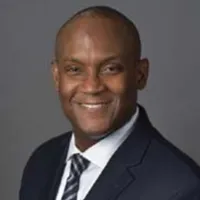
Chad Thompson
Chief People Officer, LanzaTech
Why Discomfort is Your Secret Weapon for Global Career Potential
Episode 59 · January 23, 2025 · 14:36
Why Discomfort is Your Secret Weapon for Global Career Potential
Key moments
In Chad's words
“The loudest person in the room isn't always the smartest, and sometimes the quietest person in the room might have the more profound influence on outcomes.”
“There's never going to be a universally consistent solution in anything because you always have to make accommodation for, you know, diversity and different cultural perspectives.”
“I had to literally prove my capabilities working in a business unit that I didn't know... leaning into a concept of you have to go to grow, I kind of, that's one of my mantras.”
Transcript
Read the transcript2,257 words
HostWelcome to the Built by People podcast, where we share the stories and insights of the world's top HR leaders. Join us as we dive deep into the minds of HR executives, uncovering their strategies, challenges, and triumphs in shaping today's workforce. I'm excited to welcome Chad to the Built By People podcast. Chad, thank you so much for joining us. And as a starting question, I always love to ask if you could share a little bit more about your career journey.
GuestOkay. So, you know, I think it's always important to start with a little bit about who I am. My name is Chad Thompson. I was born in the UK to Caribbean parents, and I've lived in Barbados and worked in a lot of other countries around the world. So from a career perspective, a lot of my career has been around movement and adjusting to different environments and scenarios. I continue on that journey to build a career in HR. Over, well, over 30 years. I'm currently the head of people or chief people officer at Lanzatech, supporting a startup that recently became public, growing to maturity and delivering on an amazing promise to try to help the world recycle carbon and have a better outcome for next generation.
HostChad, how has your multicultural upbringing in places like the Caribbean and UK shaped your approach to diversity, creativity, and culture in the workplace?
GuestI think 3 things come to mind. One, growing up, particularly in the Caribbean, gave me a strong sense of identity and confidence in who I am as a person and what skills I bring to any environment that I'm in. The Caribbean, you know, is a beautiful— one of the most beautiful places in the world, but has challenges because we're a small and operates within some complexities of the geopolitical environment we find ourselves. So we're very agile. We can accommodate and adapt well. We have a strong pride in who we are. We're very, you know, kind of innovative. And I brought that to my career, obviously growing up in the UK as well, you know, in an established, you know, our society helped as well. But I think that gives me an ability to almost pick pivot and toggle through different scenarios, whether I'm in Asia when I was there for some time, or here in the US. I'm comfortable in lots of environments, comfortable if I'm the only Black person in a room, comfortable if I'm the only American, comfortable in many different changing environments. I think that's allowed me to be adaptive, it's given me confidence, and it's led to a lot of my I think secondly, growing up in an environment where things shift a lot teaches you to, to really be focused on where and how you can add value. And it really also helped me learn a lot because every time I'm in a new environment, I have to try to figure out and get context around where am I, how are things different, what are some skills that I, I might need to deploy enjoy in this particular situation, but also what are some similarities or some context issues that I need to be aware of. For example, hey, I'm in an environment in the world where age is highly valued, and so even though I have ideas, I might need to be more respectful to get my ideas across. And I would say lastly, it's made life for me fun with change. And moving into different environments, I think that has given me an ability to succeed where others might take a little bit longer to get up to speed. My adaptive skills and muscles have been developed so I can figure out quite quickly where value needs to be added and how I can play a part.
HostWhat were some of the other more significant lessons you learned from working around the world in over 70 different countries?
GuestYou know, a couple of things. When I worked in Asia, there are certain things that you respect or that you have to be sensitive to pick up. And so when you work for an American company, our culture is very individualistic here in the US. You're working or living in Asia, they have much more of a community-oriented approach to problem solving. And you have to be sensitive to those dimensions of how people see problems and what solutions look like. I think the other thing I've learned is that the loudest person in the room isn't always the smartest, and sometimes the quietest person in the room might have the more profound influence on outcomes. And so it's taught me as well the importance of listening, engaging people, and being inclusive in the way that I work. And that does not in the, you know, kind of ethnic sense of inclusion and diversity, which is so profound in the US. It's really around making sure that everyone has a voice and that people are included and encouraged to participate. I think thirdly, you learn a lot about the challenge of culture and how interesting it is to try to build a global company when you have to compete with so many different cultures. And one of my lessons learned is There's never going to be a universally consistent solution in anything because you always have to make accommodation for, you know, diversity and different cultural perspectives. And I'll say lastly, you know, talent looks very different and talent looks— shows up in many different ways that sometimes our biases prevent us from observing. And so particularly in my experience working predominantly for U.S. Companies has taught me to really value our people's gifts and talents in ways that don't always show up visually. And that you have to do a lot as an HR leader to make sure that you're really measuring talent and that you're calibrating not on, you know, kind of external business only, but really evaluating people and getting to learn people, because sometimes quiet people are totally, you know, missed or for lower people who may not be as good.
HostChad, can you share a pivotal moment when you stepped outside your comfort zone to embrace growth?
GuestI'll probably say on my journey to Indonesia, I was offered an opportunity to go to Indonesia in a role that wasn't attractive but was precursor to growth and development. Essentially was to become a strategic advisor I was faced with the challenge of leaving a role to be like a global director for one of our divisions to go to a different business unit I had never worked in, which was our upstream oil and gas business, and to take a role that I had no authority. I was giving up everything that would give me comfort as a leader because I had a defined role, defined scope, defined authority to go to a role where I was an influencer. Freelancer and an advisor, and I had to literally prove my capabilities working in a business unit that I didn't know. On top of that, I was transitioning my family and had 3 kids at different stages of their life, a high schooler graduating, one of my kids moving into middle school, and almost sophomore year of high school. So having to balance the personal family issues As well as the career issues and figuring out, was this an opportunity that I should take or was actually pretty tough. But again, leaning into a concept of you have to go to grow, I kind of, that's one of my mantras. I decided that we would lean into it and, you know, it was one of the best assignments that I had for my family. It was very beneficial. But also, you know, it was very challenging and I'm so glad that I was able to lean into that. So the downside of a kind of career like mine is I've moved quite a bit. I've never had the ability to, you know, build roots and stay in one place and have my kids, you know, have their childhood friends forever. But in the world in which they live in today, I actually think it's still a plus for moving around and, and. You know, giving them different opportunities and helping them to build a more global mindset. So that was one. I said no to it originally. They came back and said, hey, you should really consider this. And I thought about it from a competitive perspective. If I'm at the top of the list right now and I say no, they're going to move to number 2, the next opportunity, and then I might go from number 1 to number 10. So I just had to make this tough decision about uprooting my family, leaving the comfort of business that I understood, and then, you know, trying to manage a competitive nature to, to compete and win and figure out what was the optimal decision. I think it worked out well for me. And not only did I enjoy living in Asia and the experiences there, but I've made some friends for life and I've had a really positive outlook on my development as a human. True. Living in that part of the war.
HostHow has your philosophy of saying yes to opportunities shaped your career path, and what advice do you have for others to do the same?
GuestYeah, I think my philosophy of saying yes is— I would say it has become enhanced the latter part of my career. The early part of my career, I had a framework that you had to extract maximum value out of the job. You had to complete everything. You had to perform well. The big guys at the top would look down through the organization and see all the hard workers, and they would see your effort, and they would pick you. And a lot of people think like that today, that there's this robust succession planning that evaluates every talented employee in the company, and, you know, my hard work is going to naturally lead to promotion and advancement. And I just want to prick that bubble and say no. The world that we're living in today is we're all competing for opportunities, and we all have to have a strategy that gives us competitive advantage. Sometimes you work with the right person who, as they ascend, they pull you up. Sometimes you go and take an environment or an opportunity that if you win, you make a name for yourself, and that brings a different level of aura around you and attention. And sometimes it is to churn away and just keep, you know, going from, you know, opportunity A to B to C to D. I just want to say that there is no defined path to success. What I found is that sometimes taking the hard opportunity or the one that was tougher gave me an advantage because it gave me the credibility to succeed, but it also helped in my development. And thirdly, it was more financially lucrative, so it helped me to achieve different outcomes. I think, you know, a lot of your success as a professional is determined on the risk that you're willing to take. You've heard it often: high risk, high return; low risk, low return. So each person has to evaluate their risk tolerance, their career philosophy, their willingness to be uncomfortable, and their aspirations, so that at the end of their career they can honestly ask the question: did they fulfill their ultimate potential. And that's a question I constantly ask myself. What would bring me fulfillment? What do I want to achieve? And then how am I going to get it? Because no one's going to give it to me.
HostChad, what advice would you like to share with our audience?
GuestOur— your framework and your context for how you see situations, opportunity in life is the biggest determinant in your success. It's constantly true that multiple people look at similar situations and see different things. And so I would continue to encourage folks to have an abundance mindset, to have a mindset that tolerates not having all the answers figured out, but also having ultimate and supreme confidence in their individual ability to succeed. And sometimes to be ruthlessly honest with yourself when fear is that limiting factor that is forcing you to reason away taking a risk. It's a part of life. Fear is, failure is. And I would say that would be my last thing. There is nothing that is achieved without failure. Failure is not as negative as it is being perceived. It is the most likely outcome of trying something new that you fail before you succeed. So if we can reframe failure as that constant lesson that I'm learning about how to be better, I'll have a higher likelihood of success in anything that I do because I won't be overcome by a negative outcome initially. I'm confident in my ability to ultimately figure it out.
HostChad, thank you so much for joining us in the Built by People podcast. It was a pleasure to have you involved.
GuestThanks to be a guest of, of your show today, and I'm really excited about partnering with you, and I hope this blesses people as they hear it. Thank you.
More conversations like this