Episode 65 · January 27, 2025 · 17:23
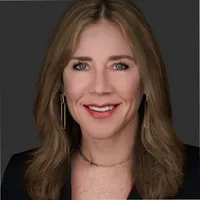
Cassandra Pratt
CHRO, Progyny, Inc.
Unlocking Loyalty: Tailored Benefits Reveal True Company Values, Far Beyond Salary
Episode 65 · January 27, 2025 · 17:23
Unlocking Loyalty: Tailored Benefits Reveal True Company Values, Far Beyond Salary
Key moments
In Cassandra's words
“So we believe that equity truly means that employees have access to the support that they need at the different stages of their life.”
“The standard in the industry right now for the US is about 12 weeks paid family leave. We do 16 weeks paid family leave for primary caregivers and 12 weeks paid family leave for secondary caregivers, and that's at 100%.”
“I actually think that we get more engagement from those type of programs than you do from the very small salary increase you might get. During a merit time because they're inspiring people to want to do more, do things different, be more creative, curious, and people come back invigorated in a way that dollars don't always do, right?”
Transcript
Read the transcript2,748 words
HostWelcome to the Built by People podcast, where we share the stories and insights of the world's top HR leaders. Join us as we dive deep into the minds of HR executives, uncovering their strategies, challenges, and triumphs in shaping today's workforce. I'm excited to welcome Cass to the Built by People podcast. Cass, thank you so much for joining us. And as a starting question, I always love to ask if you could share a little bit more about your career journey.
GuestThanks, Dave. I am very excited to be here today. I'm one of those HR people who have had a nonlinear journey. So after I graduated from college, I took an internship abroad in London, and I worked for a recruitment firm. And that was my first taste of HR. I had gone to undergrad for finance, and I really enjoyed it. I'm not sure if I enjoyed the job or the location more, but, you know, it was great. And then I came back to the States and I went into finance where I worked for a few years and realized that finance wasn't a great fit for me. I wanted to do something different. I ended up at a recruitment firm where I stayed for a number of years on the agency side, really learned about a lot of HR components, certainly talent acquisition, a variety of different types of companies, and then wanted to go back in-house and do something a little bit different. So I went to a B2B tech firm. It was a really exciting time for us. They had about 400 employees, grew it to 1,100 while I was there. We had one exit, we sold to a private equity firm shortly after I left. They sold it again to another private equity firm and really were trying to grow the business. And we were a global firm. So, you know, that was the first time I'd worked for a corporation and gotten to see the global arm, which I really liked. And the transaction bug bit me. And so I wanted to go to a, a company that was smaller, private, was gearing up to do something. So I went to another B2B firm, tech firm, and again, very focused on the business growth, wanted to have a big exit. Unfortunately, that didn't materialize for them. I don't think they've had an exit still. And at that point, I wanted a, a change in my career in the focus. And so, I was looking for a mission-driven company. I really wanted a company in healthcare because it was an industry I hadn't really experienced before, and I wanted an environment where I could have a significant influence on the culture and the programs that they offered to employees and just the general environment. And so I knew it had to be pretty small, early stage, and that's when I found Progeny. So about 9 years ago, I joined Progeny. They were just shy of 50 employees, and now we are over 700 employees and growing. We had our exit, we IPO'd back in 2019, so it's been a little over 5 years. Not really an exit, just change in funding for us. We kept on growing, and I have had the opportunity to create the kind of programs and environment that I was hoping to be able to create 9 years ago. So it's been very exciting.
HostCass, how do you approach tailoring benefits and compensation to meet the unique needs of every employee while ensuring equity across the organization?
GuestSo we believe that equity truly means that employees have access to the support that they need at the different stages of their life. And what that can mean is you have your base benefits, think medical, dental, vision, pretty standard, offer different types of plans, but really creating other types of flexible spending accounts, whether they're pretax or post-tax for employees. So HSA, FSA, reward programs, childcare stipends, eldercare stipends, and not making it a one-size-fits-all. Many times companies will stop with the standard HSA, FSA, and those are great. They do have gaps in the coverage. And so expanding that to meet different areas of the population and having other supplemental benefits that address different stages in people's life, whether that is post-college or family building or, you know, menopause and midlife or getting close to retirement, whatever it might be. People need slightly different benefits for the life stages they're in and understanding that the best way to create any of these programs is to stay close to your employees and really listen to them. There's one that we introduced for 2025 where over the course of the last 2 years, we've had a number of oncology cases, both for employees and dependents. And, you know, in that population that's under 50, they're very impactful to people's lives and can be devastating. And so we wanted to introduce something for all of our employees, regardless of whether they're on our coverage or not. No gating factors, you know, regardless of underlying conditions or comorbidity or any of the rest of it. It's a screening tool that is available to employees and their dependents because ultimately, it's better for everyone if you can identify something early stage versus late stage. That was something that we learned through our claims experience. We're self-insured, so we have a bit more visibility, which is really helpful, but also in talking to employees and what their concerns are and their family concerns and making sure we're adaptable too, depending on what what the change in needs is for our population.
HostCass, with 77% of your workforce being women, what specific initiatives have you implemented to address their needs and support their career growth?
GuestSo I always think, you know, we're really lucky to have an environment as a woman that is 77% female because there's a lot of things that we think differently about than, let's say, if that was reversed and you were 77% male. Or 77% non-binary. But I would couch that by saying regardless of whether one demographic has a higher percentage or the other, you really need to make sure you address the full needs of your population. So the 77%, the 23%, the 5%, the 1%, whatever it might be. But for us, we offer comprehensive fertility benefits and women's health benefits. Those have been really well received. I won't tell you our utilization percentage, but it is far higher than the general trend, which I think speaks to the fact that it is the right benefit at the right time for our population. So we offer fertility and family building benefits. We offer male infertility benefits. We offer doula coverage. Parenting, pregnancy, postpartum, and menopause and midlife, which, you know, is something that 50% of the population, 100% of women are going to go through at some point in their lives. And then in addition to the benefits that focus on care for the individual medically, we wanted to also focus on leave policies. So I The standard in the industry right now for the US is about 12 weeks paid family leave. We do 16 weeks paid family leave for primary caregivers and 12 weeks paid family leave for secondary caregivers, and that's at 100%. Knowing that it's not always a linear journey when someone is having a family, we took the prenatal leave that is new for New York State that just launched in 2025, and we wrap that for all of our employees. So we have employees in 43 states, so all of them are eligible for that prenatal leave. We also know that it impacts families' bonding when you have a child in the NICU, and so we introduced something called NICU leave, which can be up to an additional 4 weeks of fully paid leave that you can to put at the end once you exhaust your 16 weeks or your 12 weeks so that you have extra time to bond that makes up for the time that, you know, the baby might've spent in the NICU. In the, the more difficult stages of life, we have our bereavement leave, we have pregnancy loss leave to cover miscarriage and, and failed fertility treatments. And we also created a few other types of leave that help people when they've exhausted leave or when they have a catastrophic event in their lives. And then the last type of leave we created was for our sales team. Oftentimes, we don't prorate bonuses or accruals when people are on leave, but that's difficult to do with sales because you are the one bringing in the commission, closing the deals, prospecting. We created a whole plan that would alleviate some of that so salespeople could still get credit for deals they've been working on and not lose that full portion of their income. We've tried to be creative whenever possible and really support people because oftentimes these events are when you need to have that steady income stream, and having a significant drop or having it disappear entirely adds another layer of stress to whatever you're dealing with.
HostCass, what strategies have been most effective in designing benefits that align with the priorities of your workforce?
GuestI would say it goes back to really those conversations with employees, right? And making sure that we are not assuming we know what people need. Some of where that starts is aligning our mental health and EAP support, because regardless of the specifics of what someone's dealing with, mental health support covers all of the things that we've already talked about, and the EAP resources become integral with many of those situations. We've also used our EAP to support employees in office when there's some larger tragedy. And so we wanted to make sure that all of that was linked together to best support employees. We have a lot of development programs for employees, so we do formal mentorship, coaching, leadership development workshops, leadership development roundtables with different levels to, to sort of share experiences and ideas. And, and then we also offer the ability to participate in external conferences, courses, and certifications. I actually think that we get more engagement from those type of programs than you do from the very small salary increase you might get. During a merit time because they're inspiring people to want to do more, do things different, be more creative, curious, and people come back invigorated in a way that dollars don't always do, right? It's like the curiosity and the challenge component, and you find that people then have inspiration to share across other teams. So the contagion factor is very true when someone comes back energized, right? They're able to energize the other members of the team, or when they talk about their supported journey, be it through mental health or leave, same sort of contagion factor, right? They talk about it with other people and they realize that here are things that I could participate in that will help me do things in a way that perhaps I didn't realize was available to me.
HostHow do you ensure transparent and inclusive communication around benefits and compensation to build trust and engagement?
GuestSo our ERGs, I think, are integral in this. When I began 9 years ago, we definitely didn't have any ERGs. About 6 years ago, we've got our first couple of ERGs. Now, I might misspeak here, but I want to say there's at least 6 or 8 ERGs, and our VP of People and Head of DEI, Cynthia McEwen, has been integral in expanding this program. And it's really important for employees, and it's really important for us both in HR and as leaders in the organization, because these peer-to-peer discussions serve as platforms to share experiences, ideas. They help people build trust. It helps people understand what benefits are available to them. So as I was talking about the contagion, when people have a, a discussion forum where they can share these ideas, then it opens it up to other employees. And then on the flip side of that, you know, having diverse ERGs in a very diverse population, it helps people have a support network within the company to talk about what they're dealing with. And depending on the type of ERG, they're facilitated by experts within the company, whether it's someone like Dr. George Witkin, who is a licensed psychologist, or our chief medical officer who is a REI and OB-GYN by training, Dr. Janet Choi. So we have these specialists who are there who can step in and help, or we bring in outside resources, right? But part of it is that sharing and the support networks. And the other piece of it is really helping people have a place to discuss the ideas and then know, all right, hey, I wanna escalate this to the HR team or to my leader or other people in the organization because we have something that could improve how we do things, be it business or support for employees.
HostHow do you gather and use employee feedback to refine your benefit offerings and better support a diverse workforce?
GuestWe have lots of different ways. I think feedback is great, right? Feedback is a gift, I think, is the acronym. So we run standard engagement survey every year, which has a benefits component. We do a special benefits survey, usually mid-summer, so we can check that we're aligned with what we're talking to other new vendors or what our strategy will be for the upcoming year. We also, especially with our new products that are Progeny-created, have regular feedback touchpoints. So depending on which one of our Progeny products you're engaged with, we'll actually have members of our product team or members of our engineering team or our BizOps team will actually sit down with people and say, how is it going? How is this working? Well, what tweaks would you want to make to it? Which benefits us in two ways, right? We're able to tweak it for what we might use externally, but internally it also helps us understand in this feedback loop, are we doing what our employees need? Is there a gap in the coverage? Is everything going great? And so, you know, especially early stage with things like menopause or pregnancy, postpartum, and parenting, it's a really good way to get individuals' feedback on what else, what else could we do to, to help meet your needs? What else are we not doing? And then we have an open door policy. So whether it's coming into me in HR or one of the other leaders or executive team members, People are very open, especially on the benefit side, with what's working well and what's not working well. Part of that comes from the fact that we have lots of people that are from the benefit space, all different facets of it. And so they are eager to share their experiences, positive and negative, and that just helps us improve all of our benefit offerings for our employees.
HostKas, what parting advice would you like to share with our community?
GuestI think it's really important to invest in employee wellness and benefits. I have seen it done very well. I've seen it done not so well. And it demonstrates a company's core values when you take care of the people. You're, you know, walking the walk, not just talking the talk. And employees do feel cared for. They do understand that they're valued and that their contributions matter and that you're we're looking at them as a whole person, right? Not everybody is going to have the sunny side of their life experiences while they're with Progeny, right? They're going to go through ups and downs. And so by listening to their experiences, by helping them through the more difficult times and the really happy times, right, like family building, we will be able to give them a better experience at Progeny and keep our employees with us longer and allow them to be a whole person, both inside work and outside work.
HostCass, thank you so much for joining us on the Built by People podcast. It was a pleasure to have you involved.
GuestMy pleasure. Thanks so much, Dave.
More conversations like this