Episode 84 · February 7, 2025 · 21:41
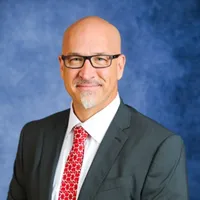
Bob Lockett
Former Chief People Officer, CAE
Stop 'taking care' of employees: Scientifically link HR to financial outcomes.
Episode 84 · February 7, 2025 · 21:41
Stop 'taking care' of employees: Scientifically link HR to financial outcomes.
Key moments
In Bob's words
“The best metrics that I've seen often tie back to the business. If you're helping the business either make money or save money, and you can make the causal or correlational relationship With doing those two things, I think it's really important.”
“The language of business is about data and numbers. They get it. But the important thing is you've got to go to the storyline behind it to really have an impact on how the organization thinks about that information.”
“My charge and mandate is about influencing leaders to make better business choices, help them with talent, help them understand, know, the decisions that they make and the second and third order effects of that as well.”
Transcript
Read the transcript3,631 words
HostWelcome to the Built by People podcast,
Introwhere we share the stories and insights of the world's top HR leaders. Join us as we dive deep into the minds of HR executives, uncovering their strategies, challenges, and triumphs in shaping today's workforce.
HostI'm excited to welcome Bob to the Built By People podcast. Bob, thank you so much for joining us. And as a starting question, I always love to ask if you could share a little bit more about your career journey.
GuestSure. And thank you so much for having me. I'm not going to give you the long version of my career journey. I prefer to give you the Reader's Digest version. So started from very humble beginnings outside of the St. Louis area, spent time at West Point, 4 years at West Point military experience. And following that, I knew that I wanted to get out of the Army after I commanded a unit in Germany. And so the military also, I was very fortunate to also serve our country in Desert Storm. So following that, I started my career in recruiting, went from recruiting at a small firm to Frito-Lay, which was a great experience in working with two unions as well as recruiting. The second part of my career after graduate school, I was trying to decide what I wanted to do, if I wanted to stay in HR, if I wanted to pursue a GM track, and I got a shot to do that at Harrah's Entertainment. And what that taught me was I really liked HR and not necessarily the gaming industry. So you go through life and you learn these lessons. For me, getting back into HR, I went to Limited Brands in Columbus, Ohio. From Columbus, Ohio, I went to USAA in San Antonio, Texas. And after USAA, went to First Data in Melville, New York. All in HR-related roles. And then of course, got an opportunity to go back to San Antonio to start my CHRO role. And that was with a private equity shop called Harlan Clark, owned by Ronald Perlman. Got recruited to go to ADP and had a couple of roles there, culminating in the Chief Diversity and Talent Officer role. This was the president of the ADP Foundation, which I found great joy in. And then ultimately left ADP to pursue the CHRO role of a publicly traded company with CAE. And so today I am in transition, leaving this role, looking for the next opportunity as a CHRO role. If I could sum up really quickly the things that are important for me to share with you about my career, number one, it's about taking risks. There is— with no risk, there's no reward, just like the investment philosophy. Risk and rewards. I think with your career, you have to be capable of taking risks and getting out of your comfort zone. The second thing that I would mention, it's about learning. You've got to continue to learn and grow and challenge your thinking and apply lessons from various industries. And the third thing I would tell you is you've got to enjoy where you work. And if you don't, the beautiful thing is it's a free market economy. You can always take your services somewhere else in my career. I've demonstrated that over and over again.
HostBob, thanks for that great introduction. I want to talk about something we've discussed in the past, and that's using a scientific method as a way of thinking about solving business challenges. Can you walk us through how HR leaders can effectively implement that approach?
GuestAbsolutely. Well, first, let's go back to what the scientific method is. And what I would tell you is we all learn this great concept, most of us learned it in middle school, and that concept was really about developing a hypothesis about something. Following that hypothesis, then you've got to do some research. You've got to get the data that you need to either support or deny your thinking. And once you have that assessment and analysis, then you can put together your recommendations and your thoughts. And I think that is a very simplistic approach to solve some of the most complex problems that we face in HR. So for me, it's always been about, you know, having that question, I wonder if, or what happens when, what if we tried this? And I think those questions are really important and they're open-ended. They don't have a solution. And then you can start to define the problem and do the necessary research. I'll give you an example of leveraging that thinking in my career, and I'll do it on a couple of ways. The first time I did this, I happened to be at Harrah's Casino, and one of the things that we were trying to do was improve our customer service scores at our facility in North Kansas City. In order to do that, we had to get everyone engaged in improving those scores, and that meant the front office folks like the beverage servers, the wait staff, the table games dealers and the like, they all had to provide excellent customer service. While the folks in the back office roles, whether they were HR or finance or operations, they didn't feel like they were as connected. So what I did was pair up front office and back office teams so you can start to build this level of camaraderie. Every Tuesday, we would get scores. And with those scores that came in, I created a quick algorithm and changed the score into a, a reasonable number. And I based my thinking on fantasy football. So my goal was to create a level of engagement with front and back office folks and to ensure that we delivered great customer service because our bonus was tied to it. So just imagine you're coming into a facility and now everyone is talking about how we can beat the other team, particularly the employees. They're all talking about, oh, by the way, here's what our focus is on this week, and we're going to do these things on this shift in order to delight the customer. Lo and behold, what you saw was a 20 to 30% increase in the customer service scores. So needless to say, we were able to achieve over 100% of the bonus target because of the competitive nature that we created. And again, this is a data-driven approach, leveraging the data, putting plans in place so that we could reap the benefit of this, and which is exactly what we did. We saw the customer service scores go up. In addition to that, customer loyalty went up, and we all had fun doing it because I created this weekly blog, if you will, back then, and I would create these stories about what teams were competing against each other and who's gonna give the best customer service, and then I create these fictional stories and people just love reading them too. So it's tying it all together to improve a business challenge, leveraging the data, but also taking action and making sure that what you do also includes an element of fun.
HostBob, I'm curious, what was your process for deciding on a fantasy football model? I'm sure there was a lot of discovery work done. Or maybe it was just a personal experience of you doing fantasy football with your friends and seeing how exciting and motivating that experience was for you. Just curious to get a little more background on what was the catalyst for establishing that initiative within an organization.
GuestWell, it, it multiple influences is what I would say. First and foremost, I think it was about being creative. And one of the things I've often been known for is I've leveraged creative solutions to solve business problems. And this was just an example of trying to come up with a creative solution with a group of people who are young, who wanted to be engaged in something. And so that was the first dynamic that happened. I was like, okay, what can we do that breaks the traditional norm? Because normally what would happen is you'd come in and people would say, okay, we need to improve our customer service scores. And everybody goes, yes, we do. And then the question, you know, we could talk about it, but then How do you engage people? And I think that was the real priority for me to say, if we understand the data, we understand how to leverage it, then we could create something that's a fun experience for people that will also have business benefit. We created what was called the CSL League, the Customer Service League, and you saw the teams competing and I put up this big bracket, if you will, in the dining facility. And everyone saw it. And by the way, we gave out a big trophy at the end. The employees got bonuses. They got an additional bonus because guess what? I gave them an extra $500. That didn't really hurt the revenue of the location, but the teams that won really appreciated it.
HostBob, thanks for sharing that unique story and approach. One word that I heard a lot was data, and I want to dive a little bit deeper into that by asking the question of, How can HR professionals better position themselves as true business partners by leveraging data? What specific metrics should they focus on?
GuestWell, when we talk about data, I mean, there's so much data that we have around us. Everything can be measured for the most part. And, you know, I often talk to people about ensuring that you have a balanced approach with your data, that you have both qualitative and quantitative data and marry those two together. The important thing for HR professionals is to really think about what problem they're trying to solve, and then think about how they measure success. I always focus on the measurement of success because that will help you understand where you're going. Now, we all know about the traditional metrics that you can use. For example, if you're talking about talent acquisition, you wanna understand efficiency and effectiveness, you talk about cost per hire. Uh, if you want to understand how productive, uh, your organization is, you talk about things like revenue per employee. So there are multiple metrics depending on what you're trying to assess, uh, when it comes to efficacy or when it comes to performance. The best metrics that I've seen often tie back to the business. If you're helping the business either make money or save money, and you can make the causal or correlational relationship With doing those two things, I think it's really important. Now, granted, there are some other things you've gotta consider in that, like engagement. Can you measure that? Can you do it effectively and the like? So it's really important to tie whatever it is you're doing in HR back to how does this impact our business? And if you can't draw at least a correlational relationship back to the business, the question is, are you measuring the right things? And/or are you doing the right things?
HostBob, in your experience, what's the biggest mistake HR leaders make when trying to implement data-driven decision-making?
GuestIn my experience, it's really been about understanding the data and being able to defend your position. So one mistake HR leaders make is when they fail to say, hey, I truly understand the data. I understand the, the relationship. And oh, by the way, Let me tell you how this plays out because the data is one piece of the puzzle. The other part of it is what's the story behind it? And what— there are times in organizations that HR leaders will make the mistake of complicating a problem that can be broken down into pieces to make a little more simple. And so I do think that you can speak the language of HR or you can speak the language of business. The language of business is about data and numbers. They get it. But the important thing is you've got to go to the storyline behind it to really have an impact on how the organization thinks about that information. Because data's just information and you can, you know, massage it, if you will, statistically to make it look one way or the other. But the important point is, is going back to what I mentioned earlier, how does this connect to the business and our ability to make money, save money, or add shareholder value?. And if it's not doing those 3 things, we're missing the boat because we get caught up in some of the real HR-related things. HR is a cost center. It's always lovely when HR figures out a way to generate revenue. That's always a great thing to see. But by and large, you're not put in that position to do that. But it's important to think about it. How does what we do connect back to the business to help the organization? Either make money or save money.
HostBob, you've got obviously a lot of extensive experience across different organizations. How has the role of an HR business partner evolved throughout your career? And what skills do you view as crucial for success in that role today and in the future?
GuestI've seen the role of the HR business partner evolve, and I, I can recall when I first joined Frito-Lay, and I started out in a staffing manager role, and then I went to the manufacturing facility and you were HR. But the beautiful thing at Frito-Lay, they had just put in place Dave Ulrich's model, the HR business partner. And I've used that as my, the holy grail, if you will, of HR, because it gives you a perspective about the expectations of an HR business partner. Not only do you have to know the business, you also have to understand the external environment. You have to understand data and statistics. You have to have relationships with people and be able to influence them, and you have to be a phenomenal coach. And the coaching skills that are needed are not telling people what to do. It's really about asking the right questions. And so that way they can go on this journey of self-discovery Now, not everybody's gonna go on that journey to self-discovery. So it's important for you then to say, okay, well, how about you try this? And so being able to understand where people are in their journey and their development so that you can have an impact on them. So I really do think that an important skillset for the modern HR business partner is to understand and leverage data. You've— we've got this great tool now called auto, you know, artificial intelligence. It's been around for a while. It's not been as prominent as it is today. But understanding the data, thinking about how to provide scenarios, the best case, worst case scenarios for situations so you can speak the language of the business, so you can influence the business leaders so that they can do things. Now, keep in mind that many organizations think about the role of the HR business partner as Oh, they're responsible for taking care of the employees. No, that's not the case. If you think about the model, because if you, you know, if you think about it, many people will look at, well, how many HR business partners do we have per employee? And I go, well, why do you think about it that way? Because that's not the way the model has ever been intended. The model has always been about how do I work, have an, as an HR business partner, work with the leaders who, if I can influence them and can help them become more effective leaders, then they have this multiplicative effect because I'm one HR business partner. I might have 5 leaders, but those leaders might have 20, 30, 40 people underneath them. Now they've gotta put the systems and processes in place. And so my role as an HR business partner is really about how do I influence leaders? And I'll have to figure out a way to deal with some employee problems, but My charge and mandate is about influencing leaders to make better business choices, help them with talent, help them understand, you know, the decisions that they make and the second and third order effects of that as well.
HostBob, I want to go back to your early days. You are a graduate of West Point. You, but you are a collector of unique international experiences. How has that academic background tied with your military experience shape your career?
GuestWhat a phenomenal question, by the way. Well, let's start with West Point and what I learned there. You know, Angela Duckworth wrote a book about the most important characteristic in order to graduate from West Point. Not your academic prowess, not the fact that you were the most athletic or the smartest or the strongest military leader. It was really about grit. Do you have the ability to fight through situations and work through them, solve problems and keep moving forward? Do you have the ability to learn and take feedback? You know, in the military, we also talked about this concept that resonates with me even to this day, mission first, people always. And that's important for me because that's why I chose the profession of HR. Because I always believe that people are the most important piece of it. I've always looked for the underdog as well. And looking for the underdog means that I'm looking for people who others have not given an opportunity. I'm looking for people that said, well, they're not really good at what they do. And I try and understand the dynamics and understand if I can motivate and get them inspired to do something different and change their course. And watch them get promoted, to me, that's a win. And that's really the mission for his people always. The grit is the other piece of it. I, you know, again, I would love to tell you that my journey has been linear. Unfortunately, it's fairly hyperbolic in terms of the moves I made and decisions that I made. And the other lesson learned is I was an artillery officer. The one thing that you learn is once the round is out of the tube, you don't go back. You can't see it. And so many of us spend our times second-guessing our decisions and we, you know, I should have, would've, could've. Well, you didn't. Learn from it, move on. And that's the mindset that you have to have. That's the grit mindset. That's the mindset of a person who is willing to learn and understand that they're not going to get it right all the time, but they learn from it and they keep moving forward. The last thing that I'll mention that also prepared me for my life in the corporate world, I'll mention two other things. One is keep it simple. And just to give you a perspective, I was an artillery officer, as I mentioned, and one of the things that we learned in field artillery was that the unofficial mission statement was to shoot, move, and communicate in that order. So when I've put together my various HR vision or mission statements, it always revolves around keeping it simple. And I always focus on 3 things. If I can attract, develop, and retain talent, then 9 times out of 10, I can put other things in place to support that effort. But notice how simple that is. We know it's fairly complex on the back end because there's some complexities as you think about talent acquisition, as you think about development and succession, as you think about engagement, uh, and retention, all those things are fairly complex systems. However, I always believe that everyone in HR should know what the mission is and how we are going to define success. And if you can do those things, people can rally behind those ideas and that concept of, I know what I'm, I'm supposed to do. And then I don't need to go get permission because I am focused on doing things that are aligned with where the leadership is trying to go because we know that this will have an impact on the organization. And the final thing is I often would coach leaders and use a term that I learned in the military called commander's intent. And I translated it into leader's intent to say, if you're the leader, then what is your intent? Oftentimes in this day and age, leaders forget they've gotta be absolutely clear about where they're trying to go, what they're trying to do. I'm not saying be perfect, but pursue excellence. And then as they think about these things, it's critically important that they reinforce with great communication and understanding everyone is aware of their intent and what it is he or she is trying to accomplish.
HostBob, thanks so much for joining us on the Built By People podcast. It was a pleasure to have you involved.
GuestThis has certainly been my pleasure. If there— hopefully I'll get an invite back at some point and we can talk about other fun topics and other fun things that I've done in multiple industries. Thanks, Patrick.
More conversations like this