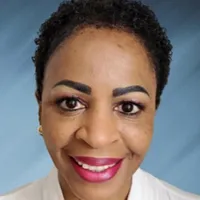
Barbara Matthews
Chief People Officer
Remote
Unlock Top Talent: Why a 'No Surprises' Culture Starts with Better Managers
Thesis
“Effective HR leadership hinges on building a 'culture of no surprises' through strong manager development and transparent communication, while embracing AI and flexible work models to attract and retain top talent in a rapidly evolving landscape.”
What you'll take away
- 01Prioritize manager development to foster clarity, transparency, and consistent expectations, as poor managers are a significant detriment to employee and business success.
- 02Implement a 'culture of no surprises' by ensuring clear communication of performance expectations, providing timely feedback, and aligning management on assessment criteria.
- 03Leverage data from performance calibrations and employee issues to identify disconnects and inform targeted HR initiatives.
- 04Embrace AI not as a job replacement, but as a tool to automate HR workflows, freeing up teams for more strategic work, and hire talent curious about AI.
- 05Be deliberate in designing flexible work infrastructures with clear guardrails, recognizing that top talent will increasingly seek out adaptable work environments.


What most organizations get wrong
- Successfully pushed back against senior leaders on a disciplinary outcome, advocating for a stricter penalty despite being new in her role and risking credibility, demonstrating conviction over convenience.
- Challenged the common fear of AI replacing jobs by stating, 'AI is not going to take your job, but people who understand AI will,' shifting the focus to skill adaptation rather than job loss.
In Barbara's words
“I really deliberately and intentionally chose to use my voice. I disagreed with the penalty that was being imposed after the outcome of an investigation. I actually thought it was way too light for what had actually happened.”
This quote highlights the courage required to uphold ethical standards and advocate for the right outcome, even when it means disagreeing with senior leadership.
“Poor managers are the biggest problem across any company.”
A bold statement emphasizing the profound negative impact of ineffective management on employee experience and overall business success.
“I encompass or package all that into building a culture of no surprises.”
This phrase encapsulates her core philosophy for fostering transparent communication and consistent expectation-setting within an organization.
“AI is not going to take your job, but people who understand AI will.”
This quote offers a crucial forward-looking perspective on the necessary skills and mindset for the future of work in an AI-driven landscape.
“you know more than you think you know, and you were hired for a reason. So, even now, I still get imposter syndrome when I'm in rooms.”
This offers relatable, personal advice on self-belief and overcoming imposter syndrome, a common challenge for professionals at all career stages.
The problems this episode addresses
- Poor managers lead to employee disengagement, lack of clarity, and unexpected performance issues, negatively impacting retention.
- Disconnects between employee self-assessments and manager evaluations indicate a systemic problem with clarity and consistent performance expectations.
- Inefficient manual HR workflows consume valuable time, preventing HR teams from engaging in more strategic work (opportunity for automation).
- Traditional 5-day in-office models risk losing top talent who now expect and will 'vote with their feet' for flexible work options.
- HR leaders and employees grappling with imposter syndrome, hindering proactive career growth and contribution.
In this episode
Intro
Barbara Anderson started her career at Google over 2 decades ago
How to start your career on a positive note
Dave: Tell us about a moment in your career where everything was on line
A Moment When Everything Was on the Line
What can really affect someone, an employee and therefore the business is a poor manager
What is the most meaningful change that you've made in a company
Barbara, what's a leadership move or HR initiative that you've repeated
Barbara, What's a leadership move or HR initiative that you
Barbara, what is the single biggest shift HR leaders need to prepare for
What is the Biggest Shift in HR in the Next 5 Years
If you could leave one piece of advice for our community, what would it be
Barbara On The Built by People Podcast
Topics covered
Organizations and entities mentioned
Full transcript
Expand transcript (2802 words)
Welcome to the Built by People Podcast, where we share the stories and insights of the world's top HR leaders. Join us as we dive deep into the minds of HR executives, uncovering their strategies, challenges, and triumphs in shaping today's workforce. I'm excited to welcome Barbara to the Built by People podcast. Barbara, thank you so much for joining us today. And as a starting question, I always love to ask if you could share a little bit more about your career journey.
Yes, of course. And thank you very much for having me. So I started my career journey is about over 2 decades ago. I cut my teeth at Google on a 3-week contract that I ended up staying there for 12 years. So, I don't know what happened. They either got the paperwork wrong or they decided to keep me going. So, I rotated through all the different departments there, really within the people space, started in recruiting, moved into HR operations, global people programs, and ended in an HR business partner role. And then after that, I moved, I moved home to Dublin and I moved into a company called Stripe, and I was there for 7 years. So, the remit that I took there, um, was the head of international HR, so everything outside of the US. However, when I started, there was like no HR person in the States either. So, I did a global role for about 3 years. And then, in that, that was a really interesting role for me because it was a company that was rapidly scaling. And when I joined, it was only about 600 people. So, a lot of programs needed to be built out, a lot of processes to be established, you know, building policies, all that sort of thing. And then about 2 years ago, I moved to Remote, which is the company I'm currently in now. So, Remote is really, is a company, it's about 1,800 people across 85 countries. So, it's pretty dispersed and it's focused on building and selling a global HR platform that takes the employees from hiring right through to retiring. Now, for me, I think the most exciting thing for me is that I am their ideal client profile. So, I am their ICP. And so, I get to work really directly with the team of the product builders and the engineers, and we're building a really, I think, a really amazing product that's going to be seamlessly integrated, intuitive, efficient, and connected. All the things that I guess I had frustrations with in my past experience with the tools that I used.
Barbara, thanks for that great introduction. I was hoping you could tell us about a moment in your career where everything was on the line including the decisions you made and talk about what happened next.
Yeah, I actually thought this was quite a deep question, Dave, I have to be honest. And I had to really scour my experience because I don't know if I felt ever that everything was always on the line, but I did have a moment that, that felt very pivotal to the type of human resources business partner that I was going to be and the type of, I guess, personality and reputation that I was going to have in my career. So it was a moment where I really deliberately and intentionally chose to use my voice. I disagreed with the penalty that was being imposed after the outcome of an investigation. I actually thought it was way too light for what had actually happened. But I was disagreeing with senior leaders who knew the individual, and I was quite new in my role, and I had to really push and fight to do what I thought was the right outcome for the company, for the business, for the individual itself, and for kind of our culture and the precedent that we were going to set with that decision and with that outcome. And I think what was challenging for me is that as I was quite new in the role, what was at stake was kind of the trust that my leaders had with me, their perception of my ability to do my role, and also that ever, ever, never-ending balance that I'm sure a lot of your listeners will understand around protecting the business, but also the employees and kind of overall, I guess I was risking my credibility, but I decided to stand firm and help them. Understand the perception of the path that they were taking and the potential alternative. So, in the end, we, we, um, we did what I asked for, what my advice was. And I think we landed on having the right precedent around ethical leadership, how to handle things. And then I also developed my own reputation of not kind of cowering or going, um, going along with the leaders in the organization. And with that, I think, came a more, I don't know, a more respect maybe, and more of an upfront partnership.
Barbara, what surprised you most about the outcome in that situation?
The fact that I had to fight so hard to get it, honestly. To me, it was very black and white, and to me, there was only one outcome if we were going to be the company that we talked about being. And so, that was the biggest surprise, which I had to discourse and influence to try and get it over the line.
Barbara, we're going to switch gears and talk about something a little more positive. And that is, what is the most meaningful change that you've made in a company that employees still feel today? And how did you make that happen?
Yeah, I think when I think about all of the experiences I have with employees and all the conversations I've ever had within my— in the experience that I've had, what can really affect someone, an employee, and therefore the business is a really poor manager. And, um, I was actually talking about it with friends, my husband at the weekend, about the, the effect that a terrible manager can have on you, like the feeling in your gut before a one-to-one or the nerves at the weekend. We've all had it in our careers. And for me, building really strong managers is something I really believe in. I want to build managers and have built managers who deliver clarity, transparency to their team. And, and once you have a high-performing, effective, trusting team, it can really meaningfully change the trajectory of the team or the organization or the department. And I truly think that poor managers are the biggest problem across any company. And if you think of the employee issues, and I'd invite your listeners to do the same, the majority of them are from employees who, kind of simple things, like they're literally blindsided by a performance evaluation, or there's some new piece of feedback that they have a total like lack of clarity in what's expected of them as an employee or as a team member. And people can't change behavior if they don't know what's wrong. Poor managers can also do a pretty poor job in like sharing a vision, uniting teams behind a mission so, so that all the team can unify together and deliver something. In my last company, I supported operations, that organization globally at Stripe, and we spent a ton of time at the beginning when building that org focusing on on the fundamentals. So what does good look like in a manager, in an individual contributor at this level, at that level? Let's align on that. What is table stakes in any role or team? Let's all agree on that. Let's understand the mission. Let's align on how we're sharing it with our teams and rinse and repeat. So I really focused on, on building those strong managers who had that consistent understanding of what their team or their org needed and what their role was. To ensure that their team showed up, what their role was in investing and nurturing and growing their team members, what their role was in terms of like speaking transparently and guiding them towards a mission, reinforcing a vision, sharing expectations of how to get there, and sharing it with a clarity that just can't be denied. And also, it's really important to have hard conversations when needed. So, I encompass or package all that into like building a culture of no surprises. That's a real transformation that I have done in teams, I feel we're still working on here at remote. I don't, I don't actually know if it's ever actually done, but I think it's, it's, it's an ongoing conversation that you're constantly having. And within Stripe, just to give some specific kind of tangible outcomes, I doubled down on all things with my managers. So, the learning teams, I complemented the learning team sessions with my own manager roundtables. I had my own coaching presentations. I had some dedicated one-to-ones that then progressed into kind of cohort coaching sessions. I had real-time coaching myself and sharing some hard feedback sometimes with the managers too. I think a lot, I think a lot of managers, Dave, are kind of plopped into a pool without any swimming aids, and it's not fair on them. It's not fair on the team. But being a manager is really, really hard, and supporting managers to deliver all the things that we ask of them from an HR perspective, you know, cultural transformation, coaching, growth, feedback, tough conversations, honest performance evaluations, and also smash all those sales targets. Like, it's a really, really hard task. And you, you know, to make that happen, you need to dedicate a ton of time as a people partner, and you need to have a really strong leader of the business who is aligned with what you want to do, who understands the importance of what you want to do, and will support and kind of walk the walk of that across the organization. All of that kind of helps underpin the work.
Barbara, what's a leadership move or HR initiative that you've repeated in more than one company because it just works?
I mean, I think not to repeat what I just talked about, but I think it is the culture, culture of, um, the culture of no surprises. It just underpins so much across the company, from engagement surveys to performance conversations, to growth conversations, to career development. And if you're thinking about employee engagement and if you're thinking about retention of your top talent, all of those things need to be top-notch. You need to keep your best talent in the organization.
And what's the first step that an HR leader could take to try that within their own organization? I'm speaking to the culture of no surprises. How, how'd you recommend someone go about trying that?
So firstly, I would look at your data, uh, you know, look at your performance calibrations, see how they are within our performance. I don't know how, if this happens for a lot of other people, but within our performance, uh, cycle and our tool. We ask individuals to self-assess their own performance evaluation, like rating between 1 and 5, and we ask manager obviously to do the same. If there's a disconnect, there's a clear problem. There's a clear problem that everyone is not singing from the same hymn sheet. Think about the employee issues that the HR leader is seeing on their team, the types of conversations employees are citing when they're being exited, if it's being exited from performance and they have pure surprise. And then I would sit down with the managers and I would, and I did this at Stripe, and we do it here, we have what's called pre-calibration sessions. So, we think about a team, think about a person at a given level, no individuals, no names. So, it's completely agnostic of anyone. We just think about the role. For level 3 engineer, what is the what that you would expect to see across the impact, the goals, et cetera? What is the how in terms of the values, how they show up, all of that, and make sure there's alignment. Now, I've sat in conversations that are 4 or 5 hours long where managers are debating and discussing And it's really quite painful, but the outcome is quite beautiful because you have clear alignment across your management team. You are then able to share that document with your individuals so they all understand what good looks like, what great looks like, what's table stakes. And then through that, you develop the coaching mechanisms, the feedback mechanisms, the conversations, and you really try and coach managers on how to have those in a really transparent and clear way.
Barbara, any pitfalls that you would recommend HR leaders avoid when trying this?
Don't present it as like a, you know, this is a tick sheet because you might find that the individual comes back and goes, oh, I can actually tick all of those, so I should get promoted now, or I should be at the next level. So what it is, it's a guide to open the conversations and making sure that obviously you're positioning it as that and making sure you're talking about the what and the how and how the combination of both is what gives you your performance evaluation and what helps you understand what way you're trending.
Barbara, looking ahead, what is the single biggest shift you think HR leaders need to prepare for in the next 5 years?
So I think for, so it's two. Uh, so for me, definitely more around AI, how to develop workflows, how to identify really tech-savvy employees. I actually hired a couple this year that are really, really hungry and curious, and that's the mindset that I want in my team in terms of where we're going with AI. I heard a talk, uh, last year and it was AI is not going to take your job, but people who understand AI will. And so really making sure that you're hiring the right people and using AI in the right way. So not necessarily just putting everything into ChatGPT and, you know, getting it to spit out answers, but looking at workflows and using Gumloop and Zapier and kind of integrating Sheets and Slacks and trying to find quicker ways to automate all the workflows that a lot of your team are doing so they can free their time to move up and do more interesting, more strategic work. And then secondly, I think in the future, the companies of tomorrow, I mean, I work remotely and I believe we need to move away from the more standard and traditional way of working and pivot to a more flexible work, integrative versus disconnected type lifestyle, and be really deliberate as an organization for whatever company is doing this to document guardrails and infrastructure to to be in a place to make that happen, because I believe top talent are gonna vote with their feet, and a lot of them will not be interested in going back to an office 5 days a week.
If you could leave one piece of advice for our community, something you wish you had known earlier in your career, what would it be?
So for me, it would be, you know more than you think you know, and you were hired for a reason. So even now, I still get imposter syndrome when I'm in rooms. I still get imposter syndrome when I'm having certain conversations with external companies or even on podcasts. Like, you know more than you think you know. And they did hire you. And then also, that I would always tell anyone who's up and coming, always put your hand up and say, yes, I'll do it, I'll do it, I'll do it. So that really will just open up everything in terms of all the opportunities that you could possibly have in your career. I had this, this mentor who was always in my ear going, put your hand up, go on, you can do it, you can do it, put your hands up. And everyone needs, you know, your own kind of private cheerleader to be pushing you. So I think that's really important. Never say no.
Barbara, thank you so much for joining us today on the Built by People podcast. It was a pleasure to have you involved.
Thanks for having me.