Episode 298 · July 30, 2025 · 9:03
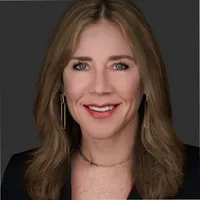
Alana Fallis
Head of People, Quantum Metric
The HR Identity Crisis: How To Prevent Burnout By Living Beyond Work
Episode 298 · July 30, 2025 · 9:03
The HR Identity Crisis: How To Prevent Burnout By Living Beyond Work
Key moments
In Alana's words
“being an HR practitioner is hard. It's a really hard job and it requires a really big emotional investment where we are the corporate therapists and we're also the people problem solvers.”
“I felt a lot like who I am as a person and my identity at work became one thing. So I really took on my work self nearly all the time, even when I wasn't working. And it was a sort of one-way ticket to losing sight of myself.”
“I don't even have Slack notifications enabled on my phone. He told me to do that. So if your CEO tells you to do it, that's what you do, right?”
Transcript
Read the transcript1,916 words
HostWelcome to the Built by People podcast, where we share the stories and insights of the world's top HR leaders. Join us as we dive deep into the minds of HR executives, uncovering their strategies, challenges, and triumphs in shaping today's workforce. I'm excited to welcome Alana to the Built by People podcast. Alana, thank you so much for joining us today. And as a starting question, I always like to ask if you could share a little bit more about your career journey.
GuestYeah, sure. Happy to be here. Big fan of the pod. Thanks for having me. So my career journey, I have an eclectic career journey, as they always tell me, where I actually started as an actor a long time ago. I got FA, and when I moved to New York City after acting school, I made the transition from what I call my artsy bohemian life to my direct deposit life, but it started me off on a journey where I was at this transition. I thought, what do I wanna do? Transferable skills do I have? And I found a roundabout pathway through HR, through the world of startups, and then through the world of tech. So, I've been a broad spectrum HR generalist for about 12 years now, and my current role is head of people at a tech company called Ontometric, and I oversee the global people program. We're headquartered in the US, and we're also in the UK, Germany, Spain, and Canada. So, I'm overseeing the global HR program there. I help built it over the last couple of years. And so it's been a really good journey.
HostAlana, I'm curious to understand your story of when you left Quantummetric due to burnout. And what specifically led you to that breaking point?
GuestYeah, I talk a lot about this, that being an HR practitioner is hard. It's a really hard job and it requires a really big emotional investment where we are the corporate therapists and we're also the people problem solvers. And we also have to be really front-facing when things go wrong. As a starting point to my fellow HR community out out there, I see you, the job is really hard. I think what led specifically to burnout in this case at Quantum, we scaled up really quickly. When I started, we were 300 people back in 2021. We scaled up to 500. We went through international expansion. We went through a lot of company changes. We also went through a riff in 2023. So it was just a lot of changes and the workload has always been very heavy, right? This is startup life. I had a global team. My first person on my team was in Germany, the earliest time zone, the latest. Time zone was California. So I would wake up with a full plate. I would go to bed with a full plate. I had not a lot of boundaries around my workday and when I was working, I was plugged in all the time. But if I could summarize it, I think the thing that really did lead to my burnout is that I come from an acting background, a very creative background. And I think over time, having built my career and having taken on more and gone through this upward mobility, I felt a lot like who I am as a person and my identity at work became one thing. So I really took on my work self nearly all the time, even when I wasn't working. And it was a sort of one-way ticket to losing sight of myself. And I think that's what happened.
HostAlana, what specific actions did you take during your 3-month break to change your relationship with work before the return to Quantummetric?
GuestYeah, so I, the biggest thing that I had to do was really rediscover myself and plug into the things that actually do bring me joy. Define what I want actually out of my work experience. So the exercise really over those couple months was pulling apart my work self and then my creative self. And so I spent time doing a lot of the things that I love. I did a little bit of traveling. I actually started a theater podcast with one of my best friends from theater school. It's called This Might Be Niche on Spotify, if you're interested, if you're also fellow theater kids. I took a class on writing a TV pilot. I started a voiceover practice. So I just plugged into a lot of the things that I wanted to do and dreamed for myself. I had a period of time where I thought I've done a decade in HR. Is it actually what I want to do? Is it actually what I enjoy? But believe it or not, in the couple of months that I was gone, I really did miss it. I missed my team. I missed working on projects. I missed working on interesting work. And I actually did do a brief stint as a chief people officer cover at a different company. So I got experience of what things were like on the other side. But the more that I thought about it, I actually realized that I do love this work. I do embrace this work. It's about finding the pieces that resonate with me. And to me, that's a team that I really love. And it's the opportunity to work on interesting projects. It's the opportunity to design and build systems. And I thought, what do I do? Where can I do that? I could do it back at Quantum where I left. And so luckily there was still a spot for me when I called back, but it was certainly a lot about defining my own relationship to work and what I wanted out of my career in addition to making sure I made space for all those other things.
HostSounds a lot of that. You implemented a lot of new boundaries and you also garnered a lot of new perspectives while you were away. I'm curious what challenges you faced in maintaining this healthier relationship with work once you returned.
GuestI definitely had a lot of new perspective, and I think when returning, it was all about implementing this mindset shift that work is a part of my life and not my entire life. And so of course that mindset is challenged on occasion. Things get busy, things get seasonal, there can be catastrophes, fires. So ultimately how I approach my work now is I tap in and tap out, that I don't just wake up and check my phone, that I don't check my phone before going to bed. I have blackout hours where I don't check my phone at all. This might sound absolutely insane, but actually my CEO told it, so I give him a lot of credit that I don't even have Slack notifications enabled on my phone. He told me to do that. So if your CEO tells you to do it, that's what you do, right? So I make sure that I am implementing boundaries about when I'm tapping into work and I don't let work just come to me at any time, that I make sure that I'm plugging in and checking it. And I have a mindset that I show up, um, here to do the work that I can, do meaningful work, do the best that I can each day, and then I turn it off at the end of the day. I also started taking better care of my health. I did start exercising. It's a non-negotiable that I have to have dedicated time for walks, to have time to do the weight training that I wanna do in the morning. Started blacking out my calendar. I do lunch half an hour. I block out focus time. I block out admin time. But to answer your question, when challenges come up where things are really busy and seasonal and cyclical, I overcommunicate with my team. I overcommunicate my intention to have my boundaries, and I make sure that we're able to flex our efforts so that in the busy season we are able to step back a little bit more because it's the truth that there just are these cycles in the business where you have to be more on. And so recognizing that and calling it out and then making sure that when we're in the off season that we are stepping back and not overcommitting and not overtaking on projects.
HostI wish everyone would take like a long sabbatical where they can just be away from work for 6, 12 months. Yeah. I'm curious. What tangible strategies you'd recommend for the HR professionals out there who are feeling emotionally drained but may not be in a position to take extended time away from their jobs?
GuestYeah, I too wish everyone could step away for a couple months. It really does change your whole mindset. My first advice would be to get to the root of your burnout. What is the thing that's actually weighing on you? Is it an emotional overinvestment? Is it the plate is too full? What is the things that are actually contributing to how you're feeling? So That would be my first thing. My second note is that, again, this job is really hard. Do seek community. There is great community out there on LinkedIn, on Slack, for fellow HR practitioners to meet and to talk about their problems. Don't try to go it alone. Don't try to solve every person's problem in the business. So, make sure that you are setting those boundaries for yourself and develop a mindset that when you clock into work, you're punching in to move the needle and play as a team for the time that you're here. And you're here to support the business, but you can't take responsibility for each person's individual experience. And so having that kind of separation sometimes will certainly help. Another thing that I did to help manage my workload was really looking at my calendar and being a little bit ruthless about those recurring meetings, about the things that take up time and things that take up cycles. So I've announced to people before, I've said, hey, listen, I have a really full plate. There's a lot going on. I'm trying to manage my calendar better. I'm going to move our weekly to a monthly. Nearly everyone has been super receptive to that. So be protective of your calendar, block your time for lunch, don't check your phone after you log off. So those things too. But if it were that easy, everybody could do it.
HostAdvice you'd like to share with our community?
GuestYeah, I would say it's most important to define yourself outside of work. You are not your job. You are not the problems that you solve day in and day out. What are the things that actually bring you joy? And make sure that you are prioritizing nurturing for yourself, caring for yourself, and going easy on yourself, but definitely do seek out community and make sure you don't go it alone. This job is hard, so work with your community and ask for help.
HostAlana, thank you so much for joining us today on the Built by People podcast.
GuestThank you.
More conversations like this