Episode 181 · May 2, 2025 · 12:28
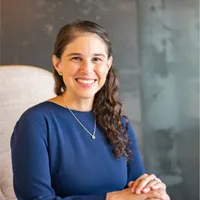
Shannon Ross
VP of Human Resources, Home Health, Amedisys
Why your best people leave: The critical role of connected leadership.
Episode 181 · May 2, 2025 · 12:28
Why your best people leave: The critical role of connected leadership.
Key moments
In Shannon's words
“I always joke that I moved 4 times in 4 years with GE. I had various roles, specialists, generalists, all part of the healthcare business, but really got some broad exposure to HR and then moved from GE to Biogen...”
“Wicked technical with almost no leadership experience. And so when I joined the organization, quickly identified we had this kind of middle manager group, like many organizations do, that just didn't have a ton of training in what good leadership looked like.”
“I can't say that enough. It sounds so simple, but communicating with people about what good looks like, that behavior was just as important as the outputs.”
Transcript
Read the transcript2,195 words
HostWelcome to the Built by People podcast, where we share the stories and insights of the world's top HR leaders. Join us as we dive deep into the minds of HR executives, uncovering their strategies, challenges, and triumphs in shaping today's workforce. I'm excited to welcome Shannon to the Built By People podcast. Shannon, thank you so much for joining us. And as a starting question, I always love to ask if you could share a little bit more about your career journey.
GuestAbsolutely. Thanks for having me. Well, I am a 20-year HR veteran at this point. However, you know, I started my career almost by accident. If I go way back, I was a college athlete. And so when I graduated from undergrad, I had spent most of my time focusing on my sport, volleyball, and came out with a business degree, but no real experience to work from. I spent time in various roles. I was in hospitality, I did a stint in inside sales, and then I did some sales training, which actually really was my first true foray into HR from a training and L&D perspective. That role took me around the world. I was in Southeast Asia for a few years, and I ultimately got my MBA and was looking at concentrations, and HR was something that struck me in that regard and ended up ended up going and joining GE Healthcare in their HRLP program, which was really one of the best decisions I made from a career perspective. Got a ton of experience in HR. I always joke that I moved 4 times in 4 years with GE. I had various roles, specialists, generalists, all part of the healthcare business, but really got some broad exposure to HR and then moved from GE to Biogen and ran the town development program at Biogen and then went into more of a business partner role. And I've really been in this solid business partnering for the last 15 years now, give or take, and just really various 4 different industries, but many different sizes of companies. I've done small companies, I've done large companies. I'm currently at Amedisys where we are the largest home health organization in the US. So we do provide home health, hospice, and acute in-home care. And I'm the VP of HR for our home health and acute home care sections. We have over 10,000 employees in that part of the business. And so it's really run the gamut of HR in my background.
HostShannon, thanks for that great introduction. Can you share a specific example of a leadership development initiative that you implemented in your organization? What were some of the challenges you faced and how did you overcome them to successfully build leadership capability?
GuestAbsolutely. It's one of my favorite things to do, I will say, in my career. The leadership development aspect is the best part of HR. I've done this in various forms over the years. I think leadership development and the development of people in an organization is pretty specialized and it's going to need to be tailored based on your needs. One of my favorite ones that I did was a couple of roles ago when I was at a company called Ascensus. We were a surgical robotics organization. So, really cool technology, high-tech, specialized engineers, very smart team. Many had never worked anywhere else. It was a startup. So, they had come from the ground up in this role and promoted from within. Wicked technical with almost no leadership experience. And so when I joined the organization, quickly identified we had this kind of middle manager group, like many organizations do, that just didn't have a ton of training in what good leadership looked like. And so we built an emerging leaders program that was one of the most successful of things I've done. This was a cohort program. I feel like when you're doing programs with leadership development, you need to bring people together. Leadership is by example, helping others, learning, doing, seeing, feeling. And so you need that cohort. We had a coach assigned to everyone during that session. They had homework in between our monthly sessions. And we had a project the whole group worked on individually toward the end of their time. We started this program with a year and then ended up shrinking it back down to about 8 months. We felt like as we got to a year, it was too long. And that was one of the challenges we faced was getting the timing right of how much time people could spend out outside of their day jobs. But that program really allowed these very technical experts to learn about the basics. And we really scaled this program to some of the most basic things you needed to know as a leader, how to communicate, how to understand your team styles, how to take and receive feedback, the basic financials of a company and how that is important to your team. And that program really opened up a whole new level of knowledge for these technical experts and allowed us to move the business forward in a way that we hadn't been able to because people were getting stuck and then leaving because they didn't see a possibility for growth in the business.
HostTell me about a time when effective leadership directly impacted employee retention in your organization. What strategies did you use to foster leadership qualities that help retain that top talent.
GuestAbsolutely. I mean, I think retention is one of the most critical things that companies are always trying to get right. In my time at GE in the healthcare business, I was in a satellite site and we were a smaller— or for GE standards, we were 400 employees, but we were smaller and it was an acquisition organization that had been really separated from the kind of corporate headquarters of the business. And we had pretty high turnover and really bad employee engagement when I went to that site. We did a overarching survey and quickly realized that we had a lot of leaders who knew their business and knew their specialty, but they did not have the ability to engage with their teams in a way that they could. Or I had two leaders, brought on a new site leader and a new functional leader within the scientific department. And they both really started over-communicating. I can't say that enough. It sounds so simple, but communicating with people about what good looks like, that behavior was just as important as the outputs. We were highly technical PhD-level leaders and they thought as long as they produced good work content, nothing else mattered. We had to change the narrative of actually the behaviors, the way you treat people, how we speak to people is just as important. Made that a new focus. We created a monthly leadership meeting where we focused on leadership topics and how we could connect. We actually brought the team together more, which allowed people to reconnect. This was pre-COVID, so we spent a lot more time in the office. So people were actually connecting in a way that doesn't always happen today. The other thing that these two leaders did that I think went a long way, there was a lot of change that we were an acquisition who was being integrated with a lot of moving parts. And they took the time to educate our next level leaders and the everyday employees on the why things were happening. That was such a part that had gotten missed along the way where people just said, here's the change, here's what you need to know. But they wanted to know why. This is not how we've done it. And taking that time to explain the why it was happening and what that meant allowed them to buy in and allowed us to actually retain people going forward.
HostShannon, can you describe a situation where you saw leaders' influence significantly improve team performance? What were the key actions or behaviors that made the difference and how can other leaders replicate that success?
GuestAbsolutely. I think there's a few examples that come to mind for me, but one of the ones that I think back to was in the biotech industry. I had a very skilled, highly specified biostatistician group that we worked with, and they were very good at their roles. They weren't the best at partnering outside of their team. That was a critical juncture because they were a support and a partner to many other aspects. We're running clinical trials. We were trying to develop rare disease drugs. It's not one group can do this alone. The leader of that organization really worked hard to understand her team. What were their strengths? What were their interests? What they struggled with on a day-to-day? But she also went to the partners, the internal kind of other teams in the business, as well as our vendors and said, okay, what do you need from my team? What are the biggest struggles in working with us? Where are we falling down? And she brought those two organizations together in a way to creating the joint group, the goal of why we operated, which had never been done, which sounds so silly. But everybody, one group said, I'm doing this, and the biostatistician said, I'm doing this. And by bringing everyone together and saying, we have the same goal, we are getting drugs, rare disease drugs approved. Okay, now that we've established that, how do we work together? And she really focused on that why, and then continued to bring these leadership teams together. And we made partnerships at every level across these lines so that there was no question about who you were working with and how we were going to get this successful. And that really created a link between good behavior, good leaders, and being a good partner and not just churning out excellent statistician-type work, which really allowed this team to be much more successful by meeting their clients' needs too.
HostShannon, what parting advice would you like to share with our community?
GuestThere's a couple of things that I think about when I, over my many years of HR, the experience that I— people ask the question of what makes a good leader or what makes a good manager? There's 4 things that come to mind that I always share that I think are critically important. It's as a good leader, there, you should be direction, connection, feedback, and career. And by that, I mean in direction, you're setting the direction for your team. People should know what's expected of them. What does good look like? That is your role as the leader to make sure that nobody is questioning what they're supposed to be spending their time on. The connection piece is about taking it beyond just the work, connecting to the team. One of my mentors always said, you can't lead people you don't know. And I took that to heart from a very early stage of my career. You have to find a way to connect with people and spend some time working working and talking with that's not work-related. You don't have to be their best friend, but there is a way to connect and still be professional, and that's important. Feedback is one that I think we miss the mark on a lot, but people need to hear how they're doing, specifically what's going and what's the opportunity to do better. I always say it's early and often. I told you I was an athlete, so my reference is always it's not getting feedback. It's like being an athlete who never gets any notes from their coach if they're doing well or taking 23-point 3-point shots in basketball and not seeing if they go in. Like, you have to know what's happening. And so that people need feedback. The part of this is around career. And this is a big one that I've actually added in recent years. I have found where leaders were stepping away from having career discussions with their employees and allowing an HR person or a compensation person or insert someone else here to have a career discussion. And as a leader, people should be owning Everything related to a career discussion, pay, promotions, performance rating, a bonus or not, getting a new job or not. Like all of this is the discussion that the direct manager should own and communicate cuz it's wrapped into here's why, here's what you need to know, and here's how we're gonna move forward. But I think that's if leaders can own those 4 things, no matter what function they're in, they really do add a ton of value and again, create a culture people wanna be part of.
HostShannon, thanks so much for joining us on the Built by People podcast. It was a pleasure to have you involved.
GuestThank you, Evan, for having me.
More conversations like this