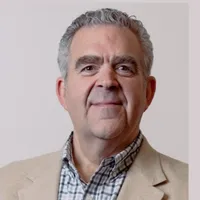
Episode 364 · January 15, 2026 · 16:34
Sarah Frymire
Vice President of Human Resources, One Source
Unlocking high growth: Why your people strategy is your secret weapon.
Episode 364 · January 15, 2026 · 16:34
Unlocking high growth: Why your people strategy is your secret weapon.
Key moments
In Sarah's words
“I really love to be part of scaling organizations and trying to connect those dots between what are the business objectives, what is the people strategy, and how to connect that to one another.”
“Biggest one we have right now is really our workflow refinement. It's looking at What people do, should we keep doing it that way? Making sure that like what they're spending their time on is helping us scale.”
“We're looking at a complete review of how we're structured. That started probably even back into late 2024, called Project Horizon is actually what our whole project name was for.”
Transcript
Read the transcript3,136 words
IntroWelcome to the Built by People podcast, where we share the stories and insights of the world's top executive leaders. Join us as we dive deep into the minds of executives, uncovering their strategies, challenges, and triumphs in shaping today's workforce. Now, let's jump in and get started with our next guest.
HostI'm excited to welcome Sarah to the Built By People Podcast. Sarah, thank you so much for joining us today.
GuestGreat to be here. Thanks for having me.
HostWell, hey, one of the first questions we love to ask is, how did you get here? Tell us about your career journey to this point.
GuestYeah, so I am a born and raised North Carolina girl. And so I have, you know, born here, went to college here, and RDU, the Raleigh-Durham area, is a great place for growing companies. So I have been in a ton of different industries from banking, pharmaceuticals, environmental engineering, but really found my stride in technology and found that I really love to be part of scaling organizations and trying to connect those dots between what are the business objectives, what is the people strategy, and how to connect that to one another. And thankfully, I found a really great place at OneSource Source that has allowed me to ask those questions, translate complexity into clarity as far as it comes to people, and that's where I'm at now.
HostWell, and I know you have a broad landscape, right? You've been through, through different, a few different companies and different verticals. So looking at OneSource, right, what are some of the strategic priorities you have for this upcoming quarter?
GuestBiggest one we have right now is really our workflow refinement. It's looking at What people do, should we keep doing it that way? Making sure that like what they're spending their time on is helping us scale. We're in a period of really high growth, so it's just making sure that what we're doing every day is supporting that growth. So clear ownership, fewer handoffs, and, and especially leaders who understand the why and the how of what we're doing so that we can get ready for continued growth to get us to where we want to be.
HostOkay. So looking at that and thinking through, obviously I mean, this leads into that next question, which is, you know, what's the biggest challenge you're facing right now inside the organization, which is that how operationally, what are you looking to do to try to help streamline some of those things so that it can take something off your plate a little bit in that whole setting and organizational strategy?
GuestYeah, so I think, um, two parts. One, I think the clarity piece of understanding what we're doing, making sure our leaders who, who are in those operational roles understand what we're trying to build and how we're going to get there so that they can make sure their teams, their processes line up with that. But in addition to that, we're looking at a complete review of how we're structured. That started probably even back into late 2024, called Project Horizon is actually what our whole project name was for. But it was even looking at our organizational structure of, are we aligned with what we do versus how we've always done it, or are we aligned with what employees and the work they're doing with where we're going and less silos, more consistency, less friction.
HostInteresting. Okay. So, all right. So looking at, obviously there's a lot of objectives in that.
GuestYeah. Yeah.
HostI mean, you're busy. So, I guess my question now would be, so if I were to sit and shadow you for a week, unfortunately, where, where would I see you spending time on things that maybe don't feel quite as strategic, but have to get taken care of.
GuestYeah, so I would definitely say a lot of what I do doesn't look strategic because it's, it, I almost call it, I like Stranger Things, so it's instead of the Upside Down, I call it the In Between. So it's in between when decisions are being made, it's in between alignment, it's, it's reducing that friction of understanding, you know, helping a team or helping a leader understand, okay, we're changing this process. Why is this a cost efficiency? Is this a technology advantage of something we're going to implement? Is this going to give us a growth advantage? Or is this just a, we're trying to optimize this process, but it has diminishing returns on, on, you know, we've put a ton of effort and we're going to get 1% better versus switching over here and we can get 10% better over here. It's looking at all of those things, but I call it the in-between because it it's doing a lot of pressure testing. It's doing a lot of questioning and really asking leaders to think differently about what they've— about what we've always done and how we should do it going forward. We're just in that phase, which is the fun part of we're growing and we're doing so many different things, but it's letting go of what we've done to figure out what we need to do in the future.
HostTotally. Okay. Well, now thinking through that question, right?
GuestYeah.
HostAnd change of processes right now for you, what internal process or processes have consistently created friction or slowed you down that you're trying to maybe move away from?
GuestYeah. I would say the approvals that HR is always involved in, and that's always been one of those reactive processes that we've had of, okay, we need to do, whether it's comp change approvals, it's title changes, it's org structure changes, it's, it's policy changes, whatever it is. We have somewhat of a, of an older process where it's done through email. So you're constantly having to go through, do we have the right people? Do we have something? And we're looking at automating that where there's a built-in hierarchy, it's all in the same system so that we're not having to rely so much on the organization in my email inbox. And it's more automated and it gets to everybody faster and it's You know, that's the part that I'm looking forward for, not only myself, but for my team as well.
HostYep. I hate— you're not alone. We hear that a good amount. All right. So switching gears a little bit into some of this and kind of highlighting yourself, what's one initiative you've rolled out recently that you're like super proud of, right? You put that's your name on that and you can stamp it.
GuestYeah. I would say it's probably one of the leadership book studies that we're doing. One of the things, again, as we're growing, we've had to build additional layers into our leadership group. And so that's giving people, uh, new opportunities to be in leadership roles, whether that's a supervisor, a manager, a director, whatever that is. And what we're doing is taking different, um, leadership books. So right now we're doing The Wisdom of the Bullfrog, which is great. It's from a Navy SEAL, Admiral McRaven. He was the longest serving Navy SEAL, so they're called the Bullfrog. And it's, I would say what's nice about that is I don't have to lead it. We have different leaders giving their perspective. I do a lot of the facilitation, but it's looking at how we're reading this, we're taking the information in, and then I'm starting to see some of the practical application to it. And it's, I would say the book itself is, it's amazing. I love the book. I recommend it to people, but it's not new information. So what I'm really excited about seeing is that our teams are taking that information and just using it on a day-to-day because they're talking about what are we not doing at OneSource? What can we be doing better? What are we doing really well, but what do we need to be training more people to be able to do with us? You know, all of those things. So it's, we're not just, we're reading it for application versus just for knowledge.
HostI like that. Putting it into the actual real use case in the company.
GuestYeah.
HostWell, okay. So I am curious, right? Obviously there's a lot of different kind of moving pieces, right? And you guys are working on communication. Kind of, it's, it's interesting. We've done, you know, quite a few podcasts. We've talked to a lot of leaders and what we've heard a little bit is employee communication can sometimes be a little straining, a little bit harder to get. Every part of the organization into the same spot. So, looking at that, right, you're, you know, you've got this book initiative, you're doing all these other uses to be able to help streamline it. You've got your email that's kind of the main source, but it's hidden in your own inbox, right? How to identify that. What are the areas where you're trying to improve engagement maybe through the communication tools you have?
GuestSo, I will say one of the things that we're lacking that I would change on our tech stack is actually our engagement ability to track. We don't have a great way to do that. We do, you know, traditional employee surveys too, and we, we have metrics that we try to get engagement. But what I would say, one of the things from a communication standpoint with these changes we've seen is we, we kind of swung the pendulum too far to one side and tried to overcommunicate everything, whether it was through email, through town halls where everybody was involved, multiple meetings, and we've kind of swung back a little bit to the middle now. So we're trying to have more targeted communication. And one of the ways that I see that being effective effective is through, we always allow Q&A time, especially for town halls or meetings at the end. And we always want that to be a time where employees can ask for clarity, ask for understanding. And so one of the ways that I measure the engagement and, and especially the clarity is how many questions we get. And that can be during the session or after. So that's one of the things that it's not a it's not a pretty way of measuring it. I don't have great statistics around it, but I, I can tell how engaged our employees are, and I can tell, especially afterwards, if they're going to their managers and asking questions and getting clarity, you know, then I feel like we're on the right track of communicating effectively. I also say that as much as those are great and large communication is effective, our frontline managers, those who interact with their employees every day, is probably the biggest piece of that equation. If they have the understanding, to me, they're a better, you know, they have a better ability to communicate in a way that their employee is going to understand than I am, just because they're in the day-to-day with them. And so to me, I do spend, going back to the book study, we spend a lot of time trying to make sure the leaders are understanding what we're doing and why we're doing it so that they can then communicate it effectively to their team. So again, it's not, it's not a pretty way of what we're doing right now, but we, we have seen good success in those ways that we're doing that right now.
HostAwesome. Well, you kind of pointed out, I was going to ask the next question, which is, are there certain channels or timing or formats that you've, you found do lead to noticeable higher engagement? And you kind of hit on it, right? Which is, uh, kind of seeing how many questions come through, raised hands. Emails or questions afterwards. And it sounds like a pretty good portion of it is actually driving it through the managers that know how to communicate to their team specifically.
GuestYeah. Yeah, it definitely is that. I mean, we have, you know, we have Microsoft, we're a Microsoft shop, so we have Microsoft Forms. We have ways through our SharePoint where people can do that. And we always monitor those, but I would definitely say our managers handling that, you know, they're that frontline of taking those questions. Obviously we are always going to have room for improvement, but I definitely see that as one of, it's one of the biggest opportunities we have, but it's also one of the biggest pain points and we've got to continue getting it right.
HostYeah, totally. Well, all right. So looking at the tech stack, things that you kind of, you can't live without in a lot of cases, what tools or platforms are most essential for your operations today?
GuestYeah, I would say for my HR team specifically, we have, you know, we have ADP as our HRIS system that manages not only our payroll, our time time and attendance, we have it linked with our benefits, and we also have our performance modules in there. There's pros and cons to every HRIS, so, you know, but it is essential to how my team works. We also have an applicant tracking system that helps us on the recruitment front that, you know, links with all the job boards and everything. And thankfully in that system, we do have approvals that go through there that are automated. So I just need that to be replicated. But, you know, we are, the, the company as a whole is looking at AI opportunities to rollout across the company, and that's something I would love to add to my team to automate, you know, those high-volume questions that are really important to our employees and they deserve a, you know, a very thorough, thoughtful answer, but ones that are probably less strategic for the team to focus on. And if we could automate that with AI and build in some of those modules, that's something I'd be really excited to look at.
HostWell, you kind of hit on it. I was going to say, what magic— if you had a magic wand, what would you do? And you kind of hit on it already, which is perfect. Because I think that's, that's a big part for a lot of people and most, right, where it's like, I've got multiple tools that I'm using. How do I get these to actually communicate and talk to each other? Right. So, I don't have to go searching 4 different dashboards to find out.
GuestWe're looking at automating, you know, our, our HRIS system into our operational system so that we're not having to do manual, you know, our IT team isn't having to do manual updates to employees that are coming on, who are leaving, who are changing. We're looking to automate that feed. So, again, It's, it's about using the systems we have and just optimizing them so that they talk to one another more.
HostYeah, totally. Well, okay. As, as a couple of parting questions, I have one, which is if I sat down again with you in 12 months, what would you hope has changed most within the org?
GuestProbably say our size. And I, I can look at that through a couple different lenses, whether that's, uh, you know, a larger employee base, if that's larger annual recurring revenue, that's larger EBITDA. The reason I say I would be excited about that is that means that all the foundational groundwork that we're laying today has set us up to succeed there. So in 12 months, if we're bigger by any of those 3 vectors, then we have done a good job of preparing us in for that growth. Now, I'm not going to say it wouldn't be a little painful along the way, but again, it just validates that all the work we're doing right now is, is what we need to be doing.
HostYeah, I totally— well, okay. As, as the parting last thing you'd like to give out to the community, What advice would you share with other leaders that are trying to navigate current, like all the rapid change, the rising employee expectations, all the communication that happens with that? What advice can you share with this community that would help them as they're in their journey as well?
GuestTouched on it a little bit. I've mentioned a couple times, but I would probably say never underestimate the clarity, the need for clarity, whether that's telling employees, leaders what you know, what you don't know, you know, just being really honest and transparent about that. Because what I have found to be the biggest strength, and I've learned it from my team, they've been an incredible example of that, is that when you're going through change, when you're going through, you know, growth, that trust a lot of times is built prior to that time. Like trust being built before it's tested is so much stronger than when you're in the fire. I'm not saying that you can't build that trust during that time. But, you know, if you already have that foundation, it sets you up to, in my mind, to be more successful. So to me, one of the best ways to build trust is to, you know, to be clear about what you're asking of, of people, to be clear about what you're doing and, and to be honest about, you know, what's working, what's not, what you don't know, that's okay to say. And to me, it's just, you know, being vulnerable with that and being clear about about what you're doing.
HostYou just said the word I was going to say, which is I think being vulnerable, right? Being open to saying, I don't know this part, but I can figure it out. And this part I do know well, and let's merge it. So you said exactly what I was going to say from that, from that comment. So I appreciate it. Well, Sarah, thank you so much for joining us today on the Built By People podcast. It's been a pleasure to have you involved, and I'm excited for our community to hear all the things you have to say. Because I think it was very insightful for our community to hear what's going on in your world.
GuestThank you so much for having me. I really enjoyed it.
HostYou bet. See ya.
GuestBye.
More conversations like this